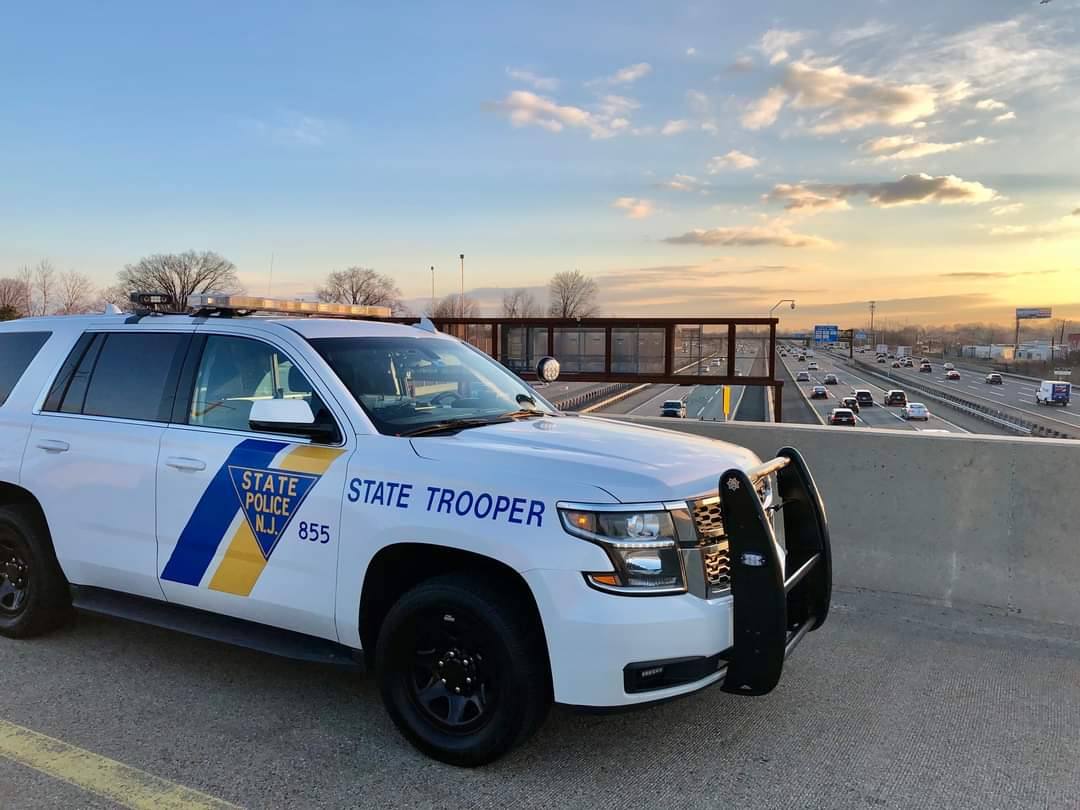
New Jersey asked a state appeals court on Monday, November 16, 2026, to throw out the roughly $11.3 million verdict won by Cheryl Rhines, a Jersey City woman who was arrested on suspicion of drunk driving while she was having a stroke. The state argues that the trooper reasonably believed Rhines was intoxicated and should be granted good-faith immunity; Rhines' lawyer counters that the trooper's failure to follow her training defeats immunity — and that a retrial could produce an even larger award.
Source: New Jersey Monitor (via MassArbitration)
On October 17, 2017, Rhines, then 48 and a marketing executive, was driving to work when she began to feel ill and pulled onto the shoulder of Route 78 westbound in Newark. According to her complaint, she was having early symptoms of a stroke. Dashcam footage described in the appellate briefs shows her asking repeatedly for help and telling the responding officer, “I think I’m having a heart attack.”
The officer, Trooper Jennifer Albuja, was in her second year with the New Jersey State Police. She concluded that Rhines’ disorientation, slurred speech and inability to stand were signs of impairment. The complaint alleges there was no odor of alcohol or other indicator of substance use. Instead of calling for medical help or taking Rhines to a hospital reported to be about five minutes away, Albuja arrested her and drove her to the state police barracks in Somerville, where Rhines was shackled to a bench in a holding cell.
The verdict the state wants erased
After a trial that lasted nearly a month, an Essex County jury returned its verdict on January 29, 2025: $5 million for pain and suffering, $6 million for emotional distress, $6.5 million for future medical care and $1.6 million for lost income — $19.1 million in total. The jury found that 60% of Rhines’ disabilities flowed from the delayed treatment and 40% from the stroke itself, which the trooper did not cause, and the award was reduced accordingly. After post-trial adjustments by Judge Thomas Vena in April 2025, the judgment stood at $10,882,432.20; a February 2025 order of judgment produced the “$12.9 million” headlines once costs were added.
Her lawyers say the detour delayed stroke treatment by about two and a half hours. Rhines was left with global aphasia, a severe impairment of the ability to speak and understand language. She has not returned to work and, according to her counsel, needs lifelong care and supervision. The lawsuit was filed in 2019 in Essex County through her mother, Mary Lou Rhines, acting as guardian ad litem, against the State of New Jersey, the New Jersey State Police and Albuja.
The state's immunity argument
Arguing for the state on November 16, Michael T.G. Long told the three-judge panel of the Superior Court of New Jersey, Appellate Division, that the trooper reasonably and sincerely suspected Rhines was impaired, and that the trial judge was wrong to refuse immunity. He asked the panel to vacate the January 2025 verdict and grant immunity outright under N.J.S.A. 59:3-3, which shields a public employee who “acts in good faith in the execution or enforcement of any law.”
The state also sought narrower relief in the alternative. If the panel orders a new trial, Long argued, the jury should receive fuller instructions on immunity and on the difference between pain and suffering and emotional distress, two categories the state says overlapped and inflated the award. If the verdict stands, the state asked the panel either to reduce damages or to order a new trial limited to damages.
Rhines’ trial lawyer, Dennis M. Donnelly, urged the panel to affirm. He argued that Albuja’s deliberate indifference, negligence and failure to follow police training defeat any claim of immunity, and warned that a new trial would risk a higher award for the state — a second jury would not be bound by the first jury’s numbers, and roughly two more years of care costs will have accrued by the time any retrial is held.
N.J.S.A. 59:3-3 gives public employees a good-faith defence, but it also says nothing in it “exonerates a public employee from liability for false arrest or false imprisonment.” The New Jersey Supreme Court has read the defence two ways — objective reasonableness or subjective good faith — and has limited its reach, holding in Fielder v. Stonack (1995) that it does not cover a police officer’s negligent operation of a patrol car.
What happens next
There is no deadline for the Appellate Division to rule. The New Jersey Monitor reported that it is unclear how soon the panel will decide; opinions after oral argument commonly take several months. Whichever side loses can seek review in the New Jersey Supreme Court by petition for certification, so a final resolution could extend well into 2027 or beyond.
The case also carries a wider lesson for police agencies: training on recognising stroke symptoms that resemble impairment — slurred speech, confusion and loss of balance — is now part of the liability record, since Rhines’ counsel argued that the trooper’s failure to follow training defeated immunity. And the Tort Claims Act already limits what Rhines can collect: pain-and-suffering damages against a public entity require proof of a permanent loss of bodily function, punitive damages are barred, and no interest accrues before judgment.
For New Jersey residents, the appeal will decide whether a $11.3 million jury verdict for a medical emergency mistaken for intoxication stands — or whether the state’s good-faith immunity argument wipes it out. The panel’s three questions — whether the injury came from enforcing the law or from failing to summon medical aid, whether the false-arrest carve-out applies, and whether immunity was a question for the judge or the jury — will shape how far that immunity reaches for every officer in the state.