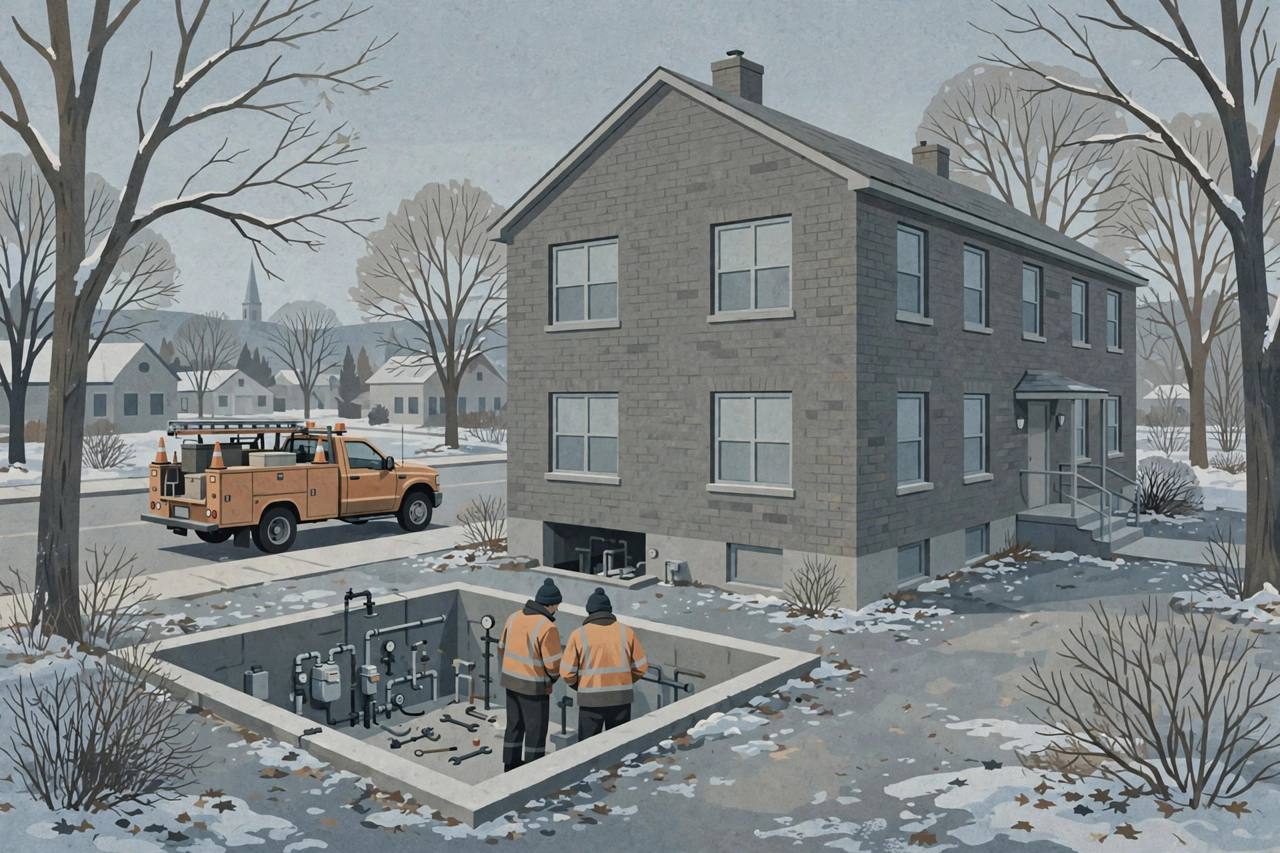
Nearly eleven months after a natural gas explosion tore through a Bristol Township nursing home two days before Christmas, the federal investigation has produced its most damaging disclosures yet. This week the National Transportation Safety Board (NTSB) released more than 3,000 pages of investigative records into the December 23, 2025 blast at Bristol Health and Rehab Center in Bucks County, Pennsylvania — and the documents describe a chain of failures by PECO, the region's gas utility: a standard leak test that was never performed, a technician facing a 1940s-era valve he had never seen before, a wrong address in the company's own system, and a post-explosion "leak sheet" that one employee told investigators was fabricated at management's direction.
Source: McKnight's Long-Term Care News
The explosion killed three people — a nurse and two residents of the home — and injured at least 20 others. The records released this week contain interviews, timelines and company documents, but no probable-cause finding: the NTSB says its investigation continues, and a final report typically comes one to two years after an accident. What the records do establish, in the words of the people who were there, is how much went wrong in the roughly three hours between the first report of a gas smell and the blast.
The morning of the explosion: a timeline from the records
According to the NTSB's earlier investigative summary, the nursing home's maintenance director reported the smell of gas coming from the basement boiler room at about 11:07 a.m. on December 23, 2025. A PECO technician had responded by about 11:50 a.m. and identified the source as a leak in the gas meter valve. A meter services technician arrived at about 1:20 p.m. to help with the repair. The explosion came less than an hour later, at 2:15 p.m. — and PECO's emergency crew did not fully isolate the flow of gas to the building until 3:50 p.m., roughly 95 minutes after the blast, while firefighters were still pulling victims from the rubble.
Source: FireRescue1 / NTSB preliminary timeline
The new records fill in what was happening in between. One PECO technician did not perform "bar hole testing" — a standard procedure used to detect and measure gas leaks underground — before the explosion. He told investigators he knew the test should have been run in that situation, but forgot. Crews were meanwhile taking underground gas concentration readings near the service line that reached as high as 100 percent.
A second technician had limited experience with the type of indoor meter installed at the nursing home — a model whose design traces to the 1940s and which is no longer manufactured. He told the NTSB that the day of the explosion was the first time he had ever encountered an indoor valve like the one leaking in the facility's basement, and that dealing with the faulty valve required two workers rather than one. The NTSB's initial findings in January had already noted that both the PECO foreman and the meter services technician on the job had less than one year of experience in their current roles.
A wrong address, a hand-drawn map — and a leak sheet investigators were told was forged
The records also show the response was hampered by PECO's own paperwork. The nursing home's address was incorrect in the utility's system, so technicians had to hunt for the gas lines when they arrived, and later had to create an informal map of their gas measurements — one technician told investigators he used Google Maps on his phone to sketch the building and street layout for the incident report, so the report contains no exact measurements.
Most seriously, the documents describe how a "leak sheet" was created after the explosion. One PECO employee told federal investigators he raised concerns about the document, characterising it as a "completely fabricated piece of evidence," and said he believed workers had effectively "forged a company document" for management; another technician told investigators the leak sheet was inaccurate because management had instructed them to forge the information. The same employee who used the word "forged" also told investigators the information recorded on the sheet was accurate to the best of his knowledge, and that his concern was how the document was created, partially completed and filed. The records are witness accounts gathered by investigators — they are not, by themselves, a finding that PECO falsified evidence, and the NTSB has made no such determination.
Source: Focal News Philadelphia
The documents further show this was not the first gas problem at the building: PECO had found a separate gas leak at the nursing home 77 days before the explosion, during proactive maintenance work, and its workers repaired that earlier leak.
What PECO, the nursing home owner and the workers' union say
PECO, an electric and natural gas subsidiary of Exelon Corporation, said in a statement after the documents were released that it recognises "the importance of continuous improvement and vigilance with respect to the safe and reliable delivery of electric and natural gas service," and that it has already taken steps to enhance safety, including relocating indoor meters to outdoor locations and providing additional training for technicians. On Friday evening the company issued an updated statement saying that "commenting publicly on the investigation before it is complete is irresponsible," and that "speculation and premature conclusions undermine the process, distract from the facts and do a disservice to those affected."
Saber Healthcare Group, which owns the nursing home, took the opposite position. The company had acquired the 174-bed facility — previously known as Silver Lake — only 23 days before the explosion. "The NTSB's records confirm what we have said from the start: our staff promptly reported the gas odor to PECO, and the gas line and valve that leaked belonged to PECO," Zach Shamberg, Saber's chief of government affairs, told McKnight's Long-Term Care News on Friday. He said the records show PECO's response "was marked by serious failures: a technician was dispatched who had not been trained to repair an indoor leak, they could not locate their own shutoff valve, they did not shut off the gas before working on the leaking valve, and gas continued to flow to the building for more than 90 minutes after the explosion."
The union representing the utility workers put the blame on management. "The sins of PECO management were paid for in blood, and this is a wake-up call," said Lawrence Anastasi, president of IBEW Local 614. "There is catastrophic neglect across the system that will cause more fatalities if left unaddressed." One technician quoted in the records described his own preparation this way: "The training from PECO to become an Energy Technician was thrown together for my class [of] 10 guys hired June 1st, 2015."
At least two separate lawsuits alleging negligence have been filed against PECO and Saber Healthcare Group over the explosion. Under its previous operator, Cincinnati-based CommuniCare Health Services, the nursing home had been cited repeatedly for substandard care and facility management. The NTSB records do not assign legal fault — that fight belongs to the courts — but they are now the central public evidence both sides will argue from.
What happens next
The NTSB investigation remains open, and the newly released docket contains no analysis or probable-cause conclusion; a spokesperson has said a final report could still be months or years away. In the meantime, PECO says its meter-relocation and training changes are already under way, victims' lawsuits are moving through the courts, and regulators and lawmakers in Pennsylvania are reading the same 3,000 pages the families of the nurse and the two residents killed have waited almost a year to see. For anyone in Pennsylvania — including the state's large Punjabi community, many of whose elders live in care homes across the Commonwealth — the case has become the sharpest test in years of a simple question: when a nursing home calls a gas utility about a leak, how fast, and how competently, does help have to arrive?
What is solid
- The NTSB released more than 3,000 pages of investigative records this week into the Dec. 23, 2025 Bristol Health and Rehab Center explosion, which killed a nurse and two residents and injured at least 20 people.
- A PECO technician told investigators he skipped standard bar-hole leak testing even though he knew it should have been done, and another said he had never before encountered the 1940s-era indoor valve that was leaking.
- The nursing home's address was wrong in PECO's system, and gas was not fully shut off until about 95 minutes after the 2:15 p.m. explosion, according to the NTSB timeline.
- PECO had found and repaired a separate gas leak at the same building 77 days before the explosion.
What is only claimed
- Whether the post-explosion leak sheet was deliberately forged on management's orders, as two employees' accounts in the records suggest, or was improperly assembled paperwork whose facts were accurate, as one of those same employees also said.
- Where ultimate responsibility lies: Saber Healthcare says the leaking line and valve were PECO's and its staff reported the odor promptly; PECO says public conclusions before the investigation ends are irresponsible. The NTSB has issued no probable-cause finding.