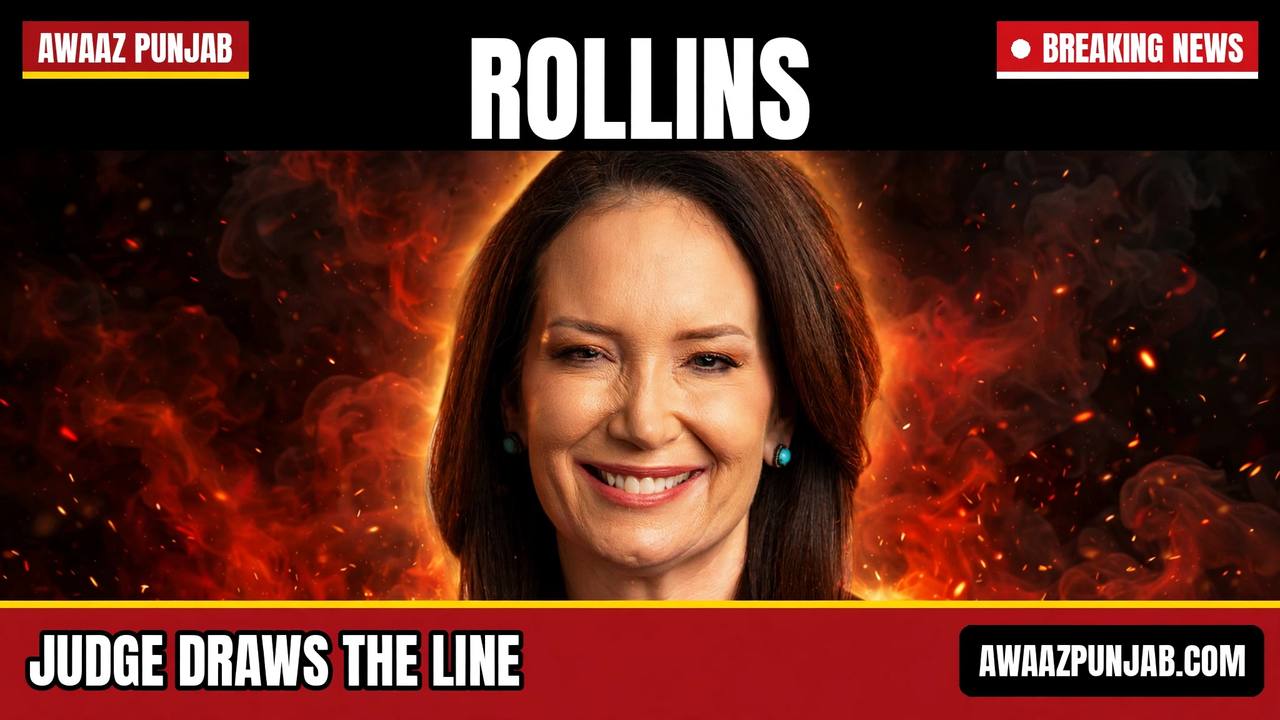
A federal judge in San Francisco has ordered Agriculture Secretary Brooke Rollins to stop sending Christian-themed religious messages to the U.S. Department of Agriculture's roughly 100,000 employees, ruling on Thursday that her holiday emails likely violated the First Amendment.
U.S. District Judge Trina L. Thompson issued a preliminary injunction in a lawsuit brought by six USDA employees and the National Federation of Federal Employees, the union representing 110,000 federal workers. The order bars Rollins from continuing to use her official email account to press her religious views on subordinates while the case moves forward.
Source: Associated Press
The messages at the centre of the case
Rollins sent the messages from her official account on major Christian holidays. On July 4, 2025, she emailed all USDA employees an Independence Day message; on November 26, 2025, a Thanksgiving message; on December 23, 2025, a Christmas message that included a video; and on April 5, 2026, an Easter message headed "Happy Easter – He is Risen indeed!"
In the Easter email, Rollins compared federal employees to "the very first disciples to encounter our risen Lord in the Upper Room almost two thousand years ago" and called on them to carry out "the mission each of us has been called for" with "Paschal joy." The employees who sued said she sent no comparable messages marking holidays of other faiths.
Source: Agri-Pulse
The six employees — who include a Buddhist, an atheist and a Pagan, according to the complaint — said they were expected to read messages from the secretary because they could contain important workplace information, and that they could not opt out of receiving them. They said the messages made them feel excluded, pressured them to hide their own beliefs or appear to share hers, and left them fearing disfavour or retaliation if they objected. The complaint says supervisors warned that objections would bring "trouble."
What the judge said
Judge Thompson ruled that the April 5, 2026 Easter message and the December 23, 2025 Christmas message "go too far." She found the employees were likely to prove an Establishment Clause violation, writing that the messages "suggest acquiescence that amounts to coercive pressure; a pressure of conformity sufficient to raise" a constitutional violation.
The First Amendment's Establishment Clause bars the government from establishing an official religion and prohibits government action that unduly favours one religion over another, or religion over non-religion. Thompson stressed that Rollins' "good faith intentions" were not at issue — the question was the effect of using official authority to promote one faith to a captive audience of subordinates.
To make the point, the judge wrote that an ordinary employee "likely could not send out an unsolicited all-staff email" urging colleagues to fast during Ramadan or attend a synagogue — yet the secretary had done the equivalent for Christianity from the top of the department.
"This Court's judgment says nothing about the value of prayer or those who believe in its power. Precisely because the tradition of worship and prayer is so personal and so cherished, protecting private devotion and spiritual reflection from government influence comes to the fore."
Rollins must now follow her own rules
In a striking detail, Thompson built the injunction out of Rollins' own words. The order quotes the secretary's own Secretarial Memorandum 1078-019 on religious expression, which says she "must stop if a colleague asks [her] to stop," "cannot create a hostile work environment through persistent unwelcome advances," and "cannot use official authority to pressure subordinates."
The same memorandum says she may discuss her religious beliefs with interested colleagues, share why her faith is meaningful to her, politely invite co-workers to religious services and express religious viewpoints in appropriate conversations. The judge's order draws the line there: personal faith, yes; official broadcasts to 100,000 subordinates, no.
"I am heartened and relieved to see the court upholding the Constitution and protecting employees from further inappropriate messages from the Secretary," said plaintiff and USDA employee Ashley Miller. Randy Erwin, president of the National Federation of Federal Employees, said: "Federal employees are public servants, not an audience for their bosses' personal religious beliefs."
Source: Democracy Forward
What happens next
A preliminary injunction is not a final verdict. The case will continue in the San Francisco federal court, and the department can appeal the order to the U.S. Court of Appeals for the 9th Circuit. Until then, the boundaries in the judge's order apply to the secretary's communications with USDA staff.
The ruling will be watched well beyond the Agriculture Department. It speaks directly to a question many federal workers — including immigrants and members of minority faiths who serve in federal jobs across the country — follow closely: whether a boss may use official channels to press one religion on the workforce. For now, in the USDA at least, the court's answer is no.
It is also the latest court setback for the department. Earlier this week, a federal judge refused to dismiss a lawsuit by states challenging USDA funding conditions tied to immigration and diversity policies, and a separate order has paused a USDA reorganisation.