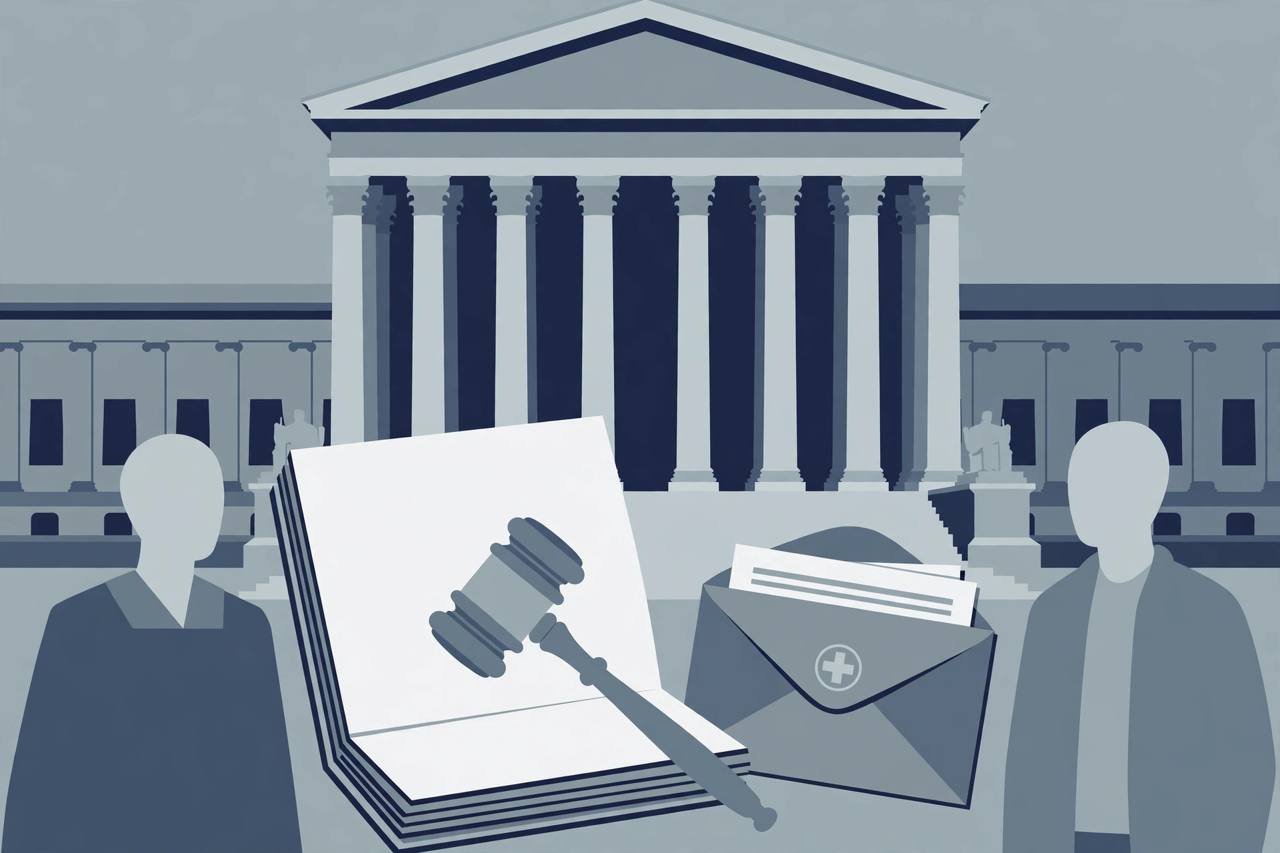
The Trump administration has asked the U.S. Supreme Court to curtail a second, long-standing power of federal judges — the ability to wipe out a federal agency's regulation for the whole country at once — in an appeal that grows out of a Texas fight over 'surprise' medical bills, Reuters reported on Saturday, November 14, 2026.
Source: Reuters
The appeal, filed by President Donald Trump's Justice Department and now pending before the justices, urges the court to stop judges from shutting down an agency regulation entirely. Instead, the administration argues, any relief a court grants should be limited to the specific plaintiffs who brought that particular case.
What 'universal vacatur' is — and why it matters
The lawsuits the administration is targeting are brought under the Administrative Procedure Act, a 1946 law that governs how federal agencies operate, including how they write and implement regulations. For decades, judges and appeals courts have claimed the power under the APA to 'hold unlawful and set aside' agency regulations they find illegal — invalidating them universally, for everyone, not just for the people who sued. Lawyers call that remedy universal vacatur.
Aditya Bamzai, an administrative-law expert at the University of Virginia, told Reuters that a win for Trump could let the government keep enforcing a rule broadly against everyone except the plaintiffs in a given case — potentially for years while litigation plays out — even after judges have already deemed the rule unlawful. Siding with Trump 'would give more flexibility to the executive branch,' Bamzai said, adding: 'Whether you like or dislike that flexibility can perhaps depend on whether you like or dislike a particular administration's policies.'
In June 2025, at the Trump administration's request, the Supreme Court clamped down on nationwide — 'universal' — injunctions, orders that block the government from enforcing a policy against anyone, not just the challengers who sued. That ruling came in litigation over Trump's bid to limit birthright citizenship and addressed judicial power, not the legality of the citizenship directive itself. The court separately ruled 6-3 last June that the birthright-citizenship policy was unconstitutional. The new appeal asks the court to extend the same logic from injunctions to APA vacatur.
The Texas medical-bills case underneath it
The new appeal arises from a challenge by Texas medical providers to federal rules implementing a statute Trump signed into law during his first term to limit unexpected medical bills. The regulation at issue sought to constrain 'surprise' bills from hospitals and health providers outside a patient's insurance network. A Texas association of medical doctors, air-ambulance providers and other plaintiffs argued the regulation violated the APA and artificially deflated their insurance reimbursement rates.
Legal analysis of the petition published on November 13 adds that the underlying fight is over the No Surprises Act, Congress's 2020 law shielding patients from unexpected out-of-network bills, and specifically over the formula — the qualifying payment amount — used to calculate reimbursement rates, which providers argued unfairly favoured insurers. The en banc 5th Circuit sided with the providers on the formula and reaffirmed universal vacatur as the default remedy, the analysis says.
Source: LexBlog / healthcare law analysis of the vacatur petition
The New Orleans-based 5th U.S. Circuit Court of Appeals voided parts of the rule nationwide in August on the grounds of an APA violation, Reuters reported. Crucially, the Trump administration's appeal does not challenge the 5th Circuit's decision about the regulation's legality. It seeks only to prevent courts from using the APA to stop a policy nationwide. 'The Supreme Court should return the lower courts to their proper role under the APA,' the Justice Department said in its filing.
Why both sides say the stakes go far beyond medical bills
Since Trump returned to office in January 2025, his administration has faced hundreds of lawsuits challenging moves to limit immigration, pursue mass deportation, end diversity initiatives and curtail transgender rights, among other actions. Plaintiffs have invoked the APA in many of them — including fights over the termination of humanitarian legal status for hundreds of thousands of migrants, major cuts to research grants, and a mass voter-verification system used for sweeping citizenship checks. If vacatur shrinks to plaintiff-only relief, each of those challenges would protect only the people who filed it.
Supporters of the tool — including numerous state governments that regularly sue the federal government — say it is an essential bulwark against executive overreach and keeps regulations uniform. 'When an agency adopts a rule that has been held to be unlawful, sometimes the only sensible solution is to wipe it off the books,' said law professor Ronald Levin of Washington University in St. Louis. 'You can't have a food-safety rule that applies only to some. You can't have an auto-safety manufacturing rule that applies only to some manufacturers.' If the court agrees with the administration, Levin said, 'it would take longer for challengers to get unlawful regulations removed from the books.'
What is solid
- Reuters reported on November 14, 2026 that a Justice Department appeal asking the Supreme Court to curtail APA vacatur is pending, arising from the Texas surprise-medical-bills case.
- The 5th Circuit voided parts of the surprise-billing rule nationwide in August on APA grounds, and the administration's appeal does not challenge that legality ruling.
- The Supreme Court restricted universal injunctions in June 2025; it has not yet decided whether to take up this vacatur appeal, and is expected to consider it early next year.
What is only claimed
- Whether the APA authorises universal vacatur at all is the contested legal question: the administration says it does not, while states and legal scholars defending the tool say it is essential and long-standing.
An unusual split: Republican states defend the APA tool
The administration may face pushback from a broad array of opponents, Reuters noted. Texas, Florida and some other mostly Republican-led states had urged the 5th Circuit not to 'neuter' the APA's effectiveness, calling the law important for maintaining the balance of power between states and the federal government. 'The APA is a critical tool … to curb federal overreach and incursions into state sovereignty by executive-branch agencies,' those states said. The Biden administration also tried in 2023 to convince the Supreme Court to limit this judicial power, in a case in which Republican attorneys general from Texas and Louisiana challenged an immigration policy; the justices did not take up that invitation and backed Biden on other grounds.
What happens next
The Supreme Court is expected to consider whether to take up the case early next year. If it agrees to hear it, a ruling for the administration would reshape how every federal regulation — on immigration, health care, food and auto safety, research funding and more — can be challenged, and would matter directly to immigrant families, including Punjabi diaspora families, whose legal status cases are often fought under the APA. Until the court acts, universal vacatur remains available to lower-court judges.