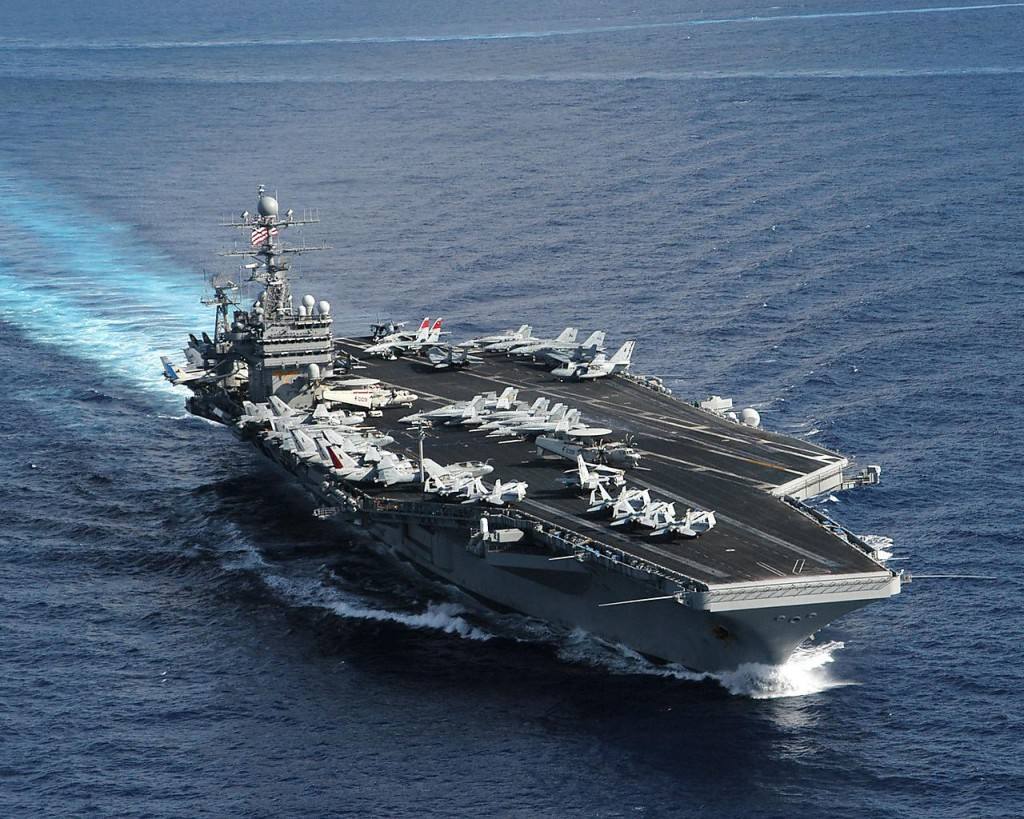
US Central Command has warned the Trump administration that keeping the current Middle East force posture beyond the end of the year risks degrading American military readiness, the Financial Times reported, citing three sources familiar with the briefings. One person familiar with the situation said the command was telling the administration that "they are running out of time, and they are burning money and readiness."
Source: Financial Times
The warning lands as the United States keeps more than 50,000 troops on alert across the Middle East, months into a war with Iran that has no clear end date, and as a third aircraft carrier, the USS Theodore Roosevelt, has joined US forces in the region. A US naval blockade of Iranian ports remains in force, and the Strait of Hormuz — through which about a fifth of the world's oil moved before the war — is still largely closed to shipping.
Source: The Washington Post
The classified warning to Hegseth
The Financial Times report is not the first such warning. The Washington Post reported that senior US military leaders warned Defence Secretary Pete Hegseth in a classified Pentagon assessment that sustaining large-scale operations tied to the war with Iran is eroding readiness for other missions. The concerns appear in the August 14 edition of the Secretary of Defense Orders Book, the classified document that tracks the worldwide availability of forces and systems.
Source: The Washington Post
According to the Post, the Navy's top officer and the four-star commanders responsible for Europe, the Indo-Pacific and Latin America formally disagreed with some force-extension decisions, while Army and Air Force leaders agreed to extend their deployed forces but emphasised the risks. The Navy appears to be under the greatest immediate strain: its chief told Hegseth the service could not sustain its current level of support indefinitely because there was no anticipated end date.
Source: The Washington Post
The commanders responsible for Europe and Latin America told Hegseth that sending ships and surveillance aircraft to Central Command had reduced their ability to meet homeland-defence obligations. The orders book directs some forces to remain in the Middle East through September and others into 2027. The Pentagon did not confirm the classified details and said it does not discuss internal operational processes or specific risk assessments.
Source: The Washington Post
Why the strain matters for the Gulf
The war began on February 28, 2026, when the United States and Israel attacked Iran. Tehran struck back at Israel and at Gulf states hosting US military bases. A ceasefire was declared in April, but the conflict has settled into a stalemate: Iran keeps the Strait of Hormuz largely shut, the United States keeps its blockade in place, and talks on a deal have stalled over Iran's enriched uranium.
Iran's Foreign Minister Abbas Araghchi has said Tehran wants a lasting agreement that guarantees the war will not return, and that the Strait of Hormuz could reopen within two hours if Washington meets Iran's conditions. He ruled out moving Iran's 60%-enriched uranium abroad. Read the earlier story
For the lakhs of Punjabi and Indian workers living in the Gulf, the readiness warning matters directly. US bases sit in Qatar, the United Arab Emirates and Bahrain — the same states where large numbers of Indian workers live and work. Any return to full-scale fighting, or Iranian retaliation against those bases, would put them in the line of fire, while a prolonged standoff keeps shipping, flights and remittances under strain.
What happens next
President Donald Trump has said he will not decide on his next step in the war until the new year, according to Axios reporting, even as Israeli Prime Minister Benjamin Netanyahu presses for a return to military operations. Diplomacy continues through Qatar — US envoys met Qatari mediators in Berlin this week — but the Financial Times report makes clear the military clock is now part of the argument: the longer the deployment lasts, the more it costs in money, ships, aircraft and readiness for crises elsewhere. The incoming Democratic-majority Congress is also expected to increase oversight of the operation, and CENTCOM is concerned about possible defence budget cuts.
Source: Axios
What is solid
- The Financial Times reported that CENTCOM warned the administration that sustaining the Middle East posture past the end of the year could degrade readiness, citing three sources.
- The Washington Post reported a classified Pentagon assessment in which senior military leaders warned Defence Secretary Pete Hegseth of readiness strain.
- More than 50,000 US troops have been kept on alert for months, and a third US aircraft carrier has reached the region.
What is only claimed
- Whether US readiness has already degraded or is only at risk if the deployment continues — the reports describe a warning, not a confirmed breakdown.
- The Pentagon declined to confirm the classified details of the assessment.