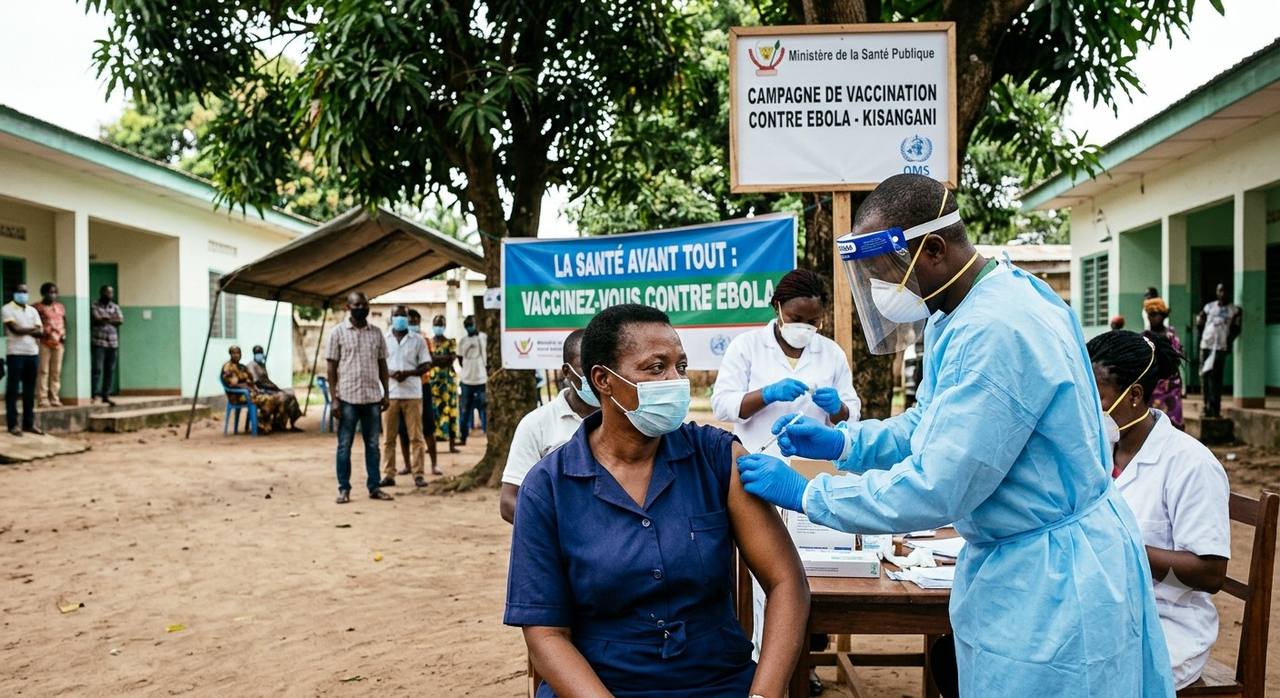
Gavi, the Vaccine Alliance, has signed an advance purchase commitment to secure access to up to 1.5 million doses of an experimental vaccine against the Bundibugyo species of Ebola, for use in the Democratic Republic of Congo if the shot proves safe and effective. Gavi announced the deal in Geneva on Tuesday, November 24.
Source: Gavi, the Vaccine Alliance
The agreement is with the Serum Institute of India and Serum Life Sciences, and covers ChAdOx1 BDBV, a candidate vaccine developed jointly by the Serum Institute and the Oxford Vaccine Group at the University of Oxford. The doses are funded through Gavi's First Response Fund, and would only be procured if clinical trial results are positive, regulators approve the vaccine, and the World Health Organization issues the policy recommendations for its use.
The Bundibugyo outbreak in DR Congo has so far caused more than 11,600 cases and more than 5,700 deaths, the vast majority in the country, according to Gavi. The World Health Organization reported 5,678 deaths among 11,613 confirmed cases as of November 17, 2026. There is no licensed vaccine or treatment for the Bundibugyo strain of Ebola.
The Serum Institute has already manufactured the drug substance for more than half a million doses of the candidate vaccine, so that doses could be made available quickly if the trials succeed, Gavi said.
The vaccine is one of two novel Bundibugyo candidates that the WHO recommended for clinical testing in the ongoing outbreak, and it is being tested in the Tumaini trial in Congo. Read our earlier report on the trial
"For the second public health emergency of international concern since its launch, the First Response Fund is functioning as designed — securing early and rapid access to vaccines so that communities can be protected as quickly as possible," said Dr Sania Nishtar, chief executive of Gavi. She urged other health agencies to step up with more funding and to draw up rollout protocols quickly.
What still stands between the doses and patients
Three gates sit between the secured doses and people receiving them: the clinical trial results, which the WHO expects in early 2027; regulatory approval; and WHO guidelines for using an unapproved vaccine outside a trial, under what is called "expanded access". Gavi did not disclose the financial terms of the deal, and no delivery dates have been announced.
Gavi had already committed up to 50 million dollars — yaani 5 crore dollar — for Bundibugyo vaccines and the outbreak response in May, including up to 40 million dollars, yaani 4 crore dollar, of at-risk financing to help manufacturers scale up before efficacy is known, and 10 million dollars, yaani 1 crore dollar, for the response. It has also invested 7 million dollars to provide 70,000 doses of the existing Ervebo vaccine from the Gavi-funded global stockpile.
The deal matters beyond Congo: the Bundibugyo strain has no licensed vaccine, and an advance purchase commitment means that if the Oxford–Serum Institute shot works, doses will not have to wait for manufacturing to start from scratch. For India, the Serum Institute's role puts an Indian manufacturer at the centre of the response to one of the world's deadliest ongoing outbreaks.
What is solid
- Gavi signed an advance purchase commitment on November 24 for up to 1.5 million doses of the ChAdOx1 BDBV candidate vaccine.
- The vaccine was developed by the Serum Institute of India with the Oxford Vaccine Group; the Serum Institute has already made drug substance for more than 500,000 doses.
- The Bundibugyo Ebola outbreak has caused more than 11,600 cases and more than 5,700 deaths, mostly in DR Congo.
What is only claimed
- Whether the vaccine will work — efficacy results from the Tumaini trial are not expected until early 2027, and the purchase is conditional on them.
- How quickly doses could reach patients, which depends on WHO expanded-access guidelines that do not yet exist.