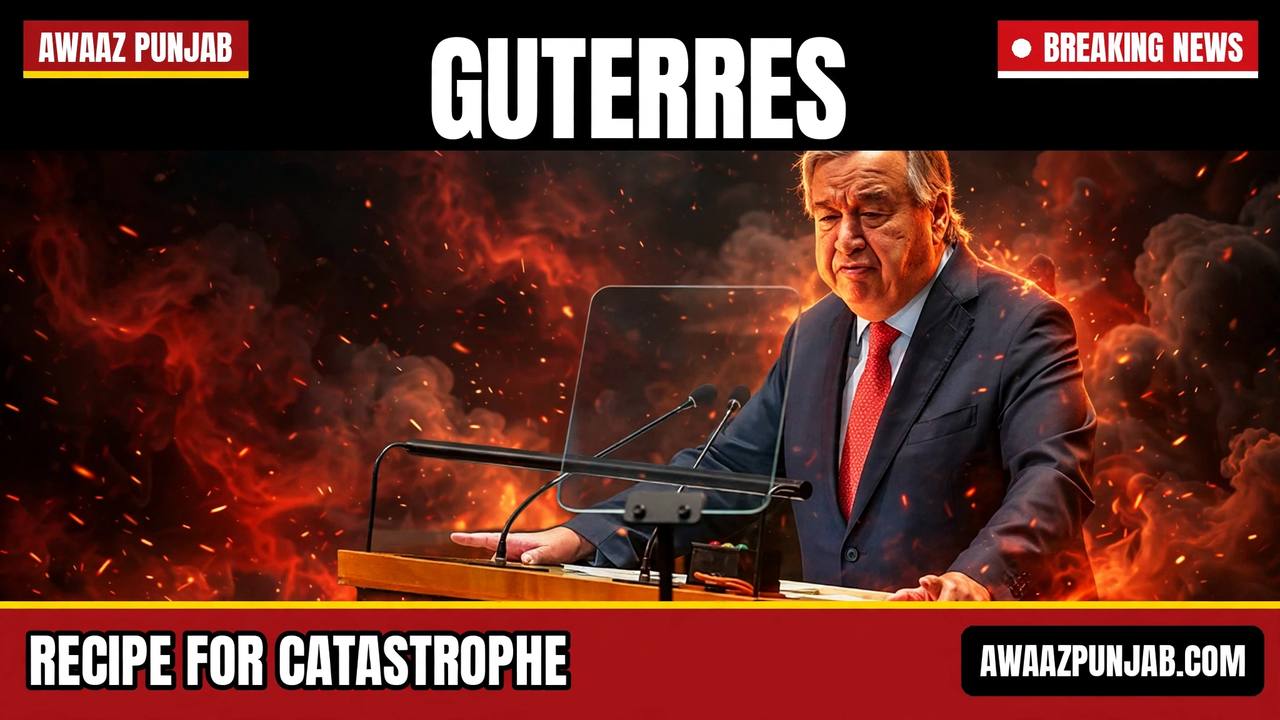
United Nations Secretary-General António Guterres warned the Security Council on Tuesday that artificial intelligence has entered the battlefield in troubling ways, and that letting AI into nuclear command systems would be a recipe for catastrophe.
Source: United Nations
"Today's wars have become proving grounds for AI-enabled targeting," Guterres told the high-level open debate in New York on 24 November, titled "Conflict resolution in an era of rapid technological change". "AI is driving greater autonomy across military functions. From intelligence gathering to target selection, it is reported that algorithms are increasingly shaping life-and-death decisions."
"And the potential integration of AI with nuclear command, control and communication systems is a recipe for catastrophe. As long as nuclear weapons exist, the decision to use them must rest with human beings alone," he said.
"Killer robots must have no place"
Guterres said machines that select targets and take lives without human control are "morally repugnant and politically unacceptable", and repeated his call to urgently launch negotiations on a legally binding instrument on lethal autonomous weapons systems.
"When civilians are killed, or human rights are violated, the answer must never be 'the algorithm did it'," he said. "Fundamentally, this issue is a question of power — who gets to shape, oversee and benefit from AI. And who will pay the price if that power goes unchecked."
What the debate heard
The debate, convened by Latvia, which holds the Council presidency for November, was chaired by Latvian President Edgars Rinkēvičs. Speakers also heard from Microsoft executive Frederick Humphries, who pointed to the company's 2026 Digital Defense Report, drawing on 165 trillion daily security signals — a figure showing the scale of AI-era cyber activity.
India's ambassador to the UN, Harish Parvathaneni, told the Council that responsibility for the use of lethal autonomous weapons must always rest with humans, and warned against technology being used for strategic one-upmanship.
Source: The Hindu BusinessLine
The warning comes days after talks in Geneva on a binding treaty for autonomous weapons ended without a clear mandate to negotiate. Read the Geneva talks story
AI's promise — and its risks
Guterres acknowledged that AI, used responsibly, could support peacekeeping, mediation, civilian protection and landmine clearance. But he warned that AI-driven falsehoods are already fuelling polarisation and weakening trust in institutions, and that an uncontrolled race for AI — and for the energy, water and critical minerals its data centres consume — is inflaming tensions between communities and countries.
He also warned that the technology is within reach of both states and non-state armed groups, and can amplify risks in cyberspace, in outer space and in the life sciences.
"They understood that power must answer to law — and that peace is a human choice. Let us ensure it remains one," Guterres said of the UN's founders, closing his address.