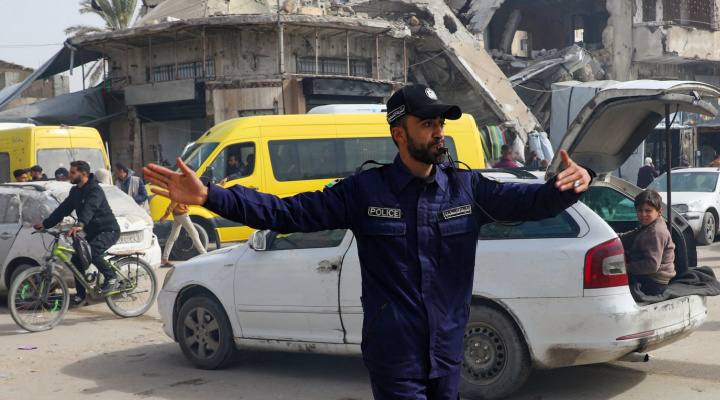
Hamas has rebuilt its grip on Gaza's day-to-day government, according to a new Israeli security establishment assessment — all 17 of the group's government ministries are working again, along with 22 of the 25 municipalities that operated before the war.
Source: Yedioth Ahronoth via JFeed
The assessment, published by the Israeli newspaper Yedioth Ahronoth, puts the scale of the rebuilt administration at about 50,000 officials employed in Hamas's governing institutions and some 30,000 armed operatives in its military wing — roughly 80,000 people across its government, security and civilian frameworks.
The ministries are not shells, the assessment says. The Interior Ministry runs the security apparatus and enforces public order, the Economy Ministry handles price enforcement, regulates cash and collects taxes, and the Health Ministry is expanding hospitals and opening new medical centres. The Transportation Ministry has reopened vehicle licensing centres, civil defence crews carry out firefighting and rescue work, and the Agriculture Ministry supervises crops and the movement of produce to markets.
Taxes, cash and new recruits
Hamas's police and security services are once again operating openly, after spending much of the war working covertly or on a limited basis because of the threat of Israeli strikes, the assessment says. It also identifies a rise in recruitment of new members — and a special financial committee collecting taxes from merchants and business owners, including payments demanded retroactively for commercial activity during the war.
Why it matters for the ceasefire
The picture clashes directly with the framework meant to govern Gaza after the war. Under UN Security Council Resolution 2803 and the Trump administration's 20-point plan, Hamas is to have no part in running Gaza, and a technocratic body — the National Committee for the Administration of Gaza — is supposed to take over civilian rule. That committee has not yet begun work inside the territory, and Hamas's disarmament, the central condition for reconstruction, remains unresolved.
Source: Mitzpe daily brief
The assessment comes more than a year into a ceasefire that has held in name but not in calm. At least 1,662 people have been killed in Israeli attacks in Gaza since the ceasefire began last year, according to the territory's Hamas-run health ministry, whose figures are considered reliable by the UN — and Israeli forces crossed the ceasefire's Yellow Line in central Gaza this week in the first ground operation beyond it since the truce.
Source: BBC
Israeli forces crossed the Yellow Line in central Gaza — the first ground operation beyond it since the ceasefire: Read the full story
What is solid
- All 17 Hamas ministries and 22 of 25 municipalities are operating again, per the Israeli security establishment assessment
- About 50,000 officials and 30,000 armed operatives are in Hamas's frameworks, per the same assessment
- The technocratic National Committee for the Administration of Gaza has not yet begun work inside Gaza
What is only claimed
- How much durable control the rebuilt administration gives Hamas, versus the technocratic committee meant to replace it
- Israeli officials' claims that Hamas is using hospitals and tunnels for military purposes — Hamas has said it is ready to hand administration to the technocratic body
The Board of Peace, the body overseeing the ceasefire framework, warned the UN Security Council on November 17 that the truce could collapse without full implementation of the deal — including deployment of an international stabilisation force, Israeli follow-through on its commitments, and Hamas giving up its weapons. The assessment lands as that warning is still fresh.
Three years into the war, the group Israel set out to dismantle is running Gaza's daily government again — and the plan to replace it has not yet started on the ground.
All figures in this story come from the Israeli security establishment's assessment as published by Yedioth Ahronoth. They have not been independently verified, and Hamas has not publicly responded to this assessment.