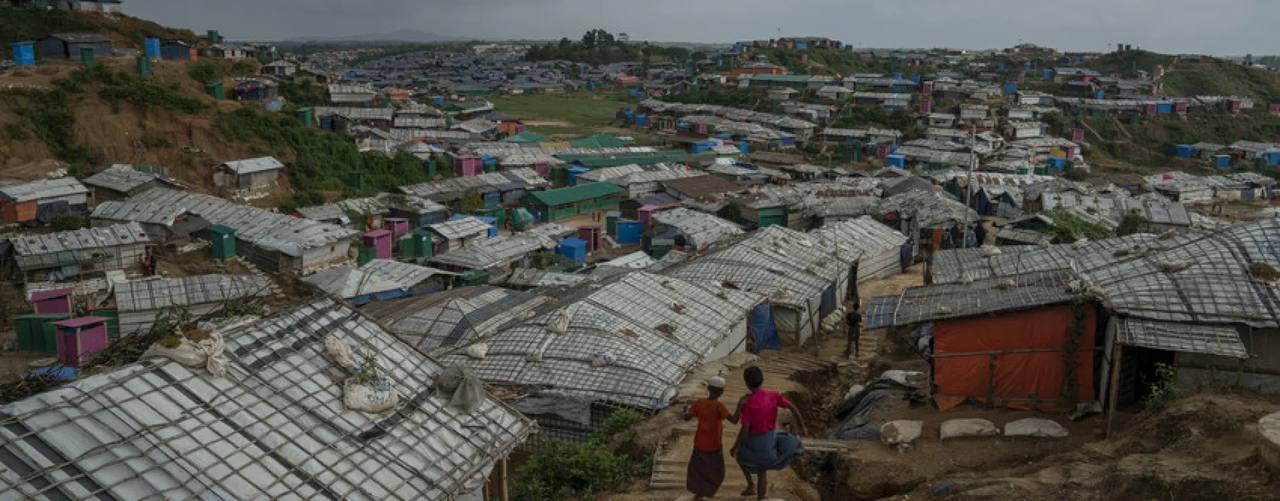
Malaysia said on Friday that it will resettle 10,000 Rohingya refugees in Türkiye through a structured skills training programme, in what Reuters described as one of the biggest resettlement initiatives involving the Rohingya since the military crackdown on their community in Myanmar's Rakhine state in 2017.
Source: Reuters
Deputy Prime Minister Ahmad Zahid Hamidi announced the plan in a statement on Friday, November 20. Malaysia's Cabinet has approved the proposal, which was put forward after Zahid's recent official working visit to Türkiye, and Ankara has agreed to receive the 10,000 refugees, according to Malaysian media reports.
The refugees will go through a Technical and Vocational Education and Training programme lasting three to six months, focused on practical skills needed by employers across industries in Türkiye. Zahid said the approach goes beyond merely sending Rohingya refugees to a third country, as it gives them the chance to build a new life through training.
The announcement came one day after the International Court of Justice ruled that Myanmar committed genocide against the Rohingya. Read our report on the ruling. Read the ICJ ruling story
The timing is no coincidence. On Thursday, November 19, the International Court of Justice in The Hague ruled by nine votes to six that Myanmar's security forces committed genocide against the Rohingya group in northern Rakhine State during the 2017 clearance operations — the first time in the court's 80-year history that it has held a state responsible for committing genocide.
The court found that Myanmar's security forces killed around 10,000 Rohingya, carried out mass executions of men and boys, committed widespread sexual violence against women, and burned or razed hundreds of villages. It ordered Myanmar to allow the safe, voluntary and dignified return of those who fled, to investigate and prosecute those responsible, and to pay compensation — though the amount is yet to be decided, and the court has no force of its own to enforce the ruling.
Myanmar's government rejected the ruling on Friday, calling it unfair. Government spokesperson Khaing Khaing Soe said the decision was not unanimous and that Myanmar had been unjustly accused.
Malaysia hosts a large Rohingya population of its own. Some 133,400 Rohingya had been registered as refugees and asylum seekers in Malaysia as of end-September, according to the country's home minister, citing United Nations figures. Malaysia has also sought to send Rohingya refugees back to Myanmar amid rising tensions with local communities.
Much about the plan is still unclear. No overall timeline has been given, and the statement did not say how many people would move in each phase, how participants will be chosen, or what legal status the refugees will hold on arrival in Türkiye.
About a million Rohingya refugees live in camps in Bangladesh, most of them in Cox's Bazar, the world's largest refugee camp. For them, return home remains distant: the court's ruling does not by itself open a path back, and Myanmar's military rulers have shown no sign of accepting it.
Myanmar has already rejected the World Court's ruling as unfair — read that story here. Myanmar rejects ICJ ruling
What happens next: watch for a formal confirmation from Ankara, a timeline and selection criteria from Kuala Lumpur, and whether other countries follow Malaysia's lead with resettlement offers of their own.