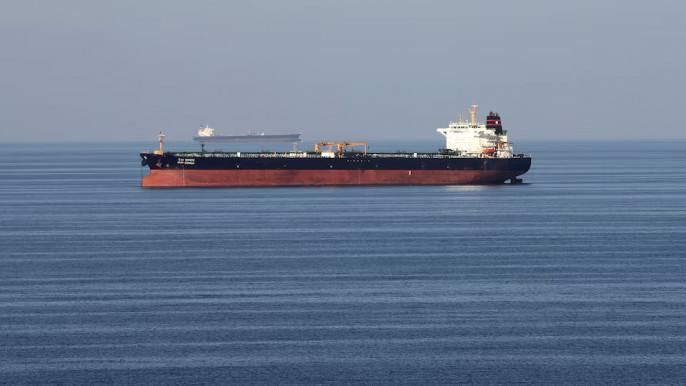
Oil prices rose on Friday as concerns over supply disruptions grew following Houthi attacks on Saudi Arabia's capital Riyadh and reports of tanker disruptions in the Strait of Hormuz. Brent crude futures rose 79 cents, or 0.9%, to $92.77 a barrel by 0404 GMT, while US West Texas Intermediate futures for December climbed 25 cents, or 0.3%, to $83.46 a barrel, and the more active January contract gained 71 cents, or 0.9%, to $83.15.
Source: Reuters
Both benchmarks had settled little changed on Thursday. Brent settled up 3 cents, or 0.03%, at $91.98, while WTI for December delivery settled 0.06% lower at $83.21, according to Reuters and Bloomberg figures. Brent had settled at $95.84 on Friday, November 13, and has fallen most days since — it is down roughly 20% in November.
Friday's rise was driven by the Houthi missile attack on Riyadh, which struck the PIF Tower area earlier in the week, and by fresh reports of a loaded tanker being hit by an unidentified projectile while sailing outbound through the Strait of Hormuz on Wednesday. Read the Riyadh attack story
Why the week is still down
Despite Friday's gain, Brent is set for a 3.5% decline for the week and the December WTI contract for an almost 6% weekly drop. Traders say expectations of a supply surplus are winning the week: crude shipments through the Strait of Hormuz have returned to roughly pre-war levels, and US crude inventories rose 3.4 million barrels in the week to November 13, according to the US Energy Information Administration.
Tanker incidents near Hormuz are holding the price above $90, but rising US stocks and surplus forecasts are pushing the trend lower. FinanceFeeds, citing Reuters and Bloomberg, put the next reference levels at $96 above and $88 below Friday morning's price in Asia.
The Shenzhen pledge and OPEC+
The leaders of the United States, China and Russia agreed on Thursday to boost the supply of fuels, Rigzone reported, citing Bloomberg. The report said prices have surged because of wars being waged by two of the three military superpowers. No volumes or timetable were given for the pledge, and Brent was little changed at $92.15 a barrel in data stamped 06:09 UTC on Friday.
Source: EnergyReader / Rigzone
The next scheduled test for the market is the OPEC+ ministerial meeting on Sunday, November 29, which is expected to set the group's output framework for 2027. The Baker Hughes US rig count, due later on Friday, will give a further signal on American supply.
What is solid
- Brent traded at $92.77 and WTI December at $83.46 on Friday morning, per Reuters.
- Brent is set for a 3.5% weekly fall, its third weekly decline in a row.
- US crude inventories rose 3.4 million barrels in the week to November 13, per the EIA.
- OPEC+ ministers meet on November 29 to set the 2027 output framework.
What is only claimed
- Who hit the loaded tanker in the Strait of Hormuz on Wednesday is not established: it was struck by an unidentified projectile, and no group has credibly claimed the attack.
- Whether the US-China-Russia fuel-supply pledge will move real volumes is unproven: Rigzone's report gave no volumes or timetable.
What it means for readers
Oil above $90 a barrel keeps fuel costs high across the Gulf economies where lakhs of Punjabi and Indian workers live and work, and it feeds into petrol and diesel prices back home in Punjab and India. A third straight weekly fall, if it holds, points the other way — but with tankers still being hit near Hormuz and Houthi attacks reaching Riyadh, traders are keeping a risk premium in the price until the shipping lane is clearly safe again.
What to watch next: whether the OPEC+ meeting on November 29 holds output steady or cuts, whether Hormuz shipping stays at pre-war levels through the weekend, and whether the Houthi attacks on Saudi Arabia continue.