Last week the IAEA said it was 'increasingly concerned' about an uninspected enrichment plant at Isfahan that Iran declared in 2025 but has never let inspectors visit. Read the earlier story
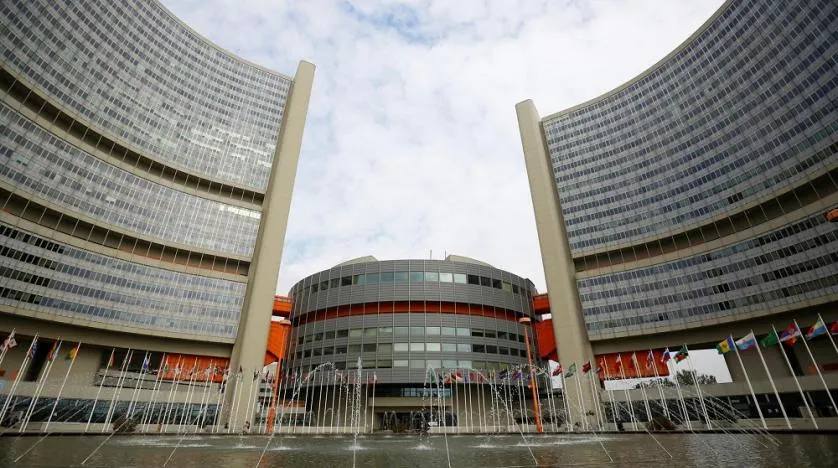
Russia, China and Iran told the International Atomic Energy Agency on Wednesday that its inspectors can only return to Iran's nuclear sites once the attacks on Iran have fully ended and all threats of renewed military action are removed. The joint statement was delivered by the Russian delegation at a session of the IAEA Board of Governors in Vienna.
Source: Anadolu Ajansı, via Bytes Europe
The three countries said unconditional demands for the routine implementation of nuclear safeguards 'would not facilitate the full resumption of IAEA inspections' because they ignored what they called the 'objective obstacles created by acts of aggression'. They said inspections could resume 'only on condition that hostilities are fully ended, all threats of renewed aggression are removed, and convincing guarantees are provided that similar attacks and threats of attacks will not be repeated.'
The statement argued that military attacks on Iran's safeguarded nuclear facilities and continuing threats had made normal safeguards implementation 'materially impracticable'. It said the attacks violated the UN Charter's ban on the threat or use of force and put at risk 'the credibility, integrity and effectiveness of the IAEA safeguards system'.
As evidence of what they called Tehran's continued good faith, the three countries pointed out that Iran authorised all IAEA inspections scheduled at its Bushehr nuclear power plant in 2026, as recorded in the agency director-general's report.
Source: Press TV
Why the inspectors left
The IAEA suspended verification work and withdrew its inspectors from Iran after Israeli and US strikes on Iranian nuclear facilities in June 2025. The following month Iran passed a law suspending cooperation with the agency, and inspectors have not been allowed back into any of the sites bombed in that 12-day campaign.
In a confidential report to member states last week, the IAEA said it was 'increasingly concerned' about an uninspected uranium-enrichment plant at Isfahan, declared by Iran on 12 June 2025 but never visited by inspectors. The agency said it did not know the plant's exact location, its status, or whether it held nuclear material.
Source: Reuters, 13 Nov 2026
The same report said the agency could no longer confirm that Iran had not diverted declared nuclear material from peaceful uses. It said about 440.9 kilograms of uranium enriched to 60 percent purity — close to weapons grade — remained unaccounted for, and that inspectors had been kept out of every enrichment site except the Bushehr power plant and a Tehran research reactor.
IAEA Director General Rafael Grossi has urged Iran to take what he called 'incremental' and 'technical and gradual measures' to let inspectors back in, and the Board of Governors referred Iran to the UN Security Council in September over safeguards non-compliance. Iran's foreign ministry spokesman Esmaeil Baghaei has replied that Iran remains committed to the Non-Proliferation Treaty, but that cooperation cannot change until the agency condemns the attacks on its facilities.
The war behind the standoff
The inspections dispute sits inside a war that began on 28 February, when the United States and Israel launched strikes on Iran. The fighting has since spread across the Gulf: US jets hit an Iranian missile site on Qeshm Island on 17 November, Iran answered with drone attacks on targets in Kuwait and Bahrain, and tankers in the Strait of Hormuz have come under repeated attack. The International Energy Agency warned on Thursday that the Hormuz crisis was the largest threat to energy security in history.
Iran's deputy foreign minister Kazem Gharibabadi said on 15 November that inspectors would not be allowed into the damaged sites at Natanz, Fordow and Isfahan until the war had definitively ended. With the Board of Governors still in session in Vienna, and the Shenzhen summit of Donald Trump, Xi Jinping and Vladimir Putin having put Iran on its agenda, the three countries' joint statement sets the terms on which they say the nuclear file can move at all: first an end to the attacks, then the inspectors.
For the lakhs of Indian and Punjabi workers in the Gulf, the standoff matters because it keeps the region on a war footing: flights to Saudi Arabia remain disrupted, oil has held near 93 dollars a barrel, and any new round of strikes would hit shipping through Hormuz, the route that carries a fifth of the world's seaborne oil. Until inspections resume, the world also has no independent check on where Iran's most dangerous nuclear material is.