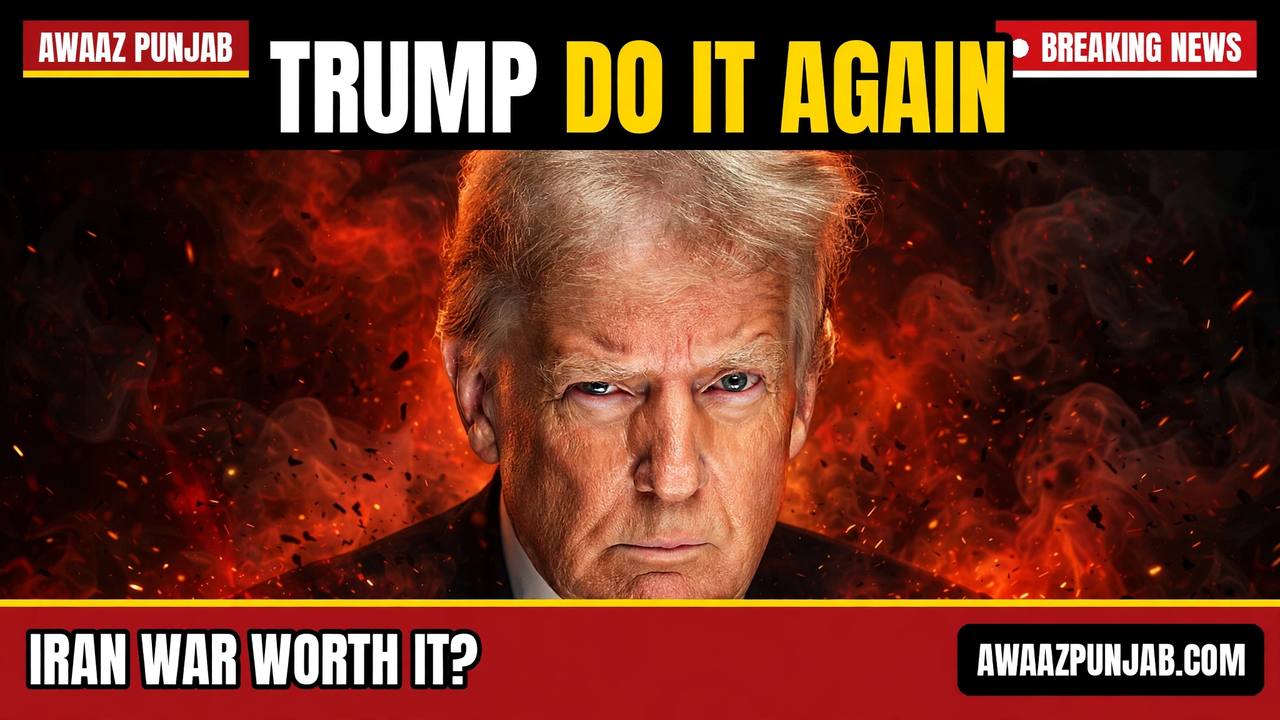
President Donald Trump used his first on-camera public appearance since the midterm elections — a ceremony on Wednesday, November 4, to raise the final steel beam of his new White House ballroom — to defend his war on Iran, agreeing with Vice President JD Vance that the war had cost Republicans at the polls but insisting he would order it again: "If I had to do it again, I'd have to do it again, because long-term, it's the only answer. You can't let Iran have a nuclear weapon."
Source: TheWrap
The questions followed a lengthy social media post by Vance on Wednesday breaking down the Republican rout, in which Democrats took back control of both the Senate and the House of Representatives, according to Associated Press race calls. "The reason we lost is the war. The president himself said so last night," Vance wrote, adding that turnout was not the main problem: many people who voted for the Trump-Vance ticket in 2024 voted for Democrats in 2026.
Source: TheWrap
Vance's post — the bluntest public verdict yet from inside the administration — was reported by Awaaz Punjab earlier on Wednesday, before Trump answered it in person. Read the earlier report: Vance says the Iran war is the reason Republicans lost the midterms
Asked about Vance's verdict, Trump conceded part of it. "Well, I think it's largely true, because it drove gasoline up a little bit short-term," he told reporters. "You have no choice," he added. "I thought oil would go up a lot more and I did it on that basis. You have to do it. You can't let Iran have a nuclear weapon, or everything that you see here someday might not exist." Asked directly whether the war was worth it, he answered: "I do, yeah."
Source: TheWrap / Zark News
"The price, not the war" — and a claim about Hormuz
Trump drew a distinction between the war itself and its cost at the pump: "We had to do what we did about Iran and we're still doing it. Right now we have an enormous flow of oil coming out of Hormuz. At the beginning, there was nothing. And that's probably the main reason [for the electoral defeat] — the price, not the war, the price," he said in remarks reported by Spain's Demócrata. The Center Square reported that he pointed to falling gasoline prices and said the United States was now exporting oil from the Strait of Hormuz at prewar levels — a claim about flows through the strait, which Iran still says will stay shut to the United States until its conditions are met.
Source: The Center Square
In Tehran, the results were read as a verdict on the war itself. Parliament speaker Mohammad Bagher Ghalibaf, Iran's chief negotiator, said on Wednesday that the confrontation with Iran was behind the Republican defeat and that American voters had rejected the war. Supreme Leader Mojtaba Khamenei, in a written statement, said US hostility would persist regardless of which party was in power. A senior Iranian official told Reuters on Tuesday that Iran and the United States remain far from a deal to end the war.
Source: Reuters via BusinessDay
Oil markets delivered their own verdict on Wednesday: Brent plunged 9 percent to its lowest since September 4 as investors bet a Democratic Congress makes a peace deal with Iran more likely. Read: Oil prices plunge 9% — Brent crashes to $94 as Trump's midterm defeat raises Iran peace hopes
Background: a war in its ninth month, talks without a breakthrough
The war began on February 28, when the United States and Israel attacked Iran. The Strait of Hormuz, through which about a fifth of the world's oil and gas shipments usually pass, was effectively closed after the start of the war, and the fighting has continued in bursts ever since — most recently on Monday night, when US jets struck an IRGC missile and anti-aircraft site on Qeshm Island in what officials called a defensive strike, which Trump confirmed and called a "minor attack". Qatar has stepped up mediation to avert an escalation after the elections: Tehran says it could reopen the strait within two days if Washington accepts its conditions, reported to include lifting the US naval blockade of Iranian ports, sanctions relief on oil sales, releasing frozen Iranian assets and a ceasefire that includes Lebanon. Trump told the Financial Times on Tuesday that the United States has no immediate plans to strike Iran — "We're locked and loaded if we need to go, but there may be no reason for it" — while US media have reported that military planners prepared further strike options, including the underground Pickaxe Mountain site near Natanz, that Trump has publicly named and left undecided.
Source: Reuters via BusinessDay / TheWrap
"If you'd like to argue it was worth it, that losing the Senate for the next six years was worth it, then do so. Argue it was a worthwhile cost to pay. Agree or disagree, that's at least honest. But everyone knows why we lost. And any honest conversation about where we go from here must start there." — Vice President JD Vance, on X, Wednesday"
In a second round of questions at the ballroom site, Trump said he had known Vance would post his message and approved of it — "I think it was fine. I thought it was good" — and repeated: "I knew that when I went in. We stopped [Iran] from having a nuclear weapon, and they'll never have a nuclear weapon." He stood by his Secretary of War, Pete Hegseth — "I think he's doing a very good job" — and was noncommittal when asked whether he had spoken with Vance about the 2028 race: "We'll see what happens. Maybe nobody's going to run. Maybe he won't run. I don't know who's going to run."
Source: Zark News / The Center Square
On governing with a Democratic Congress, Trump struck a conditional note and reminded Democrats where the remaining power sits. "I'll get along probably with the Democrats unless they want to be destructive, but I have the power of the veto," he said, adding that Democratic leaders had "already called, and they want to talk about things, and that's fine." He told Fox News he sees a possibility of working with Democrats on immigration. Asked if he was concerned about impeachment, he replied: "Not even a little bit. I think it would destroy the Democratic Party if they did that." Asked whether he regretted how he closed out the campaign, he said no: "If I was on the ballot, we would have won. You saw the people. There were thousands and thousands of people at every rally. But they just — you couldn't transfer that love. We weren't able to transfer the love to candidates." He said he would stay out of the contest to lead House Republicans and praised Speaker Mike Johnson as "fantastic".
Source: Zark News / The Center Square
What is solid
- Trump, on camera on November 4, agreed Vance's claim was "largely true" on gasoline prices, said he would order the Iran war again, and answered "I do, yeah" when asked if it was worth it — TheWrap, Zark News, The Center Square
- Democrats won control of the House and the Senate in Tuesday's midterms, according to Associated Press race calls — TheWrap
- Brent crude fell 8.9% to $94.29 on Wednesday and WTI fell 7.8% to $88.54 — Reuters market data via BusinessDay
- A senior Iranian official told Reuters on Tuesday that Tehran and Washington remain far from a deal — Reuters via BusinessDay
What is only claimed
- Why Republicans lost is disputed inside the administration itself: Vance says flatly "the reason we lost is the war", while Trump says the reason was "the price, not the war"
- Trump's claims that oil is flowing out of Hormuz at prewar levels and that Iran's nuclear capability has been destroyed are his own assertions; Iran says the strait stays shut to the US until its conditions are met, and no independent verification of either claim was offered on Wednesday
For the lakhs of Punjabi and Indian workers in the Gulf, Wednesday's exchange matters beyond Washington politics: every signal that the war is winding down lowers the risk around their jobs, flights and remittances, while a renewed strike campaign would raise it again — and oil's fall to $94, yaani a drop of more than $9 in a single day, is the clearest sign yet that markets now price in a better chance of peace than of escalation. What happens next: Qatar's mediators are awaiting feedback on their latest proposal; Trump's strike decision — including on the Pickaxe Mountain site he has named — remains publicly undecided; and a Democratic Congress, in the words of Dennis Kissler of BOK Financial Securities, could tighten US military spending in the Middle East and heighten the possibility of a peace deal sooner rather than later. Trump's own position, stated at a construction site rather than a war room, was simpler: no regrets, and he would do it again.
Source: Reuters via BusinessDay