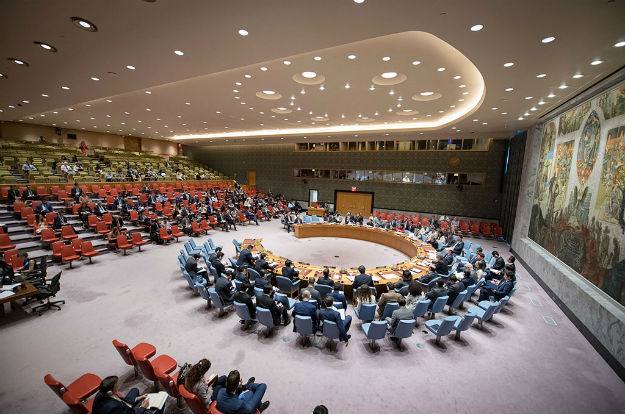
The United Nations Security Council has warned that terrorist groups operating from Afghanistan still pose a serious threat to regional and international security, putting the Taliban's de facto authorities on notice over their counterterrorism promises. Briefing the 15-member Council, its president for November, Sanita Pavļuta-Deslandes, said the Islamic State Khorasan Province (ISKP) had shifted its focus beyond Afghanistan, while the banned Tehreek-e-Taliban Pakistan (TTP) remained a serious threat.
Source: Khyber Chronicles
The briefing also highlighted the logistical and operational support provided to the TTP by the Afghan Taliban, and noted that the group had carried out several deadly attacks in Pakistan from Afghan territory. Council members from several countries warned that Afghanistan had once again become a hub for terrorist organisations operating freely under the Taliban's watch.
This Council session follows a separate warning a day earlier from the UN's counterterrorism chief, who said Daesh-K was rebuilding its capabilities and acquiring drones in Afghanistan. Read the earlier warning
What Pakistan told the Council
Pakistan's Permanent Representative to the UN, Ambassador Asim Iftikhar, told the Council there had been a sharp increase in terrorist attacks against Pakistan originating from Afghanistan. He said Afghanistan had once again turned into a safe haven for various terrorist groups and their proxy elements, and warned that Pakistan would take necessary defensive steps to safeguard its citizens and national sovereignty if the Taliban authorities failed to take concrete and verifiable action against terrorist organisations on their soil.
Source: TNN English
Pakistan's envoy told the Council that more than 4,700 Pakistanis had lost their lives to terrorism emanating from Afghanistan over the past three years, and that Pakistan had suffered more than 90,000 casualties in its fight against terrorism. He called for reforms to the UN's counterterrorism architecture, arguing that existing mechanisms, particularly the Security Council's sanctions regime, were not adequately equipped for the evolving threat.
China, the US, Denmark and Panama
China's envoy told the Council that terrorist groups operating in Afghanistan posed serious threats not only to Afghanistan but to neighbouring states, and warned that Islamic State Khorasan (IS-K) was expanding its capabilities to carry out cross-border attacks. China urged the Taliban administration to honour its counterterrorism commitments and called for the Balochistan Liberation Army (BLA) and its Majeed Brigade to be added to the UN sanctions list under Security Council Resolution 1267.
Source: Burak Digital
Denmark's representative, Christina Markus Lassen, stressed that the Taliban must play a meaningful role in dismantling terrorist networks, including al-Qaeda and the TTP, and ensure Afghan territory is not used to threaten other states. The United States representative urged the Security Council to formally warn the Taliban over the lack of progress on their counterterrorism pledges and called for accountability, while Panama's representative voiced concern over rising armed incidents linked to the TTP, Daesh and other militant groups.
Source: WE News English
What the UN monitors found
The warnings draw on the UN Security Council's Analytical Support and Sanctions Monitoring Team, whose 16th report on Afghanistan said the Taliban's claim that no terrorist groups operate in or from Afghan territory was 'not credible'. The report said the TTP had carried out numerous high-profile attacks in Pakistan from Afghan soil, and estimated the group's strength at around 6,000 fighters, mainly based in Khost, Kunar, Nangarhar, Paktika and Paktia provinces. It said more than 20 international and regional terrorist groups were operating inside Afghanistan, and estimated ISKP's strength at around 2,000 fighters.
Acting UN Under-Secretary-General for Counter-Terrorism Alexander Zuev told Russia's TASS news agency in an interview published on Thursday that Daesh-K was rebuilding its capabilities with modern equipment, including drones, and that the Afghanistan-based TTP maintained close ties to al-Qaeda, with its attacks directed primarily against Pakistan.
Source: Pakistan TV / TASS
What is solid
- The UN Security Council held a session on terrorist threats from Afghanistan, briefed by its November president.
- Pakistan, China, the US, Denmark and Panama all raised concerns about groups operating from Afghan soil.
- The UN monitoring team's report says the TTP has around 6,000 fighters in Afghanistan and calls the Taliban's denial 'not credible'.
What is only claimed
- The Taliban reject the UN's assessment and say no terrorist groups can operate freely in Afghanistan; Taliban spokesperson Zabihullah Mujahid rejected the counterterrorism chief's warning.
- The exact scale of Taliban support for the TTP is disputed: UN monitors describe tolerance or active support, while the Taliban deny it.
What happens next
The Council session adds to growing international pressure on the Taliban, but it produced no new resolution or sanctions decision. The listing of the BLA and Majeed Brigade sought by China would have to go through the Security Council's sanctions committee, and Pakistan's warning of defensive steps keeps the threat of further cross-border action open. For the region, the unresolved TTP question remains the sharpest strain on Pakistan-Afghanistan relations, with trade, border crossings and the safety of people on both sides caught in the middle.