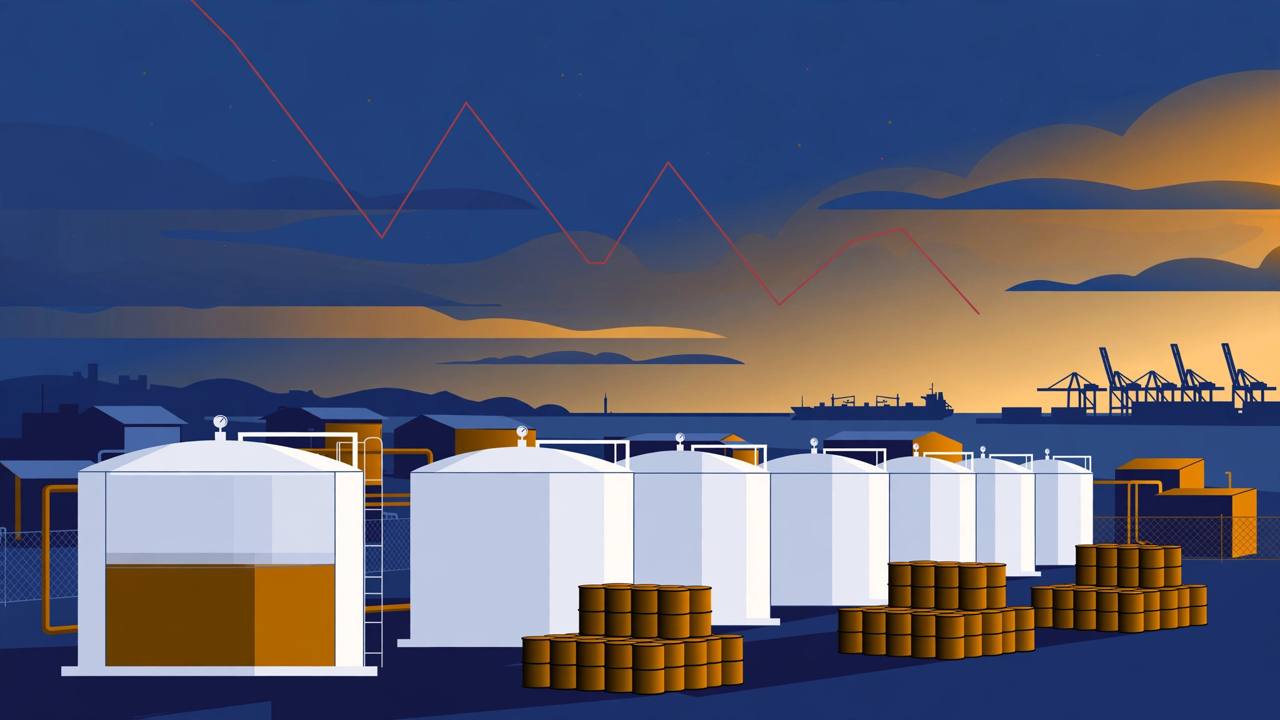
BEIJING / WASHINGTON, November 4 — Oil prices slipped in early trade on Wednesday even after industry data showed US crude stocks unexpectedly fell last week, Reuters reported, as investors awaited the results of the US midterm elections and their potential impact on peace talks in the Middle East. Brent futures fell 26 cents, or 0.25%, to $103.34 a barrel by 0157 GMT, and US West Texas Intermediate (WTI) crude futures fell 53 cents, or 0.55%, to $95.56.
Source: Reuters, November 4
The stock fall behind those prices was far larger than the market had braced for. Crude inventories fell by 5.27 million barrels in the week ended October 30, market sources said on Wednesday, citing data from the American Petroleum Institute — while eight analysts polled by Reuters had expected, on average, a rise of about 880,000 barrels. In its own detailed report on the same API release, OilPrice.com put the draw at 5.267 million barrels, following a draw of 2.031 million barrels the week before: American commercial tanks are emptying at a quickening pace, not filling.
Source: Reuters via market sources citing API; OilPrice.com API report
A strategic reserve nearing its floor
The draw is being cushioned by the emergency reserve itself. For the week ending October 30, 400,000 barrels of crude left the SPR to aid commercial inventories, bringing the total held in the reserve down to 282.2 million barrels — a level 432 million barrels shy of maximum capacity, OilPrice.com reported from the API data. The generally accepted operational minimum for oil in the SPR is between 250 and 300 million barrels, below which the reserve may find it difficult to pump and process oil efficiently — which means the United States is now holding its war-time cushion inside, or at the edge of, the zone where drawing it down further gets physically harder.
Source: OilPrice.com, API weekly report
The rest of the API picture was mixed. Gasoline inventories rose by 1.427 million barrels in the week ended October 30, after a 2.39 million-barrel rise the week before, and gasoline had been running 2% below its five-year average for this time of year on the latest EIA data. Inventories at Cushing, Oklahoma — the delivery hub for the WTI futures contract — gained 511,000 barrels after losing 453,000 the previous week. US production, meanwhile, rose to 13.992 million barrels per day in the week ending October 23, up from 13.269 million the week prior and 348,000 barrels per day higher than a year ago — record-level pumping that is still not refilling the tanks.
Source: OilPrice.com; Reuters
Why prices still slipped: the talks, not the tanks
In the previous session, Brent had eased more than 1% to settle at $103.60 a barrel — its lowest close in nearly four weeks — as traders weighed talks to end the wars in Ukraine and Iran, Reuters reported. That settle followed a violent intraday round trip on Tuesday, when Brent first rose above $107 after the US strikes on Iran's Qeshm Island and then slid as low as $101.32. Haitong Futures, in a note on Wednesday, called the inventory data “broadly supportive of oil prices”, noting diesel inventories remain tight while gasoline stocks rose more than expected — but support is not the same as a rally while a possible deal hangs over the market.
Source: Reuters, November 3-4
Tuesday's slide — Brent's fall from above $107 to $101.32 after the Qeshm strikes, Trump's Israel-funding line and Energy Secretary Chris Wright's assurance that oil flows were undisrupted — was reported in full by this desk earlier. Read the earlier report: Oil slides from above $107 to $101.32 after US strikes on Iran
The diplomacy behind the price is moving on two tracks at once. Vote counting was under way in the US midterms, which will determine whether Trump's Republican Party retains control of Congress for the rest of his second term, and markets remained on watch for progress in talks to end the US-Israeli war with Iran, as Qatar stepped up mediation efforts to avert an escalation of attacks after the elections, Reuters reported. A senior Iranian official told Reuters on Tuesday that Iran and the United States remain far from a deal to end their war. The United States, meanwhile, carried out “defensive” strikes on Iran's Qeshm island on Monday, targeting surface-to-air missiles used against US assets, a US official said on Tuesday; another official said the strikes appeared limited and did not signal a return to major combat operations.
Source: Reuters, November 4
President Trump himself publicly lowered the temperature on Tuesday. He told the Financial Times, in a six-minute telephone interview, that the United States had no immediate plans to strike Iran, Reuters reported. “We seem to be getting everything we want,” Trump said. That is the statement oil traders are pricing: a president saying the war has already delivered its leverage, a mediator in Qatar working on an interim deal, and an Iranian side saying — on the record to Reuters — that a deal is still far away.
Source: Trump to the Financial Times, via Reuters
The Gulf and India angle: why a thinner US cushion matters far from Texas
The Strait of Hormuz, at whose mouth Qeshm Island sits, carried about one-fifth of the world's oil supplies in peacetime. Every week that US commercial stocks shrink while that strait stays disrupted leaves the world market with less spare oil to absorb the next shock — a missile strike, a mined tanker, a failed talks round. For the lakhs of Punjabi and Indian workers in the Gulf, and for families in Punjab who live on their remittances and pay Indian pump prices set off these same benchmarks, the practical meaning is simple: fuel and flight costs stay hostage to a war now in its ninth month since the United States and Israel launched their attacks on Iran in late February, and the buffer that once softened its price spikes is measurably smaller than it was half a year ago.
Source: Strait of Hormuz share: Associated Press reporting; war start February 28: Reuters
What is solid
- US commercial crude inventories fell 5.267 million barrels in the week ended October 30, the API estimated — against a Reuters-polled expectation of a rise of about 880,000 barrels (API via Reuters market sources; OilPrice.com).
- The SPR fell another 400,000 barrels to 282.2 million barrels, 432 million below maximum capacity, and commercial stocks excluding the SPR have lost more than 64 million barrels over 29 weeks (API data via OilPrice.com).
- Brent fell 26 cents (0.25%) to $103.34 and WTI fell 53 cents (0.55%) to $95.56 by 0157 GMT on Wednesday, November 4, after Brent settled at $103.60 on Tuesday, its lowest close in nearly four weeks (Reuters).
- Trump told the Financial Times on Tuesday the US had no immediate plans to strike Iran — “We seem to be getting everything we want” — while a senior Iranian official told Reuters the two sides remain far from a deal (Reuters).
What is only claimed
- The size of the distillate draw is reported differently: market sources citing the API told Reuters distillate inventories fell 1.19 million barrels, while OilPrice.com's report on the same release put the fall at 270,000 barrels. Awaaz Punjab does not settle that gap; the official EIA figures are the arbiter.
- API numbers are an industry estimate, not the official count: the US Energy Information Administration's data, due at 10:30 a.m. EST (1530 GMT) on Wednesday, can revise the picture.
- Whether the SPR's 'operational minimum' bites at 250 or 300 million barrels is an industry rule of thumb reported by OilPrice.com, not an official US government threshold.
Three clocks run on Wednesday: the official EIA inventory report at 10:30 a.m. EST, which will confirm or contradict the API draw; the final US midterm results, which set Trump's room to escalate or settle; and Qatar's mediation, where both sides are reviewing proposals for an interim Hormuz deal. If the EIA confirms a draw anywhere near 5 million barrels while the talks stall, the market's cushion argument — thin US tanks, a reserve near its floor, a strait still disrupted — points prices back up. If a deal advances, the same thin cushion is why any breakdown would spike them faster.