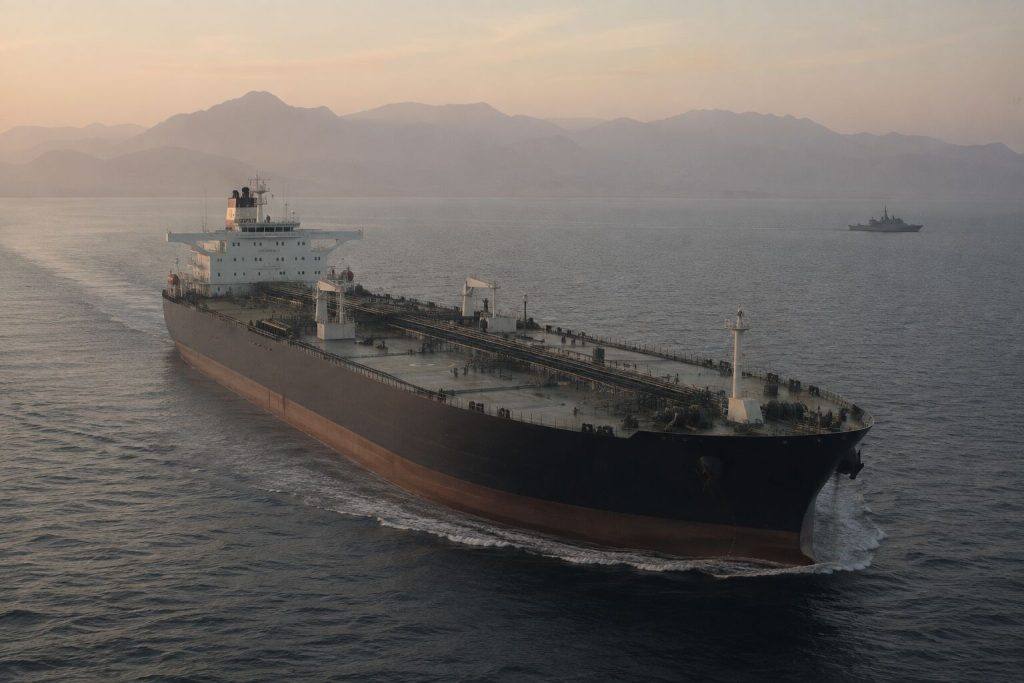
The US-China Economic and Security Review Commission has said China “remained a critical enabler of Russia’s war effort and Iran’s military capacity” in its 2026 annual report to Congress, released in Washington on Wednesday. Commission chair Randall Schriver told a press conference that Beijing has supported Iran’s military and economy throughout this year’s war, vetoed United Nations action on the Strait of Hormuz alongside Russia, and evaded sanctions to offer financial support to Russia and Iran.
Source: Europe Says
On Russia, the report concluded that Beijing indirectly supported Russia’s sanction-hit economy and its invasion of Ukraine by facilitating more than 90% of Russia’s imports of sanctioned technology and by buying its energy exports, largely in violation of US and allied sanctions — all while publicly saying it remained neutral in the conflict.
Source: Europe Says
On Iran, the report said China supplied Tehran with drone components and missile-fuel precursors and bought Iranian oil while “carefully avoiding direct involvement”. The findings land in the middle of the US-Iran war, which began with joint US and Israeli bombing of Iran in February, and as fighting around the Strait of Hormuz continues.
Source: Europe Says
In April, the report said, China joined Russia in blocking a Bahrain-led, US-backed UN Security Council resolution to reopen the Strait of Hormuz. And after a drone attack on the United Arab Emirates’ Barakah nuclear plant in May — launched from Iraqi territory and blamed on Iranian proxies — Beijing abstained on another resolution condemning Iran’s strikes on Gulf states. “These actions continue a well-documented pattern of China leveraging its veto power on the UN Security Council to help its partners evade accountability,” the report said.
Source: Europe Says
Hong Kong: the money route
The report said Hong Kong-based companies handled more than half — $4.8 billion — of the $9 billion in illicit Iranian payments identified in US financial data in 2024. Yaani, lagbhag ₹42,000 crore of the ₹80,000 crore total moved through Hong Kong entities. Iran has also used Hong Kong entities to convert oil proceeds into cryptocurrency, laundering millions before US authorities could act, the report said. The commission urged Congress to impose “primary money laundering concern” measures on Hong Kong, including cutting off US correspondent accounts for Hong Kong crypto providers thought to facilitate Iranian transactions, and to publish an annual Hong Kong business advisory on sanctions-evasion risk.
Source: Europe Says
The report also laid out China’s own exposure. Before the Iran war, roughly 40% of China’s crude oil and 30% of its liquefied natural gas transited the Strait of Hormuz, and the wider region supplied 44% of its $296 billion in crude imports last year — yaani, lagbhag ₹26 lakh crore. When oil prices roughly doubled to $112 a barrel in April, Beijing cut imports by nearly a quarter, drew a million barrels a day from its stockpiles and leaned further into coal and renewable energy. The report said China can cut oil imports abruptly “with a negligible impact on its economic activity”, and raised the possibility that Beijing is using the Hormuz experience as a “live experiment” in reducing its vulnerability to a seaborne oil cutoff in case of a conflict over Taiwan.
Source: Europe Says
Beyond the war, the commission warned that China is building parallel commodity benchmarks priced in its own currency, the renminbi, which “could be used to further facilitate sanctions evasion”. It flagged the UAE as a potential link between Gulf commodity trade and the renminbi through the China-led, blockchain-based mBridge payments platform. China held its Eagles of Civilization air exercise with Egypt in August and September, and Egypt’s Arab Organization for Industrialization signed an agreement with Norinco, China’s largest state-owned land-weapons maker, to produce tactical drones. In January, China launched Algeria’s AlSat-3A remote-sensing satellite, and it has financed port infrastructure from Djibouti, where it keeps a military base, to Pakistan, Sri Lanka and Bangladesh.
Source: Europe Says
On technology, the report said China’s military is actively seeking Nvidia’s most advanced chips for AI-enabled weapons despite US export restrictions, and that Chinese developers are distilling top US models to produce cheap, open-weight alternatives aiming to become “the global default” abroad. Export controls remain the “principal tool” to slow China’s progress, the commission said. Vice-chair Mike Kuiken warned that competition with China “is no longer confined to individual technologies or sectors”, adding that “cheap, good enough Chinese models are spreading through American products. Often users have absolutely no idea.” The report also said Beijing is intensifying pressure on Taiwan and moving toward a 2027 readiness milestone for a potential Taiwan contingency, and it presented 30 recommendations to Congress, including measures to strengthen US cybersecurity, cut dependence on Chinese supply chains and improve Taiwan’s resilience.
Source: QNC News
On shipping, the commission urged Congress to treat China’s detentions of Panama-flagged commercial ships through port-state-control inspections as “economic coercion”, and to direct the US Federal Maritime Commission to investigate the pattern and report its findings within 90 days.
Source: Seatrade Maritime
The findings follow a five-day trip to China in July by a five-member commission delegation — the first such visit since the Covid lockdowns — to Beijing, Hangzhou and Shanghai. Schriver said Chinese interlocutors were “outwardly confident” and spoke as if “ready for a G2-type arrangement”, but added: “We saw ghost cities as we took the train from Beijing to Hangzhou. We heard stories about youth unemployment.” Requests to meet tech companies were denied, he said, and the delegation was told: “Our commission is a scary commission.”
Source: Europe Says
The report was released as US President Donald Trump met Chinese President Xi Jinping and Russian President Vladimir Putin in Shenzhen for a first-ever trilateral summit on the sidelines of the APEC meeting. Read: Trump, Xi and Putin hold first trilateral summit in Shenzhen
What happens next: the report’s 30 recommendations are now before Congress, including action on Hong Kong money flows, semiconductor controls and Taiwan’s resilience. For the lakhs of Indian and Punjabi workers in the Gulf, the findings matter directly — the Strait of Hormuz carries their region’s oil, jobs and flights, and the commission’s warning is that the strait remains the flashpoint where the Iran war, energy prices and great-power rivalry meet.