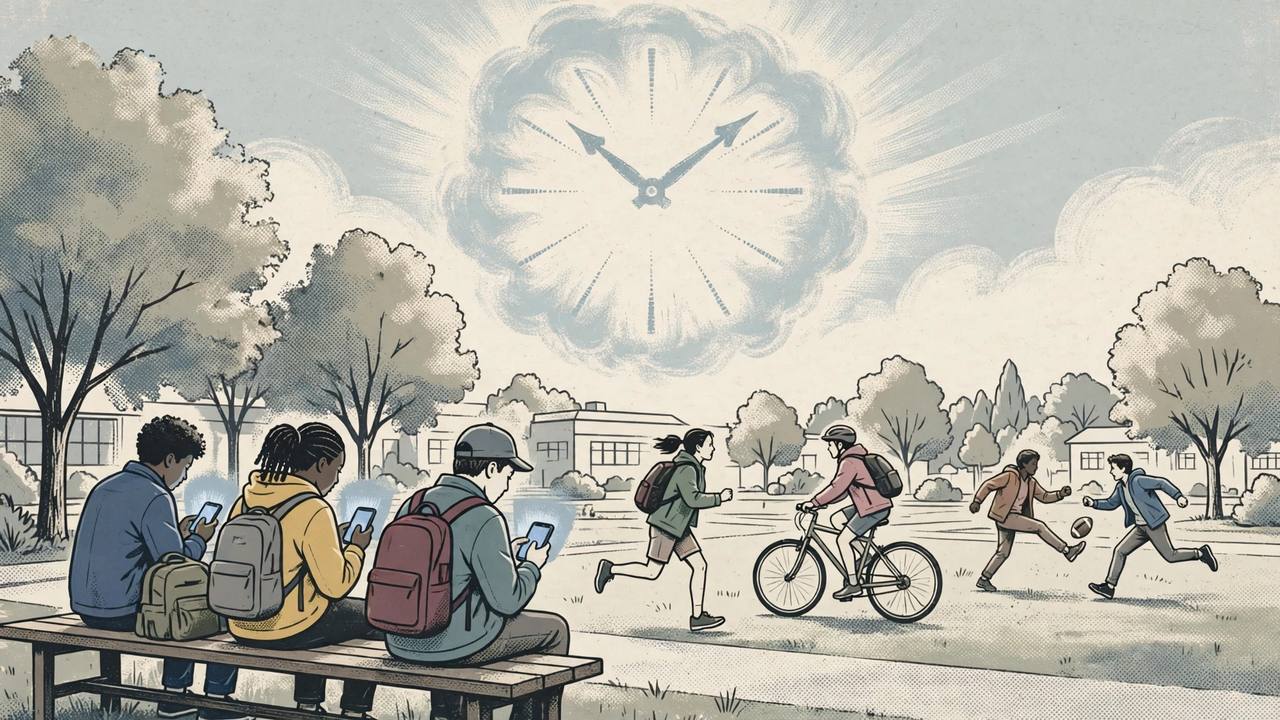
One in four adolescents worldwide reported not getting at least 60 minutes of physical activity on any day in the previous week, according to new global estimates released by the World Health Organization (WHO) on Wednesday, November 4 — a finding the agency says shows 15 years of almost no progress in getting young people moving. The figures cover young people aged 11 to 17.
Source: UN News
That amounts to some 240 million young people aged 11 to 17 who reported not completing at least 60 minutes of moderate-to-vigorous physical activity on a single day, UN News reported. On average, adolescents reported being active on just 2.7 days a week, and only 14 per cent reported being active on all seven days.
'Almost no progress' in 15 years, WHO chief says
'For 15 years, the world has made almost no progress in getting young people moving, and girls are being left furthest behind,' said WHO Director-General Tedros Adhanom Ghebreyesus. 'The answer is not to tell adolescents to try harder. It is to build schools, streets and communities where moving, playing and being active is safe, easy and normal.'
Source: UN News
The study, titled 'A generation missing out: Global trends in adolescent physical activity, 2010-2025', was published in The Lancet Global Health and draws on 389 population-based surveys from 140 countries and territories, involving more than 3.2 million adolescents, AFP reported via MedicalXpress. Health Policy Watch said the data cover some 60 per cent of adolescents globally and that trends have stayed about the same since activity was first measured in 2010 and again in 2016. The pooled analysis is by Tessa Strain and co-authors.
Source: AFP via MedicalXpress
According to the report, 86 per cent of adolescents reported fewer than seven active days in 2025 — a figure that has not changed since 2010. No country is on track to meet the global target of a 15 per cent relative reduction in physical inactivity by 2030, and without accelerated action, adolescent inactivity is projected to remain largely unchanged for the rest of the decade, the report warns.
Girls left furthest behind, and activity falls with age
The gender gap remains strikingly persistent, WHO said: some 28 per cent of girls reported no active days, compared with 22 per cent of boys, while only 11 per cent of girls reported being active every day, compared with 17 per cent of boys. Girls were less active than boys in almost every country and every WHO region. Activity also falls as teenagers grow older: 11-year-olds reported an average of 4.6 active days a week, while 17-year-olds reported 3.6.
Differences between countries are stark: in some, just 4 per cent of adolescents reported no active days, while in others the figure exceeded 40 per cent, UN News reported. In the United Kingdom, only one in six adolescents — 17 per cent — is active each day, with 13 per cent of teenage girls and 21 per cent of boys active daily, according to figures reported by Great Yorkshire Radio. The study's lead author, Dr Tessa Strain of the University of Edinburgh, said: 'We see pronounced inequalities in the UK: girls are much less active than boys, and older teens are less active than younger teens.'
Source: Great Yorkshire Radio
Why it matters, and what WHO wants done
Physical inactivity is a major risk factor for heart disease, type 2 diabetes and some cancers, making it critical to help young people develop active habits early in life, WHO said. There is no single explanation for the lack of progress: transport patterns, access to safe public spaces, opportunities for safe walking and cycling, school environments, affordability, social norms and increasingly screen-based lifestyles can all shape adolescents' opportunities to be active.
WHO called for stronger action across the education, transport, urban planning, sport and health sectors, alongside efforts to tackle the barriers faced by girls — including promoting physical activity in schools and investing in safe walking and cycling routes. In a parallel response, the World Federation of the Sporting Goods Industry said 83 sporting goods companies and federations have signed an open letter committing the industry to collective action on youth physical activity, according to Footwear News reporting cited on November 4.
The activity estimates were one of several global WHO reports released on Wednesday, alongside the agency's new climate-and-health analysis. Read: WHO says six climate actions could save 16 million lives
What happens next
The report lands days before governments gather for the COP31 climate conference, where WHO is also pressing its health agenda, and it sets a hard baseline for the 2030 target: on current trends, WHO warns, no country will hit the 15 per cent reduction in adolescent inactivity, and levels will stay largely flat for the rest of the decade unless schools, cities and sports systems move faster.