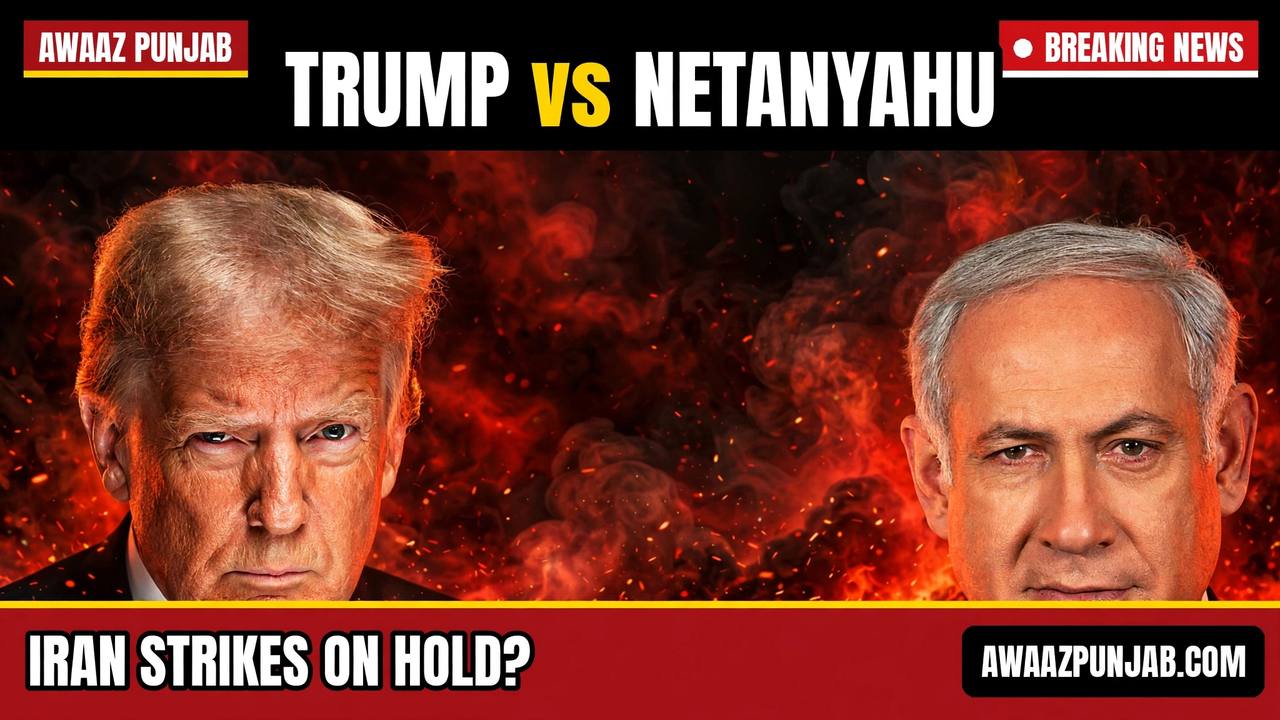
This story follows our November 19 report that Prime Minister Benjamin Netanyahu was pressing President Donald Trump to join a four-to-seven-day air campaign on Iran. Trump has now said he will not decide until after the new year. Read the earlier story
US President Donald Trump has said he will not decide on renewed large-scale military strikes against Iran until after the beginning of 2027, pushing the decision past the end of the year even as Israel presses Washington to act sooner.
Source: Axios
"I am not rushing into any decision [on Iran]. We will see what happens after the beginning of the year," Trump told the news outlet Axios in a telephone interview aboard Air Force One on Thursday, as he flew back from the APEC summit in China. He gave the same message to Reuters: "Well, I'll talk to you about it after the beginning of the year... We've got time." On Fox News he said: "We'll see what happens after January 1."
The delay is a setback for Israeli Prime Minister Benjamin Netanyahu, who is pressing the US to join a joint air campaign lasting four to seven days against Iran's missile capabilities and other strategic targets, according to the New York Times. Netanyahu has sent Mossad director Roman Gofman to Washington to brief US officials on Israeli intelligence that alleges Iran is pursuing chemical and biological weapons research — a claim Iran calls baseless, and which some US officials have described as "driven by an agenda", the Times of Israel reported.
The nuclear warning
Trump told Reuters he was keeping the military option open because of Iran's nuclear programme. "Because you can't let Iran have a nuclear weapon," he said. He also raised a newer allegation, saying there was "indication that Iran is looking at gases, looking at bio... the biological weapons", and warned: "if it does happen, we wipe them out."
The White House has asked the Pentagon and US intelligence agencies for detailed assessments of the strike options and of how Iran would be likely to retaliate — above all, attacks on oil and gas infrastructure across the Gulf states. The concern is shared by Gulf governments, which have warned Washington that renewed war could devastate regional energy infrastructure.
For now, the administration is leaning on economic pressure instead: a naval blockade of Iran and tightening sanctions. US Secretary of State Marco Rubio last week set out a third path — neither a new war nor a peace deal — under which Washington sustains the pressure campaign while diplomacy stays open.
Iran has rejected the waiting game. "We do not accept a situation of neither war nor peace," the Revolutionary Guards' spokesman Hossein Mohebbi told Press TV on Thursday, warning that any US action would be met with "at least three times as much in response". The Guards' commander-in-chief separately claimed Iran controls waters 500 km beyond the Strait of Hormuz.
The standoff follows months of fighting. The US and Israel have struck Iran — including the island of Qeshm — since the war began in February, while Iran has hit US military facilities in Bahrain and Kuwait and stepped up attacks on shipping through the Strait of Hormuz, through which much of the world's oil passes. About one vessel a day has been hit on average in recent weeks, keeping oil prices, freight and insurance costs elevated.
Lakhs of Punjabi and Indian workers live and work in the Gulf states, and any Iranian retaliation against Gulf energy sites would put jobs, flights home and remittances at risk. Trump's delay gives the region a breather — but with no ceasefire and no deal, the danger has only been postponed, not removed.
What happens next
Trump has said he will revisit the question after January 1. Until then, the blockade and sanctions continue, the Pentagon's retaliation assessments will land on his desk, and Israel will keep pressing for a decision.