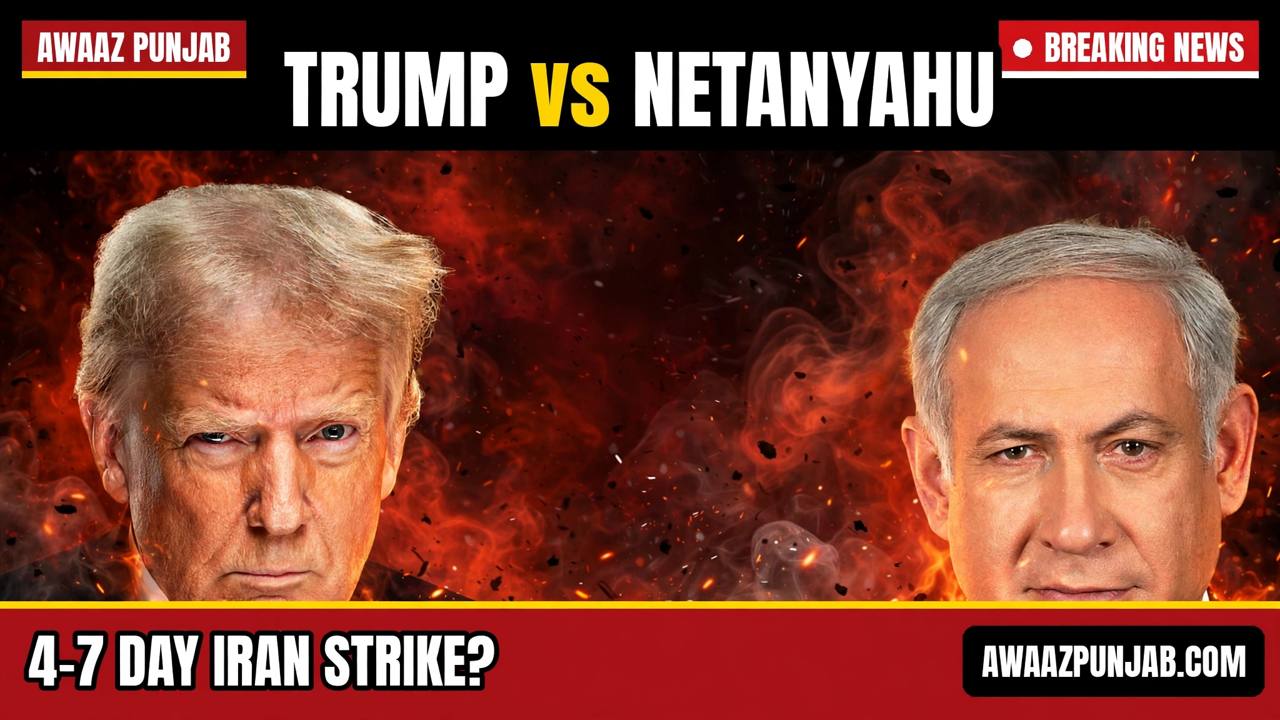
US President Donald Trump is weighing another round of extensive military strikes against Iran, while Israeli Prime Minister Benjamin Netanyahu is pressing Washington to join Israel in a four-to-seven-day air campaign, The New York Times reported on Wednesday, citing American and Israeli officials briefed on the discussions.
Source: The New York Times (via The Jerusalem Post)
According to the report, Trump has not made a decision. The proposed campaign would target Iran's rebuilt missile and drone arsenals, with possible additional targets including Islamic Revolutionary Guard Corps command facilities, energy infrastructure and nuclear sites, officials told the newspaper.
Hours before the report, Trump told Fox News there was a "huge indication" that Iran was exploring chemical and biological weapons, warning Washington would "wipe them out" if Tehran struck the United States. Read the earlier story
The push is built on fresh Israeli intelligence warnings that Tehran has made progress in rebuilding its missile and drone stockpiles and is advancing chemical and biological weapons programmes, the report said. It also said Trump is weighing what officials described as a window of opportunity created by the substantial American military firepower currently deployed in the Middle East.
The discussions intensified last week, when Mossad director Roman Gofman travelled to Washington for meetings with senior administration officials, including CIA Director John Ratcliffe. The head of Israeli military intelligence, Maj. Gen. Shlomi Binder, has also argued for resuming military operations in talks with his American counterparts, according to the report.
A senior Israeli official disputed the characterisation that Netanyahu had pressured Trump to act. A spokesman for the prime minister said Netanyahu had always worked to "safeguard the security" of Israel.
Divisions inside the Trump administration
The possibility of another major campaign has exposed significant disagreements inside the administration, the report said — over both the reliability of the intelligence and the wisdom of renewed strikes. Some officials questioned whether the emerging threats justify a new offensive, particularly after the Republican Party's defeat in the midterm elections, and after a war that began nearly eight months ago has pushed up prices without delivering the swift victory Trump initially promised.
The newspaper also reported that Trump recently instructed Vice President JD Vance to abandon efforts to reach a negotiated settlement with Tehran, while increasingly favouring sustained economic pressure intended to force Iran to relinquish its nuclear programme. One US official argued, however, that additional major military operations were unnecessary because the economic pressure campaign had already severely weakened Iran. Trump rejected the suggestion that Vance had been sidelined over disagreements, saying: "No, no, he's doing a very good job."
Trump himself left both paths open in the Fox News interview. "They want to make a deal, but I want a deal that can be lasting," he said, adding that contacts with Tehran were continuing. Asked whether he would keep American troops in the region until an agreement was reached, he replied: "Yeah, I'm going to finish it off. Yeah, soon. I mean, one way or the other, we'll finish it off."
Allies push to avert a wider war
Meanwhile, American allies in the Middle East have intensified a diplomatic push to prevent a resumption of all-out war, Reuters reported, citing four regional officials briefed on the matter. The diplomacy comes as the fighting has already widened this week: the United States struck a missile launch site on Iran's Qeshm Island on Tuesday, and Iran answered by targeting a US base in Kuwait and launching further attacks on Bahrain on Wednesday.
Iran's retaliation on Kuwait and Bahrain, and the US strike on Qeshm Island that preceded it, are covered in our earlier reports. Read the Kuwait and Bahrain report
For the lakhs of Punjabi and Indian workers living in the Gulf, the stakes are direct: any new round of strikes would raise fresh questions over flights, workplace safety and remittances, on top of a war that has already disrupted shipping through the Strait of Hormuz. Oil markets, which have swung with every development in the war, were steady on Thursday, with Brent crude at $92.12 a barrel and US crude at $83.17.
What happens next now turns in part on the trilateral meeting in Shenzhen, China, where Trump is due to sit down with Chinese President Xi Jinping and Russian President Vladimir Putin on Thursday. For now, the central question remains whether Trump will embrace Israel's proposal for another concentrated air campaign — or keep pursuing an agreement through economic and diplomatic pressure. No decision has been announced.
What is solid
- The New York Times reported on Nov 18, citing US and Israeli officials, that Trump is weighing new extensive strikes and Netanyahu is pressing for a four-to-seven-day joint campaign.
- Trump has not made a decision, according to the officials cited.
- Mossad director Roman Gofman met CIA Director John Ratcliffe in Washington last week.
What is only claimed
- Whether Iran is advancing chemical and biological weapons programmes — the claim rests on intelligence warnings cited by officials, with no public evidence presented.
- Whether Netanyahu "pressured" Trump — a senior Israeli official disputed that characterisation.
- Whether a new offensive is justified — officials inside the Trump administration are divided on the intelligence and the consequences.