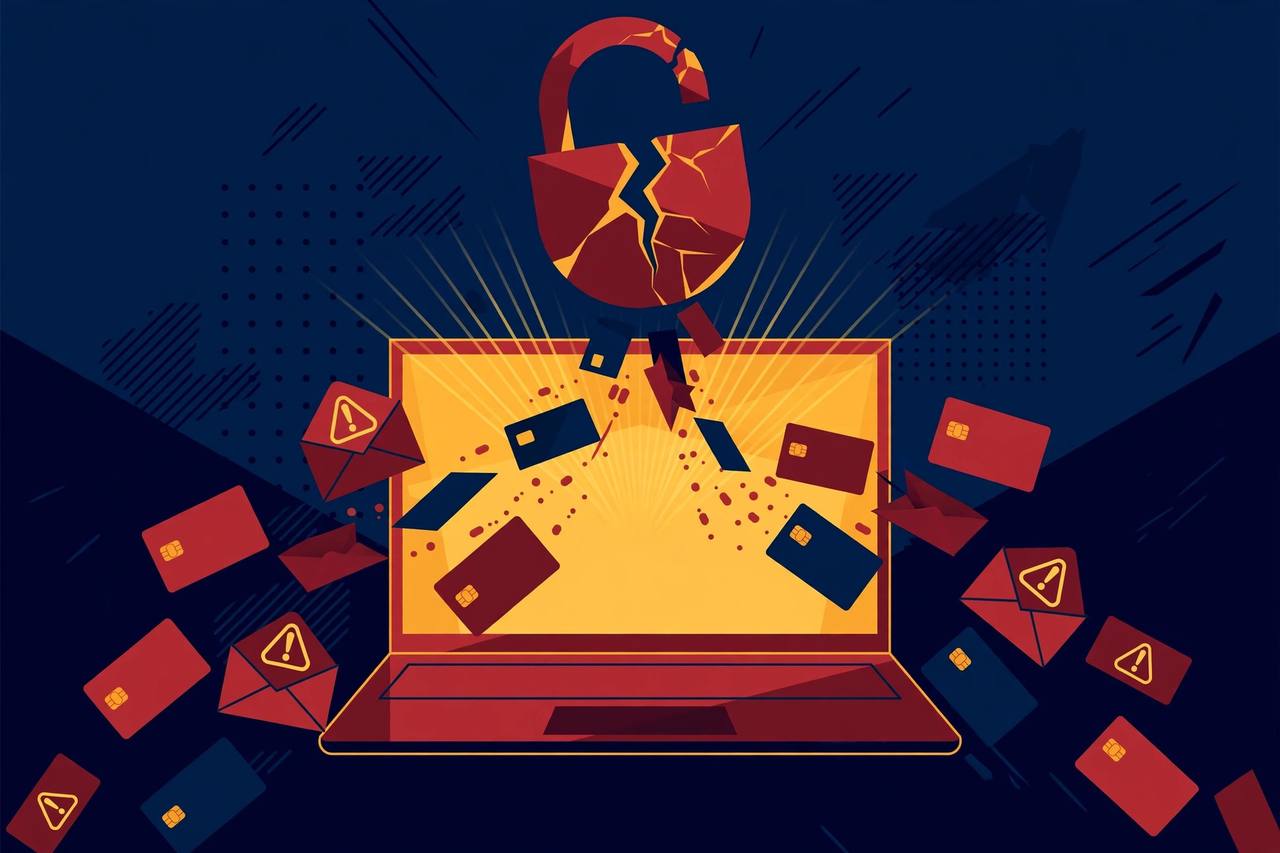
The extortion group n0n has published data it claims to have stolen from JPMorgan Chase, Visa and Mastercard, after the 48-hour deadline it set expired. The leak, published on November 19, is the first publication of stolen data in this campaign since n0n named 59 companies on its dark-web leak site on November 16.
Source: Neowin
All three companies say the data came from outside vendors that provide them services — not from their own systems — and that no card numbers, passwords or Social Security numbers were taken. The immediate danger, they and security researchers say, is phishing: criminals can now send fake "breach notice" emails using victims' real names and card programmes.
Source: McAfee
What was leaked
Researchers at Cybernews who reviewed the leaked files reported about 16,000 customer email addresses, some with phone numbers and JPMorgan Chase account identifiers, plus more than 100 employee email addresses. The file itself is only 502 kilobytes, which raises the question of whether it is the full haul or only a sample.
Source: Neowin
The Chase records appear tied to the bank's invitation-only Reserve credit-card programme, which generally requires at least $10 million in assets under management. The leaked Visa material included data on more than 6,000 premium cardholders, according to Cybernews.
Source: CryptoNews
What each company said
In a statement posted on X on November 19, JPMorgan Chase said: "We have learned that third parties who provide services to the firm were the target of a cyber attack. Based on our investigation so far, we believe the attackers accessed certain marketing data held by those vendors, which may include some customer names and email addresses." The bank said there has been no disruption to its services, the incident is not connected to a service interruption customers experienced earlier in the week, and it will contact affected customers directly and offer complimentary credit monitoring where appropriate.
Source: Neowin
Visa said the incident originated with a third-party service provider in the Asia-Pacific region, that its own systems were not compromised and that there is no indication payment card numbers were exposed. Mastercard said a limited number of email addresses from a small subset of cardholders in a specific benefit programme were exposed, that there is no impact on its payment network, and that the exposure has been contained.
Source: McAfee
On November 16, n0n named 59 companies — including Visa, JPMorgan, Walmart, Eli Lilly and Procter & Gamble — on its leak site, but at that point none of them had confirmed a breach. Read our earlier report for the full list and background. Read the earlier report
Who is n0n — and what happens next
n0n is a relatively new cybercrime group that first appeared in September 2026. It steals data, lists its victims on a dark-web leak site and threatens to publish unless a ransom is paid. Of the 59 companies it named, 46 had sat on the site since November 9 as numbered placeholders before n0n swapped the numbers for names and started the 48-hour countdown.
Source: McAfee
Do not click links in emails or texts claiming to be breach notices. Check your account only in your bank's own app or website, watch for phishing messages that use your real name, and take up the free credit monitoring if your bank offers it.
What happens next: the three companies have not named the vendor or vendors that were breached, and have not said when the vendor breach happened. Security researchers expect n0n to publish data on more of the 59 companies if its demands are not met, and regulators and law enforcement are likely to press the companies and their suppliers for a fuller account of what was taken. For ordinary customers the practical advice stays the same: no card numbers were reported taken, but the leaked names and email addresses make targeted phishing the real risk in the days ahead.