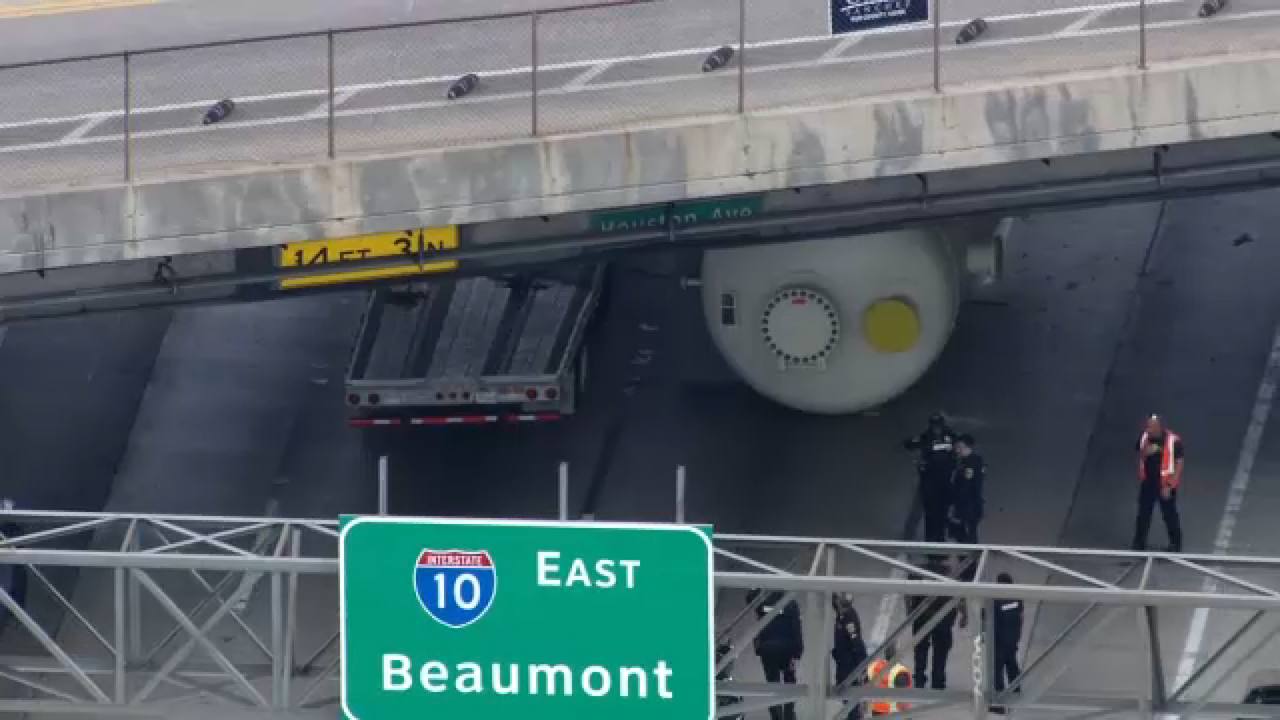
Texas highway officials say oversized trucks are hitting the state's bridges far more often than the official record shows — and many of the collisions are never reported at all. In a new report, the Texas Department of Transportation (TxDOT) says routine bridge inspections keep turning up damage from impacts nobody reported, including dozens of cases in the last two years.
Source: TxDOT
The Houston Avenue bridge: hit again and again
The worst repeat offender in the report is a bridge every Houston trucker knows: the Houston Avenue bridge near Interstate 10. TxDOT says it has been hit six times so far in 2026 — and 16 times since January 2025. The low-clearance crossing has repeatedly shut lanes on the I-10 Katy Freeway, one of the busiest freight corridors in Texas, while crews inspected the damage.
Source: TxDOT
The bridge's days are now numbered. TxDOT says it is tentatively scheduled for demolition beginning in early 2027, with the rebuild finished by mid-2028. The project will demolish and reconstruct the bridge so the roadway runs underneath I-10, removing the low-clearance conflict that has caught so many oversized loads.
How a bridge strike happens
Bridge strikes typically happen when a truck or its load is taller than the clearance under a bridge. TxDOT says the risk rises sharply when drivers do not follow their approved route or travel without the required permit. Loads that exceed legal size or weight limits generally need an oversize/overweight permit and an approved route from the Texas Department of Motor Vehicles (TxDMV) before travelling on state roads.
Following the approved route matters because not every road and bridge is built to take every oversized load. A wrong turn onto a low-clearance crossing can end with a trailer wedged under a bridge, lanes closed for hours, and a repair bill that follows the driver and the carrier.
What happens after a strike
When a strike is reported, TxDOT crews must first work out how bad the damage is and whether the bridge can safely stay open. In the Houston area, inspectors are sent to photograph the damage and share their findings with local administrators and bridge engineers. Maintenance teams set up traffic control, and engineers may visit the site for a closer look from a bucket truck.
"Engineers determine which bridge beams were damaged, the type and extent of the damage, and what repairs are necessary. Depending on the severity and location of the impact, TxDOT may close shoulders or additional lanes while crews assess the structure and develop a repair plan." — Ryan Eaves, field operations section director, TxDOT Bridge Division
Damaged concrete beams need special attention. Crews remove loose concrete and may wrap the beam in chicken wire and a tarp so no more concrete falls onto the traffic below until a permanent repair is done. For steel beams, crews also check the concrete connected to the bridge deck. Major repairs on heavily travelled bridges often have to happen at night or on weekends, which pushes costs up.
And the bill does not simply vanish. When a driver is responsible for a strike, TxDOT can pursue a liability claim to recover the taxpayer money spent on the collision — a direct financial risk for drivers and carriers who skip permits or ignore their route.
Technology, and what comes next
TxDOT districts are trying to cut repeat strikes. Some have installed over-height detection systems that warn drivers when their vehicle or load is too tall for the bridge ahead — in the Odessa area, the systems are in place at 19 structures. The technology only helps if drivers see the warning and act on it, TxDOT notes. For bridges that keep getting hit, the agency may strengthen or replace the structure or raise its clearance.
The Fort Worth area recorded the most reported strikes last year, with eight. Statewide, the pattern is the same: the strikes TxDOT knows about are only part of the picture, because the damage inspectors keep finding shows many more go unreported.
For the Punjabi truckers who run Texas freight every day — and for every driver hauling an oversized load through Houston, Dallas–Fort Worth or the Permian Basin — the message from TxDOT is blunt: know your vehicle's height, get the permit, and stay on the approved route. One wrong turn under a low bridge can cost hours on the road, a damaged trailer, and a liability claim from the state.
What happens next: the Houston Avenue bridge is set for demolition in early 2027 and a rebuild finishing in mid-2028; TxDOT inspections continue to log suspected unreported damage across the state; and the agency is urging drivers to check their height and permits through TxDMV before every oversized run. The findings were first published by TxDOT on November 17 and widely reported by trucking and Houston media on November 24.
Source: CDL Life