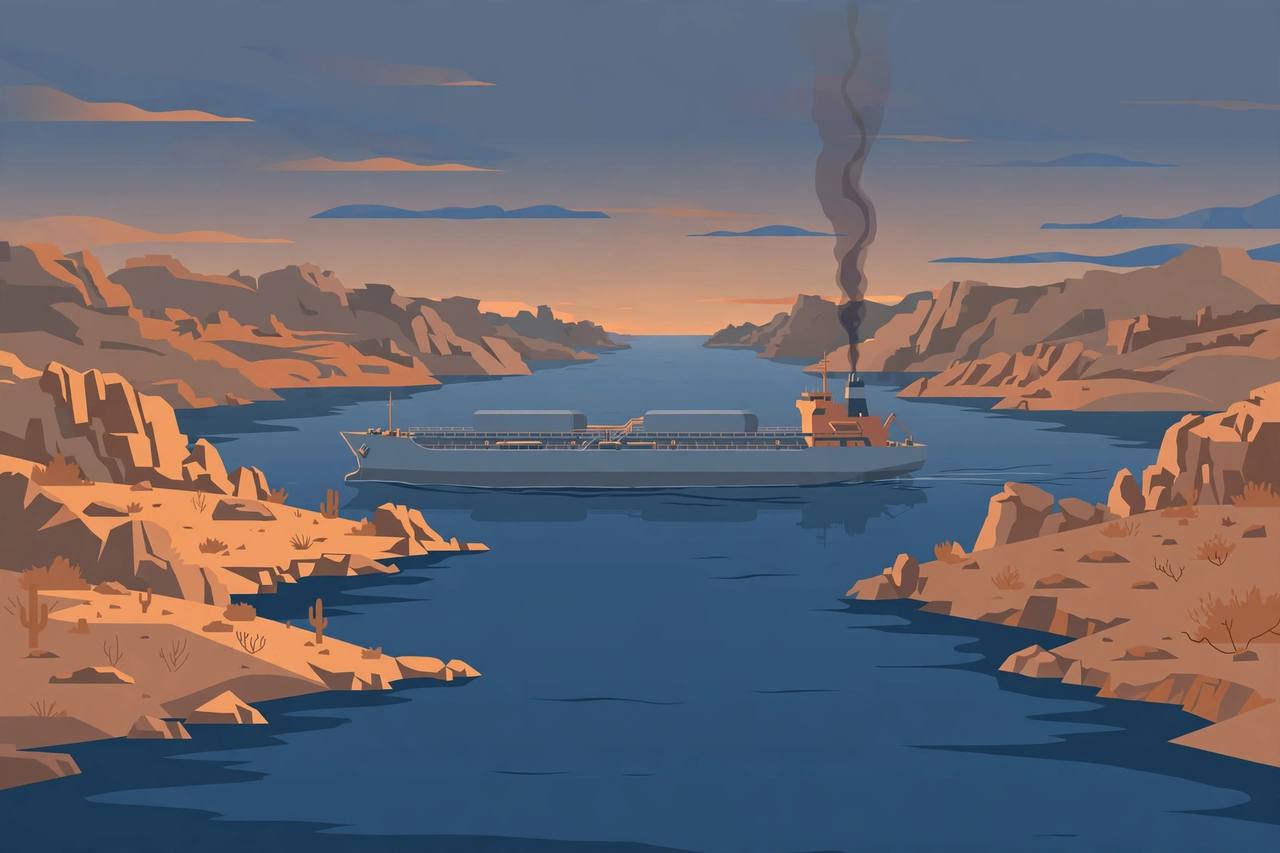
An oil tanker sailing out of the Strait of Hormuz was struck by an unknown projectile on Wednesday, 18 November, the British maritime agency United Kingdom Maritime Trade Operations (UKMTO) said. The projectile hit the vessel's engine room about six nautical miles north of Khasab, Oman, at around 16:45 GMT. The crew is safe and all members have been accounted for.
UKMTO said it received a delayed report of the incident from local authorities. The agency did not name the vessel, its flag, its owner or its cargo, and the extent of the damage and any environmental impact remain unknown. No party has claimed responsibility, and it is not known what fired the projectile or from where it was launched.
Latest in a string of attacks on shipping
The strike is the latest in a near-daily series of attacks on commercial shipping in the strait since the United States and Israel launched their war on Iran on 28 February 2026. The war has killed more than 2,000 people, mostly in Iran, according to reports from governments and state media.
On Monday, 16 November, the Panama-flagged LPG carrier Tara Gas was attacked about seven nautical miles north of Khasab and disabled with an engine-room fire. A second attack the next day forced its crew to abandon ship. Omani authorities rescued 24 of the vessel's 25 crew members; one Indian seafarer remains missing.
Hours earlier, on the evening of 17 November, a vessel commercially managed by the UAE's ADNOC Logistics & Services was attacked in the strait. The company said one crew member was missing and 11 were injured. Maritime security firm Vanguard Tech identified the vessel as the Liberian-flagged product tanker Navig8 Messi.
The attacks on shipping have run alongside direct military exchanges. On 17 November, US fighter jets struck an Iranian Revolutionary Guard missile launch site on Iran's Qeshm Island, in the strait, in what a US military official described as a defensive response after Iranian forces fired on an American aircraft. On 18 November, Bahrain and Kuwait said their air defences had intercepted attacks, and Iran's army said it had targeted US drone and missile installations at Kuwait's Ali Al Salem base.
The New York Times reported on 18 November that President Donald Trump is weighing a new round of extensive strikes on Iran but has not made a final decision, citing US and Israeli officials briefed on the discussions. The report said Israel's prime minister is pressing Washington to join a four-to-seven-day air campaign, and that US-based B-1 and B-2 bombers have been on 96-hour notice for possible Iran missions.
Oil prices and what happens next
Brent crude, the global oil benchmark, was trading above $100 a barrel in Asia on Tuesday, at $103.69, after falling more than 10% on Monday when Mr Trump delayed fresh strikes and spoke of a possible deal with Tehran. The strait is the world's most important oil shipping chokepoint, and repeated attacks have pushed up shipping and insurance costs.
Qatar, which has been mediating between Washington and Tehran, said on 17 November that it was continuing its efforts, with a meeting planned with Iranian representatives. Iran's parliament speaker has said no negotiations have been held with the US, while a senior Iranian official told CBS News that points received from the US through mediators were being reviewed. No further statement on this specific tanker incident had been reported from Washington or Tehran at the time of publication.