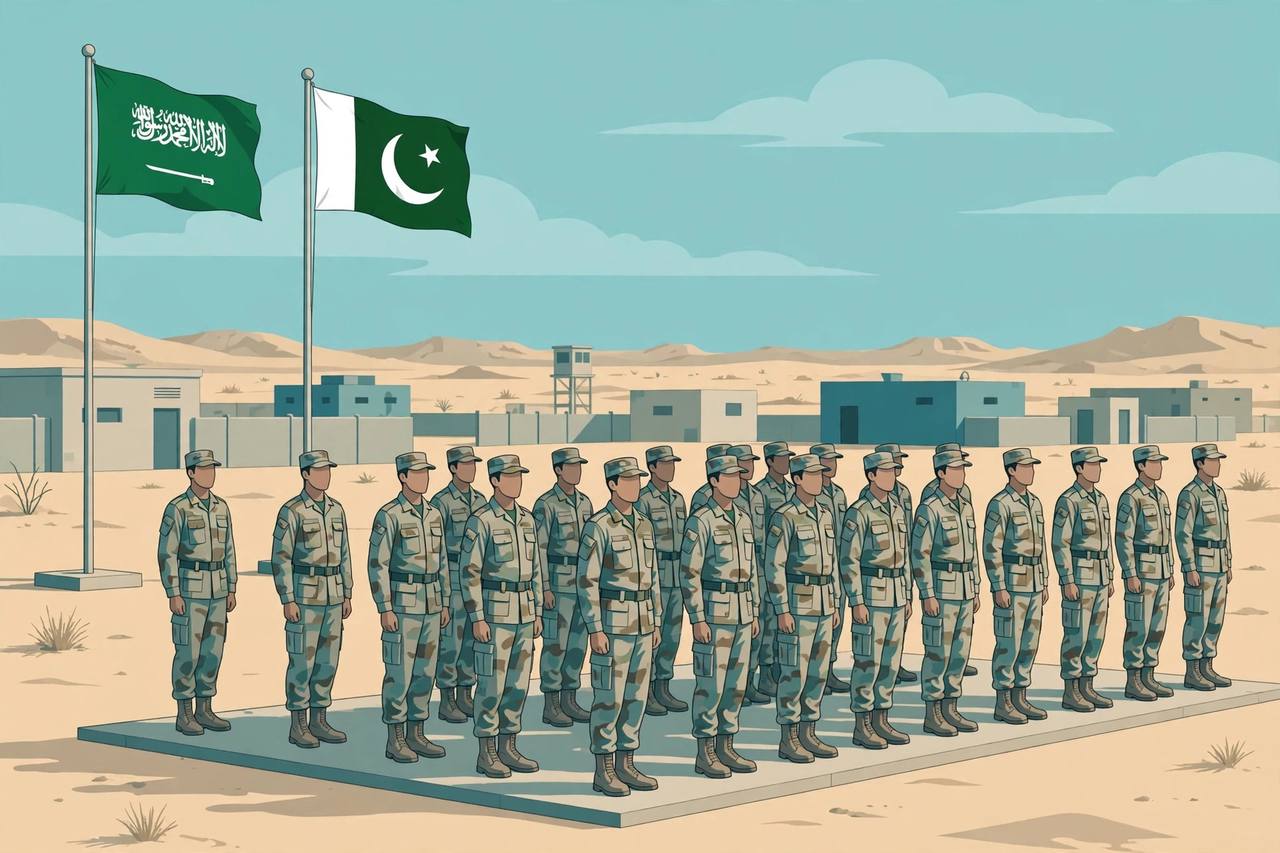
Pakistan has agreed to rapidly deploy additional military forces to Saudi Arabia under a defence arrangement that was activated for the first time on Monday, according to a Reuters report — a major shift from its 2015 decision to stay out of the Saudi-led intervention in Yemen.
The move comes as Saudi Arabia faces escalating attacks by Yemen's Iran-backed Houthi group, which has struck Riyadh airport and the PIF Tower in the capital's financial district and claimed attacks on oil facilities in recent weeks. The defence arrangement, known as the Mecca Joint Defence Agreement, was signed in August by Pakistan, Saudi Arabia and Türkiye, and treats an attack on one member as an attack on all three.
Reuters reported that the arrangement was activated for the first time on Monday, but the report did not say how many troops would be sent, what their missions would be, or how long they would stay. It remains unclear whether Pakistani troops would take part directly in operations against the Houthis.
No vote in parliament
The deployment was agreed without a parliamentary vote, the report said, underlining the growing influence of Pakistan's military over foreign policy under Field Marshal Asim Munir, who now commands all three services. Pakistan's information ministry said the alliance had "gone through all necessary government procedures" but did not clarify whether the cabinet or parliament had been involved.
Pakistan's military spokesperson, Lieutenant General Ahmed Sharif Chaudhry, told the Saudi newspaper Asharq Al-Awsat last week that arrangements were being made for the rapid deployment of agreed forces inside Saudi Arabia whenever required, and that Pakistan's commitment to the kingdom's security was "absolute and non-negotiable". He confirmed Pakistani troops were already stationed in the kingdom in defensive support and training roles.
Troops already there
Pakistan's military presence in Saudi Arabia is not new. Reuters reported that about 8,000 Pakistani troops, fighter jets, drones and an air-defence system had already been sent to the kingdom by May under a separate bilateral defence pact signed in September 2025. The Mecca agreement builds on that pact — but its text has not been made public, and no joint command or standing force has been announced.
The deployment also lands in the middle of a political storm at home. Supporters of jailed former prime minister Imran Khan are preparing to march on Islamabad, accusing the army of dominating politics — an allegation the military denies. Constitutional changes introduced last year placed Munir in command of all three services until 2030.
For Riyadh, the help is urgent: Houthi missiles have repeatedly targeted Saudi territory, including the capital, and the Saudi-led coalition has struck dozens of Houthi targets in Yemen in response. For Islamabad, the deployment is a gamble — it deepens a military alliance in a war that Pakistan's parliament once voted to stay out of.
What is solid
- Reuters reported that Pakistan agreed to rapidly deploy additional forces to Saudi Arabia and that the Mecca defence arrangement was activated for the first time on Monday.
- Pakistan's military spokesperson confirmed last week that arrangements were being made for rapid deployment and that Pakistani troops are already stationed in Saudi Arabia.
- No troop numbers, missions, command arrangements, costs or duration have been disclosed.
What is only claimed
- Whether Pakistani troops will take part directly in operations against the Houthis — the reports say this remains unclear.
- Whether the deployment had proper civilian approval — the information ministry says procedures were followed, but has not said whether parliament was involved.
Türkiye ratified the Mecca defence pact earlier this month, and the three countries have been moving the alliance from paper to practice ever since. Read the earlier story
What happens next depends on the details Islamabad and Riyadh have not shared: how many troops, where they go, and whether they stay behind the lines. Until then, the first activation of the Mecca pact is a signal in itself — Pakistan is now formally in the Gulf's war.