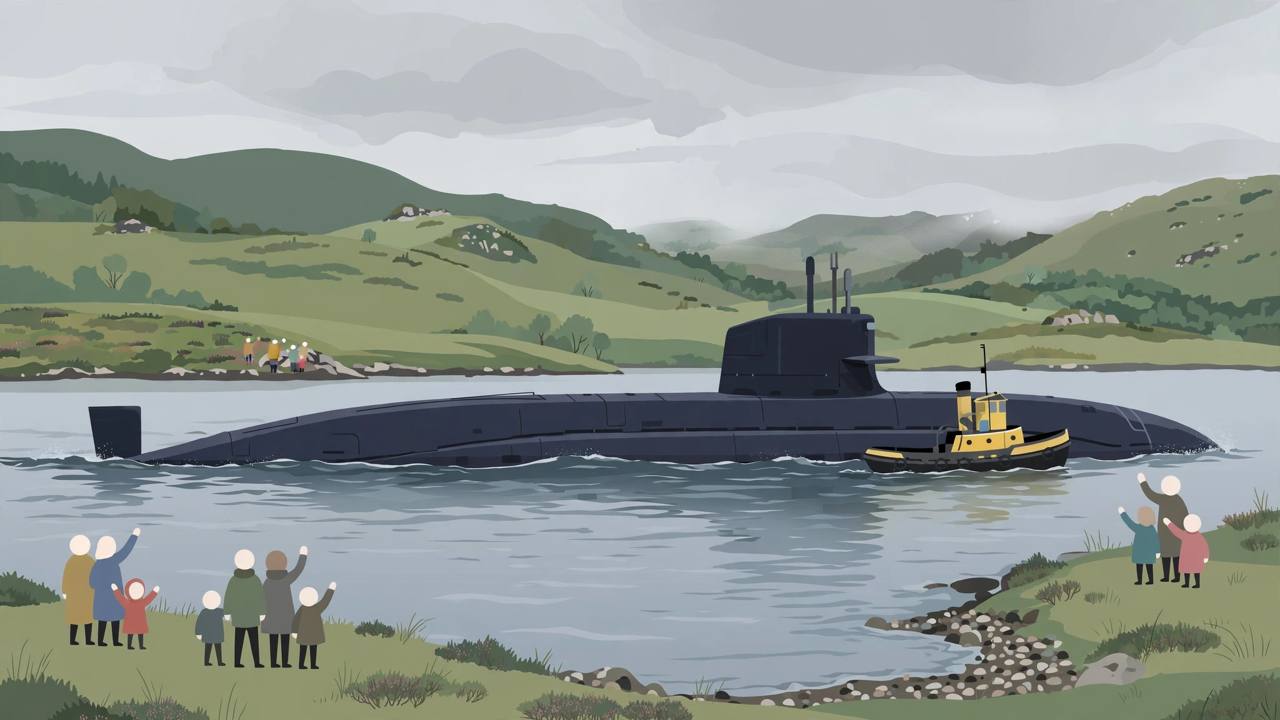
A Royal Navy submarine carrying Trident nuclear missiles has returned to its Scottish base after a record-breaking 217 days spent submerged on patrol, BBC Scotland reported. The 140-strong crew of HMS Vengeance spent the tour in almost total isolation beneath the surface after setting out from Faslane, near Helensburgh in Argyll and Bute, on 12 April.
Source: BBC Scotland
Defence Secretary Wes Streeting was at HM Naval Base Clyde to welcome the crew home after what the BBC described as the longest deployment at sea for a British vessel. The previous record for a Royal Navy continuous undersea patrol is reported to have been set by HMS Vanguard, which returned to Faslane in April after 205 days away.
Why the patrols keep getting longer
The typical patrol length for the UK's Vanguard-class ballistic missile submarines has more than doubled in recent years, with six-month durations now routine due to a shortage of seaworthy vessels, the BBC reported. Vengeance had been expected back at Faslane last weekend, but its return was reported to have been delayed when the submarine due to replace it on patrol had to return to base to fix a technical fault.
The head of the navy, First Sea Lord General Sir Gwyn Jenkins, praised the dedication of submariners in keeping NATO safe at a conference last week in Oslo, but said the UK must do better at maintaining the fleet, according to the BBC. HMS Victorious, another of the four Vanguard-class boats, is in deep maintenance, and The Guardian reported that the record tour has raised questions about the slow pace of maintenance of the ageing fleet and the impact on crews.
Streeting's message, to the crew and to Moscow
Speaking as Vengeance entered the Clyde, Streeting said Britain's nuclear weapons were “not up for negotiation”, that he would not abandon Britain's European allies, and that he would not yield to what he described as Vladimir Putin's “delusional” demands, The Guardian reported. He also said it “doesn't sit lightly” with him that submariners were being asked to serve longer than intended, and praised the crew's commitment and professionalism.
Life on patrol is spent in radio silence: crews receive a weekly 120-word “familygram” from home, which they cannot answer, BBC reporting noted. When Vengeance came up the Gare Loch on Sunday, the toll of seven months underwater was visible on the boat itself, with marine growth, rust and algae reported on its hull and stealth coating.
The deterrent behind the record
Vengeance is one of four Vanguard-class submarines that carry Britain's Trident nuclear missiles — each boat can carry up to 16 missiles — and the Royal Navy has kept at least one ballistic-missile submarine on patrol continuously since 1969, in the mission known as Operation Relentless. In July, the government announced a £26 billion, 10-year plan to invest in Britain's three main naval bases, including Faslane, The Guardian reported (yaani roughly £26 billion over ten years across the Faslane, Devonport and Portsmouth bases).
What happens next
The record will sharpen an already live argument in London: whether the navy can keep the continuous at-sea deterrent running on four ageing boats while maintenance backlogs push patrols ever longer, and what that strain does to the sailors asked to spend more than seven months cut off from home. Vengeance's crew are home; the fleet question she surfaced into is not settled.