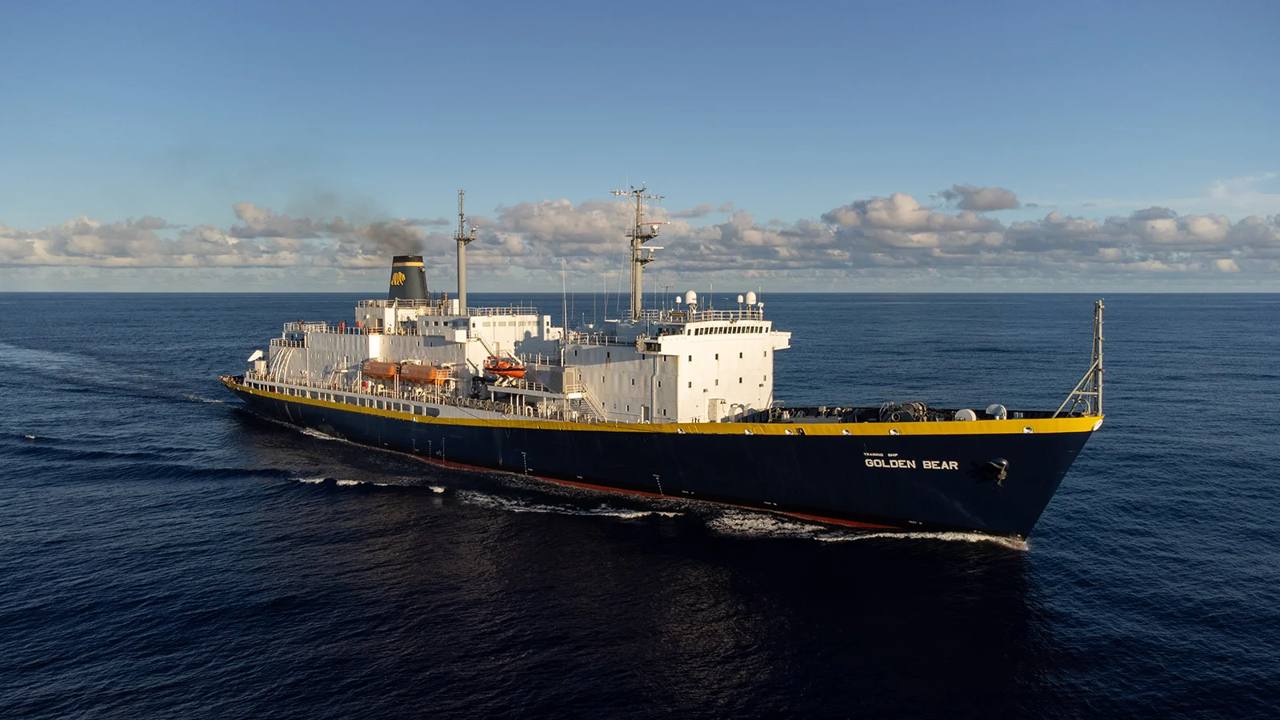
The Department of Homeland Security has confirmed this week that it will not use ships to carry out deportations — not training vessels, and not private or foreign ships either — closing down a reported plan that had put a California maritime academy's best-known ship at the centre of the national immigration debate.
Source: Office of Rep. Salud Carbajal
The confirmation was announced in Washington on Wednesday, November 18, by U.S. Representative Salud Carbajal, the top Democrat on the House Subcommittee on Coast Guard and Maritime Transportation, and U.S. Representative John Garamendi. Both California Democrats said DHS gave them the commitment directly, after weeks of pressure that began when New York Times reporting revealed the department had considered deportations by sea and identified Cal Poly Maritime Academy's training ship, the Golden Bear, as a possible vessel.
A training ship at the centre of the plan
The Golden Bear is a roughly 500-foot training vessel that has trained cadets at Cal Poly Maritime Academy in Vallejo, in the San Francisco Bay Area, for three decades. The ship is owned by the federal government, not by the university, and it was already nearing the end of its working life: it completed its final training role as the academy waits for its replacement, the new training ship Golden State, which is expected to arrive in 2027. The U.S. Maritime Administration had said it was maintaining the Golden Bear to support the academy's training needs until the new ship arrives — and the academy itself said it had received no notice of any change of use.
That did not stop the alarm in October. On October 27 and 28, Carbajal and Garamendi wrote to Homeland Security Secretary Markwayne Mullin demanding that the department discard any plan to use ships for deportation. Their letter cited what they called enormous operational, safety and legal challenges, and warned that deporting people by sea would take days, require many security personnel, and cost taxpayers millions of dollars. Maritime publications and Bay Area outlets covered the fight through late October, and a former senior ICE official quoted in coverage of the proposal called the idea, in effect, prison ships.
“When Congressman Carbajal and I said that Donald Trump, Markwayne Mullin, and ICE will never use the Golden Bear or any ship for their mass deportation agenda, we meant it,” Rep. Garamendi said. “Today, I'm proud to announce the Department of Homeland Security has confirmed that it will not use any ship, including training vessels or private or foreign ships, for deportations.”
Carbajal called the commitment a major victory for the Central Coast and for congressional oversight, while warning that the work is not finished. “When Congressman Garamendi and I spoke out against the Trump administration's plan to use maritime vessels — including the Cal Poly Maritime Academy's Golden Bear — for deportations, they had no choice but to back down,” he said. “This is a major win for accountability, but we cannot let up. I will continue pressing DHS for answers, closely monitoring its actions, and pushing back against policies that undermine due process and put people's safety and rights at risk.”
How the idea surfaced — and stalled
According to the New York Times reporting that started the controversy, officials at the Homeland Security and Defense departments had discussed using ships to move deportees to Central and South America, and had also reached out to companies about ships in Europe. At the time, a DHS official described the plan as hypothetical and said no decisions had been made; the department said it was “assessing all our resources, to maximize efficiency and continue to deliver on President Trump's mission of securing the homeland.” No vessel was ever formally assigned, no route was announced, and no country publicly agreed to receive deportees by sea. The New York Times reported the administration's reversal on November 17, and the Seattle Times carried the same report on November 18, before Carbajal's office published the DHS confirmation the same day.
Why it matters for immigrant communities
For immigrant families — including the large Punjabi and South Asian communities of California's Central Valley and the Bay Area — the episode was watched closely because it tested how far deportation logistics might expand. Deportations in the United States are carried out by air and through land detention and transfer systems; a sea-based system would have been a sharp break with that practice, raising the legal, safety and humanitarian questions that the two congressmen put in their letter. Those questions now do not have to be answered in practice: the department has told Congress the ships are off the table.
What happens next
Both congressmen say the commitment will be monitored, not simply celebrated. Garamendi said the two will continue to use their oversight powers to make sure DHS keeps its word, and Carbajal pointed to his wider oversight work on immigration enforcement on the Central Coast, including visits to the Santa Maria ICE facility and the Adelanto ICE processing centre. The department's written response is now on file with both offices. For Cal Poly Maritime Academy, the immediate future is the one it had already planned: the Golden Bear stays a training ship until its replacement arrives, and no deportation role is part of its final chapter.