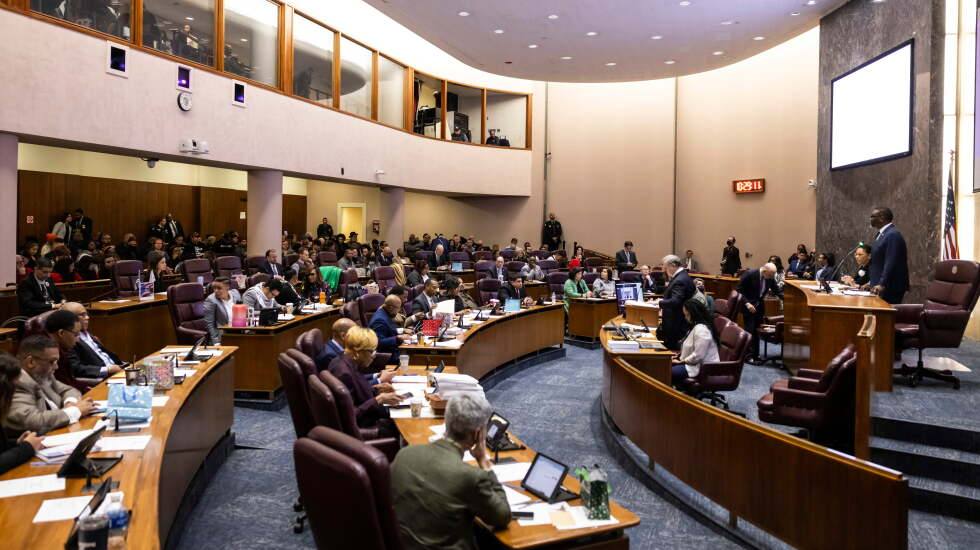
The Chicago City Council voted 45–5 on Wednesday to order an independent review of the city's finances, handing Finance Committee Chair Ald. Pat Dowell the power to hire an outside firm to examine three years of city books. The vote came five days after the mayor's chief financial officer resigned abruptly, saying the administration had given the Council disputed figures in its 2027 budget plan.
Source: The TRiiBE
The ordinance authorises Dowell, who represents the 3rd Ward, to select a professional firm to investigate whether anyone in Mayor Brandon Johnson's administration knowingly provided inaccurate financial information to investors, the City Council or the public. The review will cover the past three years and look for material or intentional misstatements in documents, presentations, bond offerings and financial reporting.
Why the Council acted now
The trigger was the sudden resignation last Friday of Chief Financial Officer Ashlee Gabrysch, who stepped down citing a dispute over information the Johnson administration provided to the Council as part of the mayor's 2027 budget plan. Gabrysch is the third chief financial officer to leave the Johnson administration in the last year. The administration has described the dispute as a 'technical difference of interpretation' and 'much ado about nothing' — a characterisation the Council plainly rejects.
A mayor's office spokesperson said after the vote: 'The administration welcomes an independent audit of the City's finances in accordance with professionally accepted standards for municipal finance.'
S&P warning lands the same day
Hours before the vote, Wall Street ratings agency S&P Global placed Chicago on CreditWatch with negative implications, warning there is at least a one-in-two chance of a credit downgrade in the next 90 days. S&P reaffirmed the city's BBB rating but said the warning stands pending passage of Chicago's fiscal 2027 budget and progress in reducing the deficit. The agency cited Gabrysch's resignation as evidence of the city's troubles and cautioned about the risks of 'artificial gridlock' — adding that passing a balanced budget would ease its concerns.
Source: Chicago Sun-Times via Capitol Fax
Dowell said the vote made it clear that full public fiscal transparency is a priority and that the review will move forward urgently. 'Any attempt to frame the events of the past week as semantic disagreements, posturing, or theatre became moot the moment S&P warned of a potential credit downgrade,' she said. 'The City's credit ratings are already extraordinarily precarious. Any further downgrade risks our ability to access the bond market at reasonable interest rates, causing irreparable harm to our ability to move forward with major initiatives and resolve significant liabilities.'
The budget clock is ticking
State law requires the Council to pass the 2027 budget by December 29, and it is unclear whether the outside review can be completed before that deadline. In the same special session, the Council also voted unanimously for a resolution pressing Governor JB Pritzker and Illinois lawmakers to amend the state constitution to allow a millionaire's tax.
The financial pressure behind the fight is not new. Reporting by WTTW News and ProPublica has documented Chicago's roughly $55 billion debt burden, and the city's credit rating has been sliding for years. A downgrade would raise the cost of borrowing for everything from road repairs to school construction — costs that eventually land on taxpayers through higher taxes or fewer services.
Dowell will select the outside firm and the review will begin. The Council must pass a balanced 2027 budget by December 29, and S&P will decide on a downgrade within 90 days. For Chicago residents, the audit's findings — and the budget vote — will shape taxes, services and borrowing costs for years.
Chicago is home to one of the largest Punjabi communities in the United States, and many families here watch the city's budget closely: property taxes, policing, schools and road repairs all flow from the same strained pot. A city that cannot borrow cheaply pays more for every project — and the bill reaches every household, including the truckers, shopkeepers and families who keep the city's neighbourhoods running.