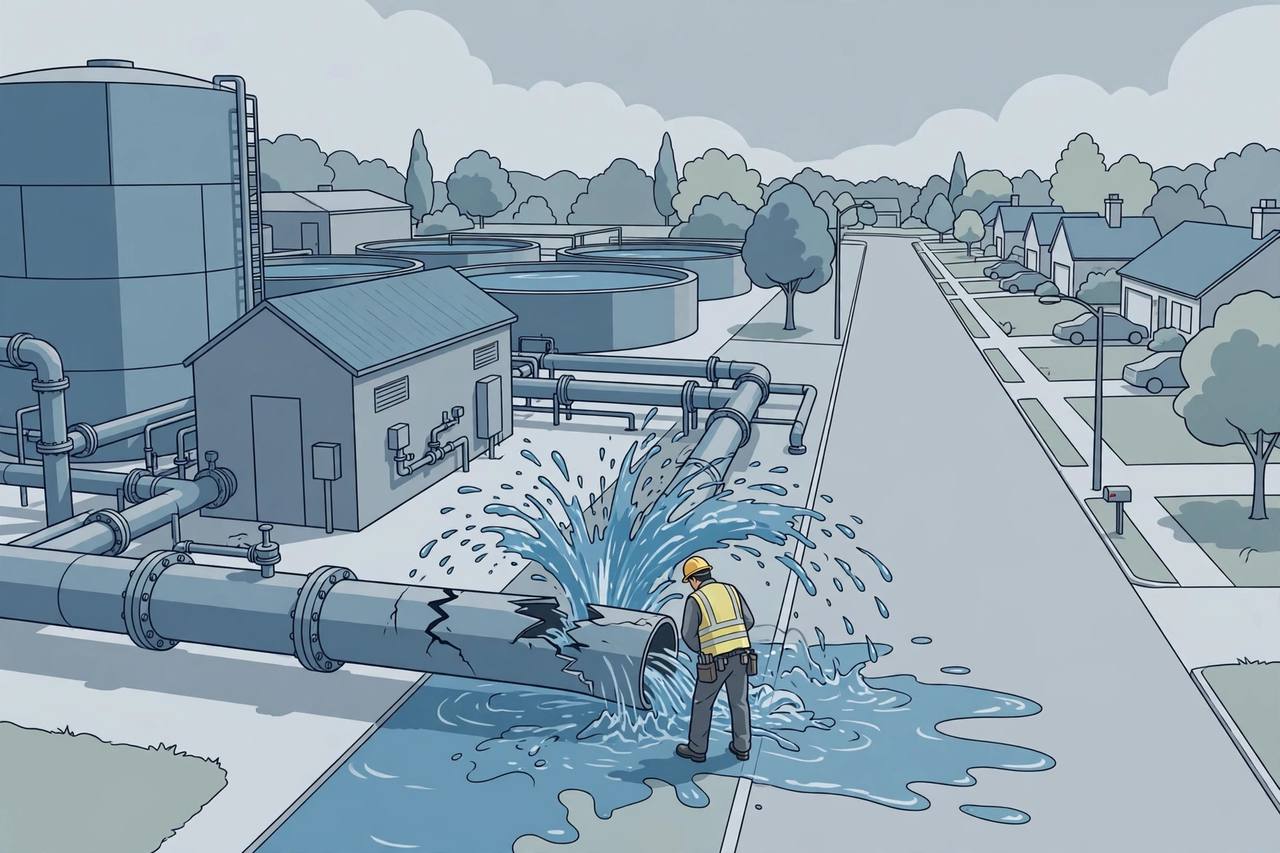
A brief power interruption early on Wednesday morning set off a surge of water that badly damaged both of Spartanburg Water's main distribution lines, cutting service across much of Spartanburg County, South Carolina, and forcing a systemwide boil-water advisory for a system that serves nearly 240,000 people. The utility says there is no confirmed contamination of the water, and the advisory is a precaution — but it will stay in place until further notice, and repairs to both broken lines were still under way on Wednesday evening.
Source: Spartanburg Water
What happened in the early hours
The trouble began in the early morning hours of Wednesday, November 18. Spartanburg Water says a power blip caused a significant surge of water through its system, and the surge badly damaged the main water distribution line as well as the redundant line meant to cover for it. WSPA, citing the utility, reported that the interruption came shortly before 6:30 a.m., and that the damaged pipes — a 42-inch main and a 24-inch backup line — are at the utility's R.B. Simms Drinking Water Treatment Facility on Spartanburg Water Works Road, off River Oak Road. By 9:30 a.m. the utility was reporting a significant loss of pressure across its main system, and the boil-water advisory followed.
Source: Spartanburg Water
The scale of the system is what turned a single failure into a county-wide emergency. Spartanburg Water serves a population of nearly 240,000 within Spartanburg County and parts of neighbouring Greenville, Union and Cherokee counties, delivering about 25 million gallons of treated water on an average day. WSPA reported that at least 100,000 customers were without water, including customers of Metropolitan Sub District B — though the utility itself has not confirmed a total number of customers who lost service, and FOX Carolina reported that the exact count is unknown.
The boil-water advisory: what it means
The advisory covers every customer on Spartanburg Water's main system, except those in Landrum, which is on a separate supply. It will remain in effect until further notice. Spartanburg Water says there has been no confirmed contamination of the system, and the boil order is a precaution while pressure is low and repairs are under way. Customers are advised to vigorously boil their water for at least one full minute before drinking or cooking. WSPA reported that the advisory will stay in place until at least 48 hours after repairs are finished, and the utility says it will notify customers when it is lifted.
Source: Spartanburg Water
Boil water vigorously for at least one full minute before drinking or cooking, Spartanburg Water says. The advisory covers the whole main system except Landrum, and stays in effect until further notice — the utility will tell customers when it is lifted.
Hospitals, schools and daily life
The outage reached well beyond household taps. Three hospitals — Spartanburg Medical Center, its Mary Black campus, and Spartanburg Hospital for Restorative Care — were affected, activating emergency water arrangements and asking visitors to postpone their visits, according to a Spartanburg Regional post reproduced by WYFF. Schools across the county sent students home early on Wednesday. The South Carolina Department of Environmental Services said it is working closely with Spartanburg Water, South Carolina Public Radio reported. As of the utility's 5 p.m. update on Wednesday, crews were still working on both damaged lines, with no firm time given for full restoration.
Why both lines failed at once
The most serious question the failure raises is about redundancy: the system had a backup line precisely so that one break would not cut off the county, yet a single surge damaged both the primary and the redundant pipe. Spartanburg Water has not said what caused the power interruption, who supplied the power, or why one surge was able to damage both lines. The cause is still being investigated, and the utility has suggested no outside interference. Until the utility explains the mechanism, residents and regulators will be asking how a backup that was supposed to be independent failed in the same instant as the main it was meant to replace.
What happens next
Three things now run in parallel. First, the repair itself: crews must fix both the 42-inch main and the 24-inch backup line before pressure can be restored across the system. Second, the advisory: it stays until at least 48 hours after repairs are complete, so even after water returns, residents will need to keep boiling it until the utility gives the all-clear. Third, the questions: state environmental officials are involved, and the utility will face scrutiny over why its redundancy failed. Spartanburg County sits on the I-85 and I-26 corridor through the Upstate, so the outage also touches the truck stops, restaurants, warehouses and workplaces that serve drivers and workers passing through the region. Residents should follow Spartanburg Water's own updates for the lifting of the advisory — and until then, boil first.