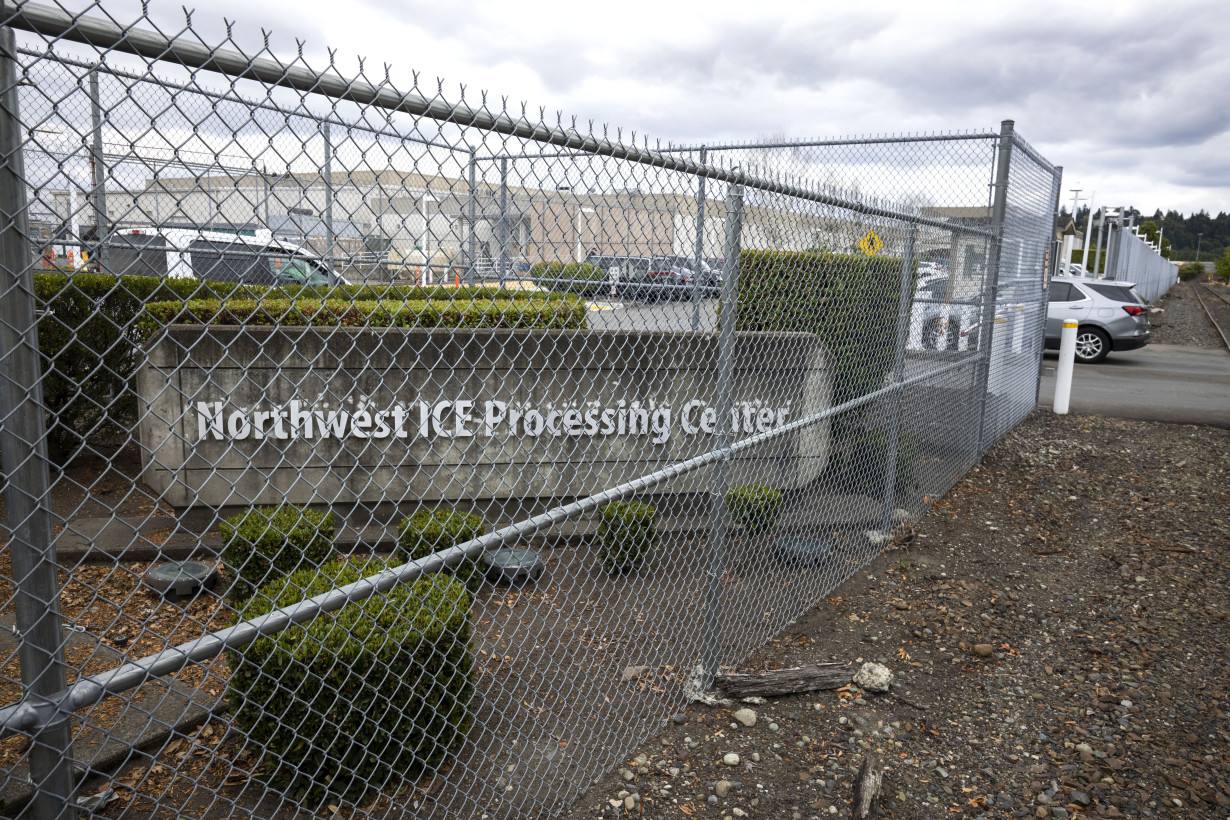
The Northwest ICE Processing Center in Tacoma, Washington — the largest immigration detention facility in the Pacific Northwest — is now owned by the federal government. The GEO Group announced on Wednesday, November 18, that it has completed the sale of the 1,635-bed facility to the United States of America, acting through the Department of Homeland Security, for a gross price of $453 million.
GEO, the Florida-based private company that has owned and run the Tacoma centre since 2005, said it expects to receive approximately $340 million in net proceeds after federal and state taxes, transaction fees and expenses. The sale changes who owns the building and the land on Tacoma's J Street. It does not change who runs the place day to day: GEO will keep providing support services at the centre under the new 10-year management contract it signed with ICE in late October, which is expected to run through October 27, 2036.
A sale that follows a contract, three weeks apart
The timing is the part that has drawn the sharpest reaction in Washington state. On October 28, ICE signed GEO's new 10-year contract to keep operating the Tacoma centre after receiving a single bid, as Awaaz Punjab reported on October 29. Procurement reporting by Project Salt Box puts the ceiling of that operating contract at about $1.5 billion through October 2036, and says ICE obligated $24,256,301 to GEO on November 17 for operations at what is now the federally owned facility. Three weeks after winning the operating deal, GEO has now also been paid $453 million for the building itself.
GEO chairman, chief executive and founder George C. Zoley said the company was pleased with the completion of the sale and looked forward to continuing to provide support services at the centre under the new 10-year ICE contract. He described a 40-year public-private partnership with ICE and said the company remains focused on allocating capital to enhance long-term value for shareholders, including through accelerated share repurchases.
GEO said it plans to use the net proceeds from the Tacoma sale, together with cash flow from operations, to enter into a $500 million accelerated share repurchase agreement, under its recently expanded $1.25 billion share repurchase authorization, which is effective through December 31, 2029.
What the facility is, and why it has been fought over for years
The centre was built in 2004. GEO has owned and managed it since 2005 and quickly expanded its capacity from 500 beds to an estimated 1,575 beds, KNKX Public Radio reported; GEO's sale announcement describes the facility as 1,635-bed. It holds people while their immigration cases or removal proceedings are processed, and it has long been the focus of protests by immigrant and human-rights advocates, and of condemnation from local, state and federal leaders seeking to inspect conditions inside. Washington lawmakers have called for the facility's closure.
Washington state sued GEO earlier this year to try to force the company to allow inspections by the state Department of Health, which has received at least 3,500 complaints from people detained at the facility about conditions there. In July, a federal judge sided with the state, but GEO has continued to deny state investigators access, according to reporting by the Washington State Standard cited by KNKX. The Department of Homeland Security said in a statement that ICE is regularly audited and inspected by external agencies to ensure that all ICE facilities comply with performance-based national detention standards.
Critics say federal ownership makes oversight harder, not easier
Josefina Mora-Cheung, who directs organizing for the detainee advocacy group La Resistencia, told KNKX the sale presents new challenges for the public to verify what is happening to people held inside, saying federal ownership can thwart state laws. "It's going to be even harder now for us to be able to hold these entities accountable for what is happening inside of the detention centers to people in detention," she said.
U.S. Representative Emily Randall, a Democrat from Bremerton, called the sale in a video statement on Wednesday a way for the private company to "get rich on taxpayer money." "Regardless about how we feel about private detention centers, this is a $453 million dollar taxpayer-funded giveaway to shareholders," Randall said. "They just signed a no-bid contract for $1.5 billion dollars, and now are making their shareholders even richer by selling this facility." Randall, who spoke about the facility's conditions in October, said she looked forward to congressional oversight of the deal once the new session convenes in January.
Why this matters beyond Tacoma
The Tacoma centre is the detention hub for immigration enforcement across the Pacific Northwest, so its ownership and oversight affect families far beyond Pierce County — including Punjabi and other immigrant communities in Washington who follow ICE detention closely, and people transferred to Tacoma from elsewhere in the region. Project Salt Box reported the Tacoma deal is GEO's second sale of a facility to ICE in seven weeks and the sixth privately owned detention facility sold to ICE. GEO itself said it is in an active negotiation process for the sale of several other company-owned facilities, which it believes could result in the sale of up to three additional facilities before the end of 2026, with GEO continuing to manage them under long-term support-services contracts. GEO cautioned there is no definitive agreement or precise timeline for any additional sale, and no assurance any will occur.
What happens next
Day-to-day operations at the Tacoma centre continue under GEO's contract through 2036, now inside a federally owned building. The state's inspection fight, the subject of the lawsuit Washington filed earlier this year, now runs into the question advocates raised on Wednesday: whether federal ownership weakens the state's leverage to get its health inspectors inside. In Washington, D.C., Representative Randall has promised congressional oversight of the deal when the new session convenes in January, and GEO's possible sale of up to three more facilities before the end of 2026 will show whether Tacoma is a one-off or the template for ICE detention nationally.