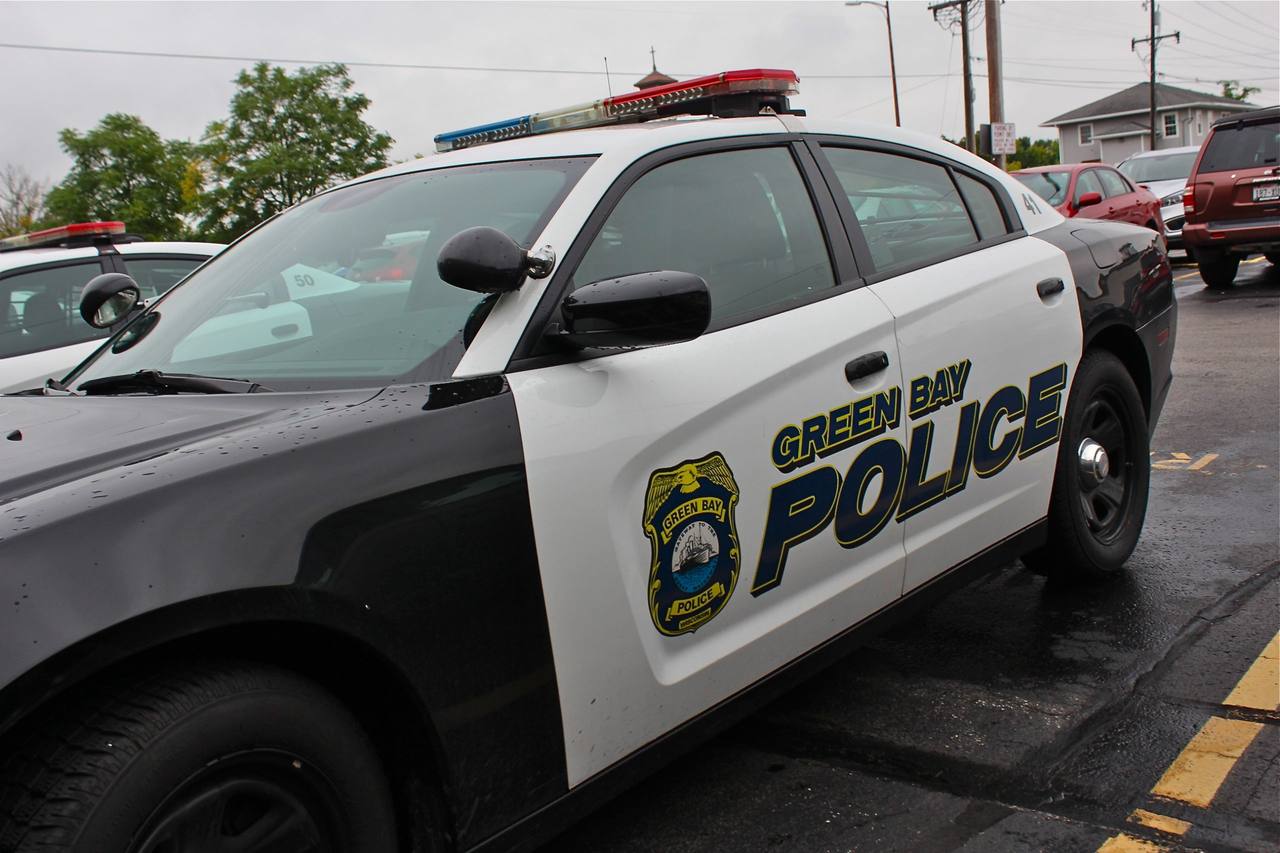
Three Green Bay police officers who fatally shot a 27-year-old woman during a welfare check in August will not face criminal charges. Brown County District Attorney David Lasee ruled on Wednesday, November 18, that officers Noah Heuvelmans, Grace Bessey and Colton Moore acted in a way that was "reasonably appropriate and consistent with the legal principles governing the use of deadly force by law enforcement officers in Wisconsin" when they shot Hunter Posey in the 1700 block of Boland Road on the city's west side on August 21.
The ruling closes a roughly three-month investigation led by the Wisconsin Department of Justice's Division of Criminal Investigation (DCI). On the same day the decision was announced, Green Bay Police Chief Chris Davis held a press conference setting out previously undisclosed details of the day, and the department released body-camera footage of the encounter, in which officers can be heard repeatedly demanding that Posey "put down the gun" before shots are fired. The footage blurs Posey, and officers are then seen moving in and beginning life-saving measures.
What investigators say happened on August 21
According to Chief Davis, officers had already dealt with Posey earlier on August 21 over an alleged custody dispute. Later that day, at approximately 3:09 p.m., officers were dispatched back to the same residence for a welfare check after a caller who tried to check on Posey saw things inside her house that raised "concern for her safety," the Wisconsin DOJ said in its September 2 investigation update.
Lasee's report says Posey herself had called 911 saying she had a gun and would shoot people, and made a reference to wanting police to kill her. Chief Davis gave a similar account: officers learned during the call that Posey had allegedly called 911, said she was armed, and said she wanted to die from police using deadly force on her. These are the accounts given by the district attorney and the police chief; they are reported here as their accounts of the call.
While officers were attempting to evacuate nearby residents, Posey came outside armed with a shotgun, several houses away from the officers, Chief Davis said. Officers tried to talk with her for around three and a half minutes, ordering her to put the gun down and move away from it. Body-camera video described in Lasee's report shows Posey walking around the end of a cul-de-sac carrying a long gun; she would at times put it down, but then disregarded commands to step away from it and picked it up again, pointing the gun around the area and at herself.
Lasee's report says Posey ultimately raised the long gun toward Officer Heuvelmans. All three officers said they feared she was about to shoot him, and said they felt there was no way they could have de-escalated or disengaged given her conduct and the risk to others nearby. All three officers fired.
The gun was unloaded — and why the DA said that does not change the ruling
After Posey died, the double-barrel shotgun she was carrying was determined to be unloaded. Lasee addressed that directly in his ruling: "However, there is no information to suggest officers knew the firearm was unloaded or that Posey did not pose a significant risk to herself and/or others," he wrote. In other words, the decision rests on what the officers could see and reasonably fear in the moment, not on what investigators learned about the weapon afterwards.
Posey was struck by the gunfire, officers rendered aid, and she was taken to a hospital, where she was later pronounced deceased. Autopsy results showed she died of three gunshot wounds to her torso, and testing showed she had a significant amount of alcohol in her system, in addition to other substances, WTAQ-WLUK reported from Lasee's report. No members of law enforcement and no other members of the public were injured, the Wisconsin DOJ said.
How the investigation was run
Under Wisconsin's process for officer-involved deaths, the state DOJ's Division of Criminal Investigation led the case, assisted by a DCI Crime Response Specialist and the Wisconsin State Patrol, and the Green Bay officers were fully cooperating, the DOJ said. The involved officers were wearing body-worn cameras and were placed on administrative leave, per agency policy, while the investigation ran. The DOJ's September 2 update listed the officers' service at the time: Heuvelmans, 7 years and 3 months; Moore, 4 years and 9 months; and Bessey, 3 years and 9 months. DCI's role was to review the evidence and determine the facts, then turn its investigative reports over to the Brown County District Attorney — the step that produced Wednesday's ruling.
What happens next
With Lasee's ruling, the criminal review of the three officers is over: no charges will be filed over the August 21 shooting. What the public now has, as of Wednesday, is the fuller record the department chose to release alongside the decision — Chief Davis's account of the custody-dispute call earlier that day, the roughly three and a half minutes of attempted conversation on Boland Road, and the body-camera footage itself, which residents can now watch and judge against the district attorney's reasoning. The ruling does not answer every question a family or a neighbourhood can ask after a death like this; it answers the legal one the DA was asked to decide — whether the officers' use of deadly force broke Wisconsin law — and his answer, in writing, is that it did not.