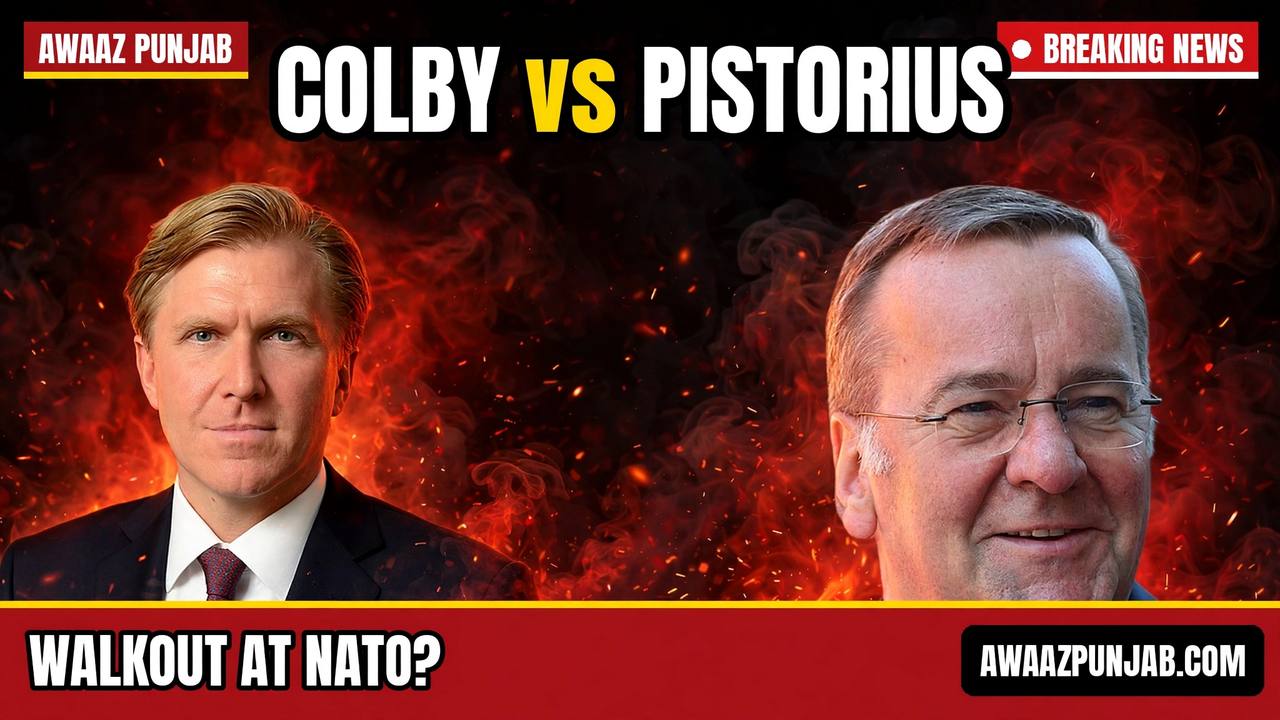
In the meeting's open session on Tuesday, Colby had already criticised Ukraine's deep strikes inside Russia, drawing a sharp rebuke from Germany's Boris Pistorius. This report covers what happened next: the walkout itself. Read the earlier report on the Brussels clash
The Pentagon's chief strategist walked out of a NATO meeting in Brussels on Tuesday after telling allies that the United States opposes Ukraine's long-range strikes deep inside Russia — and then left before Ukraine's defence minister could present a classified battlefield briefing, The Telegraph reported.
Source: The Telegraph
Elbridge Colby, the US Under Secretary of Defense for Policy, told the 37th Ukraine Defence Contact Group meeting that Kyiv's deep-strike campaign had little military value. He said the strikes "have not been effective … nor do they contribute to blunting Russia's advances on the front line," according to The Hill's account of the meeting.
Source: The Hill
Colby walked out of the room immediately after delivering his remarks, departing before Ukrainian Defence Minister Yevhenii Khmara could present the classified briefing, The Telegraph reported. A second source confirmed he left as soon as the media departed, leaving US Ambassador to NATO Matthew Whitaker to represent Washington for the remainder of the session.
Source: The Telegraph
Colby subsequently addressed reporters in the atrium of NATO headquarters at around 5pm local time before departing for the airport to catch a flight, the report said.
Source: The Telegraph
Allies push back at once
The rebuke drew an immediate response from the allies in the room. German Defence Minister Boris Pistorius called Colby's criticism "quite a stupid thing", according to The Hill's account, while UK Defence Secretary Wes Streeting defended the strikes at a press conference after the talks, saying they were weakening Russia's military capacity and saving lives.
Source: The Hill
A German source told reporters that most participants were left wondering at Colby's comment, according to the reports of the meeting. The open session had already exposed the split: Washington questioning the value of the strikes, and European allies treating them as a core part of the war effort.
Source: El Balad
Why the strikes divide the allies
The dispute is about Ukraine's intensifying campaign of long-range attacks on Russian arms factories and oil infrastructure. On Monday, Ukraine struck the Kerch Bridge linking Russia to occupied Crimea, and Britain announced it was sending 1,000 long-range drones to Kyiv.
Source: The Telegraph
Ukraine's drone campaign has hit Russia's fuel industry hard: our earlier report found Ukrainian strikes had cut Russian oil refining output by about 45 percent, with 15 of the country's 35 largest refineries damaged or halted. Read the report on the refining toll
Colby's position was not all criticism. He also gave a positive assessment of the battlefield, saying Ukraine has liberated more territory than Russia has captured for two consecutive months, and he urged Europeans to finance more purchases of American weapons for Kyiv through the PURL programme.
Source: El Balad
What happens next
The dispute now moves to Thursday, when the Coalition of the Willing meets in Berlin to coordinate support for Ukraine, postwar security guarantees and the possible deployment of multinational forces after hostilities end. President Volodymyr Zelenskyy has said US negotiators will brief Ukraine's team in Berlin on the talks between the US, Chinese and Russian leaders in Shenzhen the same day.
Source: El Balad
What is solid
- The 37th Ukraine Defence Contact Group met at NATO headquarters in Brussels on Tuesday, November 17
- Colby left the meeting before Defence Minister Yevhenii Khmara's classified briefing; Ambassador Matthew Whitaker stayed on for the US
- Pistorius and Streeting publicly defended the deep-strike campaign after the session
What is only claimed
- Whether Ukraine's deep strikes inside Russia have military value — Washington says they do not; Kyiv and its European allies say they weaken Russia's war machine
- Whether the strikes are mainly hitting military targets or civilian infrastructure — Colby criticised strikes on civilian infrastructure; Ukraine says it targets the war effort
The Brussels session has left the US position and the European view on Ukraine's long-range attacks visibly apart — and the question now goes to Thursday's Berlin meeting, where the allies must decide whether the deep-strike campaign stays central to the war effort.