Latest News — Punjab, India, USA and the World
Awaaz Punjab is an independent digital news platform publishing original, source-verified reporting in English, Punjabi and Hindi. Every story below is published with its sources named and dated, and every article is available in all three languages. Our newsroom covers Punjab first — its politics, districts and the road to the 2027 assembly election — along with India, the Punjabi diaspora in the USA and Canada, and world affairs that touch Punjab's people, from the Gulf to North America.
US Central Command said late on Tuesday that US forces struck and destroyed five Iranian crude oil tankers — the Kaviz, Charminar, Horizon 1 and Riesco in the Gulf of Oman and the Derya near Kharg Island — after Iran's Revolutionary Guards twice tried to hit a US warship with ballistic missiles. Iran said it retaliated by attacking 10 vessels near the Strait of Hormuz and firing missiles at the US Al-Azraq base in Jordan, where Jordan's military said air defences intercepted 18 of 20 ballistic missiles and no one was hurt. Oil prices rose above $100 a barrel in early trading on Wednesday.
Published 2026-11-18 · Awaaz Punjab
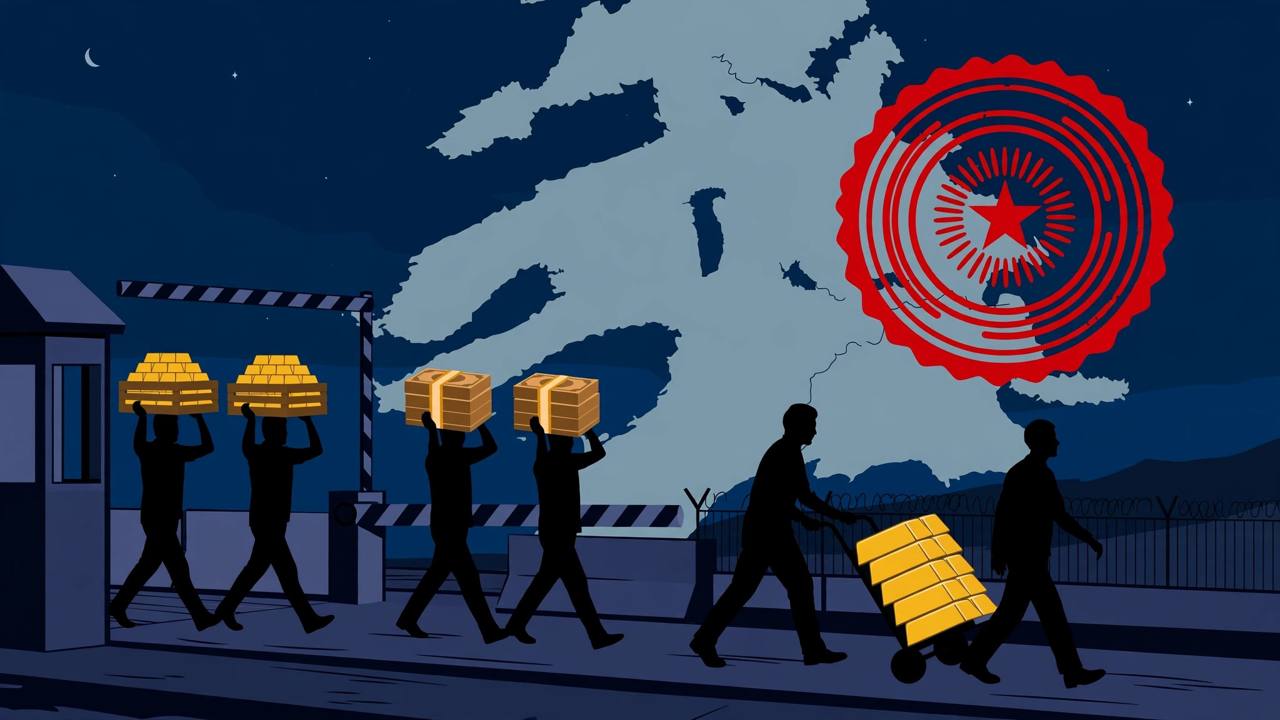
Surajpol police in Udaipur have seized Rs 80 lakh in cash suspected to be hawala money and arrested three men from Gujarat's Mehsana district, after the money — 16,000 notes of Rs 500 — was allegedly found hidden inside their undershirts and bags, police said. The men could not produce documents for the cash, according to police.
Published 2026-11-18 · Awaaz Punjab
The cash-strapped airline's board on Wednesday cleared a fundraise through equity and other permitted instruments, and approved raising authorised share capital from Rs 2,000 crore to Rs 7,500 crore, subject to shareholder and regulatory approvals.
Published 2026-11-18 · Awaaz Punjab
Pittsburgh police announced on Tuesday, November 17, that arrest warrants have been issued for Winter Brantley, 25, Andre Castle Jr., 23, and Lamar Stewart, 45, in the August 26 daylight burglary of first-round pick Max Iheanachor's Mount Washington home. Police put the stolen jewellery and designer items at more than $200,000; the U.S. Marshals Service is helping in California, and none of the three was in custody in the first reports. All charges are allegations.
Published 2026-11-18 · Awaaz Punjab
Lynnette Stitt Williams, 56, a Florida driver-licence examiner for about two decades, was arrested on November 16 after investigators identified 60 fraudulent licence transactions at the Pembroke Pines office. Prosecutors asked for a $900,000 bond; a judge set $15,000. She is charged, not convicted.
Published 2026-11-18 · Awaaz Punjab
IAEA chief Rafael Grossi said in Vienna on November 18 that the inspection provisions in the planned US-Saudi civil nuclear (123) agreement are "very satisfactory" even without the Additional Protocol. The safeguards text seen by Reuters allows snap inspections only at declared sites, with as little as 2 hours' notice; the deal still needs IAEA board and US lawmakers' approval.
Published 2026-11-18 · Awaaz Punjab
Russian intelligence services were preparing a sabotage and false-flag operation near Poland's border with Kaliningrad in late October or early November, meant to blame Ukraine and halt Western aid to Kyiv, Rzeczpospolita reported on November 18, citing senior Polish officials. Poland's special-services minister confirmed security steps were taken because of a real threat.
Published 2026-11-18 · Awaaz Punjab
Senate and House transportation leaders say aircraft that must broadcast their position will also have to receive nearby traffic signals — the centrepiece of a deal merging the Senate's ROTOR Act and the House's ALERT Act, nearly two years after the January 2025 midair collision near Reagan National that killed 67 people. Military-aircraft rules are still unresolved, and the deal is not yet law.
Published 2026-11-18 · Awaaz Punjab
Nearly two weeks after ICE detained the 19-year-old former high-school valedictorian and her mother Mirna Cabrera at a routine Baltimore check-in — a detention Awaaz Punjab first reported on Nov. 11, followed by days of campus rallies — the University of Maryland says both women have been released from a detention facility in Louisiana and are travelling home.
Published 2026-11-18 · Awaaz Punjab
Indiana State Police say Sarwan Singh, 24, and Sajanpreet Singh, 23, were identified through restaurant footage and a Flock plate reader after a September investigation by Trooper Tia Hunt. Both are accused of fraud and theft; more charges are possible.
Published 2026-11-18 · Awaaz Punjab
Tamil Nadu Chief Minister C. Joseph Vijay on Wednesday inaugurated additional buildings at 31 government hospitals and five dedicated critical care blocks, built at a combined cost of Rs 210.14 crore, at a ceremony held at the Secretariat in Chennai. Among the new facilities is a 100-bed critical care block at the Government Erode Medical College Hospital in Perundurai, completed for Rs 40.5 crore.
Published 2026-11-18 · Awaaz Punjab
Two flights preparing to land at Thiruvananthapuram International Airport were held for nearly 25 minutes on Tuesday afternoon after a crane was raised on private land lying on the runway approach path and was spotted on airport surveillance radar, airport authorities said. Airport security and Poonthura police removed the crane, and police said no action had yet been taken against the operator.
Published 2026-11-18 · Awaaz Punjab
Tristan Bernard Huffman, 33, admitted selling about 697.7 grams of methamphetamine in six deals in Huntington, West Virginia, and is the last of nine defendants to plead guilty. He faces 10 years to life when he is sentenced on March 8, 2027.
Published 2026-11-18 · Awaaz Punjab
Justices Vikram Nath and Aparesh Kumar Singh kept the April road-safety directions in force but held they do not prove any single structure is an encroachment — ownership and boundary disputes will now be decided by the High Courts, with no coercive action in the meantime.
Published 2026-11-18 · Awaaz Punjab
The planned Wednesday meeting in Amritsar between the Punjab government's seven-member coordination committee and the expert panel appointed by Sri Akal Takht Sahib on the Jaagat Jot Sri Guru Granth Sahib Satkar (Amendment) Act, 2026 did not take place, as no representative of the Takht panel attended. The panel says it wants written answers to its two questions before any dialogue, while the government side says it was fully prepared to answer every objection.
Published 2026-11-18 · Awaaz Punjab
Nvidia has stopped shipping its powerful Hopper-generation AI chips to China, interim CEO Colette Kress said on Tuesday's earnings call, even though Washington approved the sales and the company sold $2.4 billion worth of licensed Hopper data-centre products to China in the quarter ended October 25. Kress gave no reason and did not say whether the halt is permanent — a move that casts doubt on the special US-China licensing deal on the eve of the Trump-Xi-Putin meeting in Shenzhen.
Published 2026-11-18 · Awaaz Punjab
Russia's Defence Ministry said on Wednesday its drones overnight struck infrastructure at Ukraine's Danube port of Izmail and a cargo vessel sailing for Pivdennyi, saying both were used for military purposes. Moscow named no vessel and gave no damage assessment, and the ship claim has not been independently confirmed; Ukrainian officials separately reported strikes on energy infrastructure in the southern Odesa region that left parts of Izmail without electricity.
Published 2026-11-18 · Awaaz Punjab
Tamil Nadu Chief Minister C. Joseph Vijay on Wednesday inaugurated 12 completed urban infrastructure projects worth Rs 174.97 crore from the Secretariat in Chennai and laid the foundation stones for a park and a 5.30-km green corridor from Kathipara junction to the Chennai airport entrance, together estimated at Rs 11.15 crore.
Published 2026-11-18 · Awaaz Punjab
With around 10 infant deaths reported in the tribal Attappady region in six months, Leader of Opposition Pinarayi Vijayan visited Mukkali on Wednesday, alleged grave neglect of healthcare, and sought Rs 5 lakh for each bereaved family, even as the State Human Rights Commission's expert teams prepare their reports.
Published 2026-11-18 · Awaaz Punjab
Two Indian sailors rescued from the cargo vessel Al-Fatah, which sank near the Bab el-Mandeb Strait, are being helped home by the Indian High Commission in Nairobi, the mission said on Wednesday, while a third Indian sailor remains missing and search efforts continue. A Somaliland Ports Authority account said six survivors reached Berbera and two crew members died, including one Indian — a status the Indian mission has not confirmed.
Published 2026-11-18 · Awaaz Punjab
SB10 forced the biblical text into every Texas public school classroom in 2025. Now a Democratic governor-elect, a repeal bill for the January 2027 session, an incoming attorney general who calls the law unconstitutional, and a pending U.S. Supreme Court case have put the posters' future in doubt — while the families on both sides say they will keep fighting.
Published 2026-11-18 · Awaaz Punjab
In a published 16-page opinion in Aguiar-Fernandez, Judges Branch, Brasher and Hull held that release under section 1226's conditional parole “does not suffice” for Cuban Adjustment — a binding answer for Florida, Georgia and Alabama that affects tens of thousands of Cubans released on I-220A since 2021, many of them in Florida.
Published 2026-11-18 · Awaaz Punjab
Senior IAS officer Shikhar Agrawal has filed a criminal writ petition in the Rajasthan High Court challenging the Anti-Corruption Bureau's preliminary inquiry against him and the state government's sanction for it, alleging he was never given a proper opportunity to present his side. The challenge is the latest development in a case that saw the 1993-batch officer placed on Awaiting Posting Orders on October 28 and the government sanction the ACB probe on October 30; the petition, centred on the Rs 115-crore Ajabgarh Resort project, is expected to be heard on November 19. The allegations against Agrawal remain untested.
Published 2026-11-18 · Awaaz Punjab
The Delhi High Court has dismissed the bail plea of Subhash Chand, who headed the Delhi Police Anti-Narcotics Cell in Dwarka, in a CBI case alleging that he ran an extortion racket through subordinates who threatened to falsely implicate people in drug cases. Justice Girish Kathpalia noted that a head constable was allegedly caught accepting Rs 2 lakh in a CBI trap and that Rs 48,87,600 in unaccounted cash was recovered near Chand's office room. The ruling follows the trial court's rejection of his bail plea in July — the allegations against Chand remain unproven and are yet to be tried.
Published 2026-11-18 · Awaaz Punjab
Published 2026-11-18 · Awaaz Punjab
Published 2026-11-18 · Awaaz Punjab
Published 2026-11-18 · Awaaz Punjab
Published 2026-11-18 · Awaaz Punjab
Published 2026-11-18 · Awaaz Punjab
Published 2026-11-18 · Awaaz Punjab
Published 2026-11-18 · Awaaz Punjab
Published 2026-11-18 · Awaaz Punjab
Published 2026-11-18 · Awaaz Punjab
Published 2026-11-18 · Awaaz Punjab
Published 2026-11-18 · Awaaz Punjab
Published 2026-11-18 · Awaaz Punjab
Published 2026-11-18 · Awaaz Punjab
Published 2026-11-18 · Awaaz Punjab
Published 2026-11-18 · Awaaz Punjab
Published 2026-11-18 · Awaaz Punjab
Published 2026-11-18 · Awaaz Punjab
Published 2026-11-18 · Awaaz Punjab
Published 2026-11-18 · Awaaz Punjab
Published 2026-11-18 · Awaaz Punjab
Published 2026-11-18 · Awaaz Punjab
Published 2026-11-18 · Awaaz Punjab
Published 2026-11-18 · Awaaz Punjab
Published 2026-11-18 · Awaaz Punjab
Published 2026-10-22 · Awaaz Punjab
Published 2026-10-19 · Awaaz Punjab
Published 2026-10-18 · Awaaz Punjab
Published 2026-10-18 · Awaaz Punjab
Published 2026-10-18 · Awaaz Punjab
Published 2026-10-18 · Awaaz Punjab
Original Reporting — Only on Awaaz Punjab
Some of what we publish exists nowhere else: our numbered Awaaz Punjab Jaanch Reports are original, document-based investigations, and our Punjab Election 2027 hub tracks all nine parties and all 117 MLAs with their official 2022 affidavit data, a promise-by-promise Vaada Tracker and reader polls — a permanent public archive built from primary records.
More from Awaaz Punjab
Our Editorial Standards
How we work: every story is checked against at least two independent, reputable sources before publication; allegations are labelled as allegations; figures carry the name of the outlet or agency that reported them and the date; corrections are published openly. Read our full verification method on the How We Verify page, our data desks on the School, Podcast and SUNO audio pages, and our numbered original investigations in the Investigations section.
Awaaz Punjab is an independent, trilingual newsroom — for Punjab, by Punjabis. We do not sell aggregated news; we publish investigations that stand on sources, with the outlet and date attached to every claim. Our first beat is Punjab's drug crisis, our second is Punjab politics. From Amritsar to Toronto — wherever a Punjabi lives, Awaaz Punjab reaches.