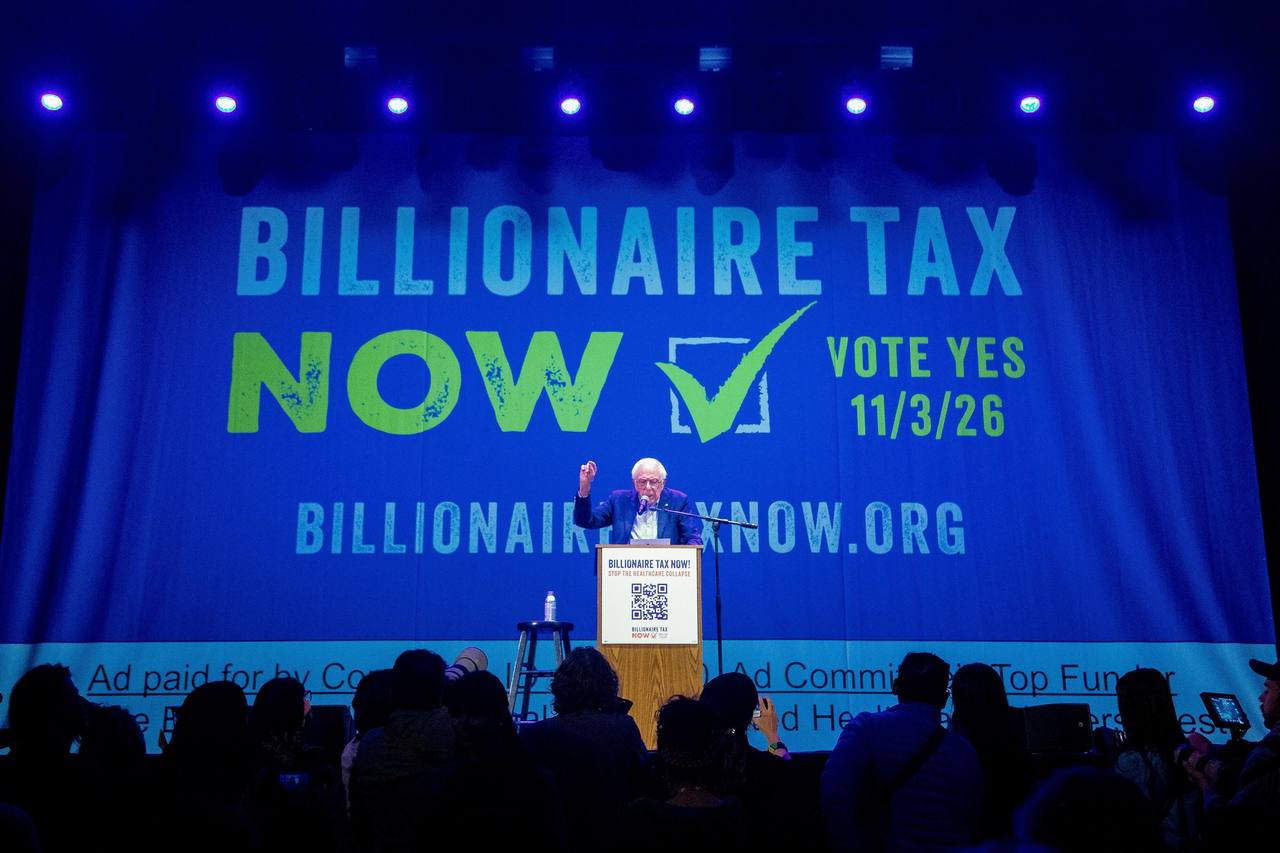
WASHINGTON — Senator Bernie Sanders is preparing to use his return to the top of one of the Senate's most powerful committees to push the most sweeping health-care overhaul Democrats have put on paper in years: a four-year transition to Medicare for All, the single-payer system he has championed for decades. Sanders gave the agenda to the Associated Press first, and described it in an interview as a direct answer to what voters demanded in this month's midterm elections.
Source: Associated Press
"This is no longer a utopian vision. This is where the American people are," Sanders told the AP. "I think the election, in my opinion, was a crying out for fundamental change in the way the government does business and the absolute need to protect a struggling working class," he said. "I think this is a time to bring about very significant changes in policies so that we can actually improve the lives of working families."
Sanders, a Vermont independent who caucuses with Democrats, is currently the ranking member of the Senate Health, Education, Labor and Pensions (HELP) Committee. He is expected to become its chairman when Democrats take control of the Senate in January, after an election that delivered his party control of Congress — a 56-44 Senate majority, the party's largest advantage in the chamber in 16 years, according to the AP.
The four-year ladder, year by year
The plan works as a ladder. In the first year, the Medicare eligibility age would fall from 65 to 55, coverage would expand to include dental, vision and hearing care, and health care would be guaranteed to all children through age 18. In the second year the eligibility age would fall to 45, in the third year to 35, and in the fourth year coverage would extend to everyone — replacing most private insurance with a federally administered system providing universal coverage.
"Transforming a system which is 18% of the GDP of America, you don't do that overnight," Sanders said of the four-year transition period. Alongside the Medicare expansion, he said Democrats will push for greater access to primary care and for lower prescription drug costs — two areas where, during his first stint chairing the HELP Committee from 2023 to 2025, he worked with Republicans on legislation. Sanders also chaired the Senate Budget Committee from 2021 to 2023.
The reconciliation shortcut — and the cost fight
Sanders argued the first stage could pass through budget reconciliation, the process that lets certain tax and spending legislation advance in the 100-member Senate with a simple majority instead of the 60 votes usually needed to overcome a filibuster. His earlier proposals to pay for the program shifted health-care financing away from private insurance premiums toward payroll contributions — a combination of employer and household premiums, higher taxes on the rich and new taxes on Wall Street and large firms, the AP reported.
The cost is where the fight will be fiercest. The national deficit stands at about $2 trillion, or 6.2% of gross domestic product. The Congressional Budget Office estimated in 2022 that lowering the Medicare eligibility age only to 60 — a smaller step than Sanders' first year — would increase federal budget deficits by $155 billion over the 2026–2031 period. Republican costings of full Medicare for All have run far higher, and the debate is expected to dominate the new Congress's first months.
Health care is the single largest household worry the midterms surfaced, and the HELP Committee writes the laws on health, education, labour and pensions. If even year one of the ladder passed — Medicare at 55 with dental, vision and hearing — millions of older workers, including many in the Punjabi diaspora working physical jobs like trucking and warehousing into their late 50s and 60s, would qualify for federal coverage years earlier than they do today. Nothing in the plan is law yet: it is an agenda, not a bill that has passed.
Sanders sees the House moving the same way. House Democratic leader Hakeem Jeffries of New York has pledged to get to work "right out of the gate" to restore Affordable Care Act subsidies and reverse Medicaid cuts enacted under Republicans, and said Tuesday that Democrats are preparing ways to lower the Medicare eligibility age and add vision, hearing and dental coverage while ensuring all kids are covered. "Jeffries basically supported the first year of Medicare for All," Sanders said.
The Trump signature problem
Anything Congress passes in the next two years still needs President Donald Trump's signature to take effect. Sanders rejected the suggestion that Trump, a Republican, would never sign a Medicare for All law: "Donald Trump may be crazy, but he is not stupid. He's a smart guy, and he's a very good politician," he told the AP. Independent national reporting the same day likewise noted the signature hurdle is the plan's biggest single obstacle, whatever Congress does.
Source: The National News Desk
An agenda wider than health care
The committee agenda Sanders outlined goes beyond health care. It includes raising the federal minimum wage from $7.25 an hour — unchanged since 2009 — to $20 an hour over a four-year transition, a near-tripling that will draw resistance from lawmakers worried about small businesses and employment; the PRO Act, which would strengthen workers' rights to unionize; and sweeping restrictions on artificial intelligence, including a moratorium on new AI data centres, a pause in advanced AI development and a ban on artificial superintelligence.
What happens next: the new Congress convenes in January, when Sanders is expected to take the HELP Committee gavel and introduce the first-stage legislation. Watch whether the reconciliation route is ruled in or out by the Senate parliamentarian, whether Jeffries' House and Sanders' Senate stay aligned on the year-one package, and whether the White House signals any openness — or a veto — before the bills are even written. With the 2028 presidential election already looming, the AP noted, Sanders is pressing Democrats to govern on the populist economic agenda he argues voters just endorsed.