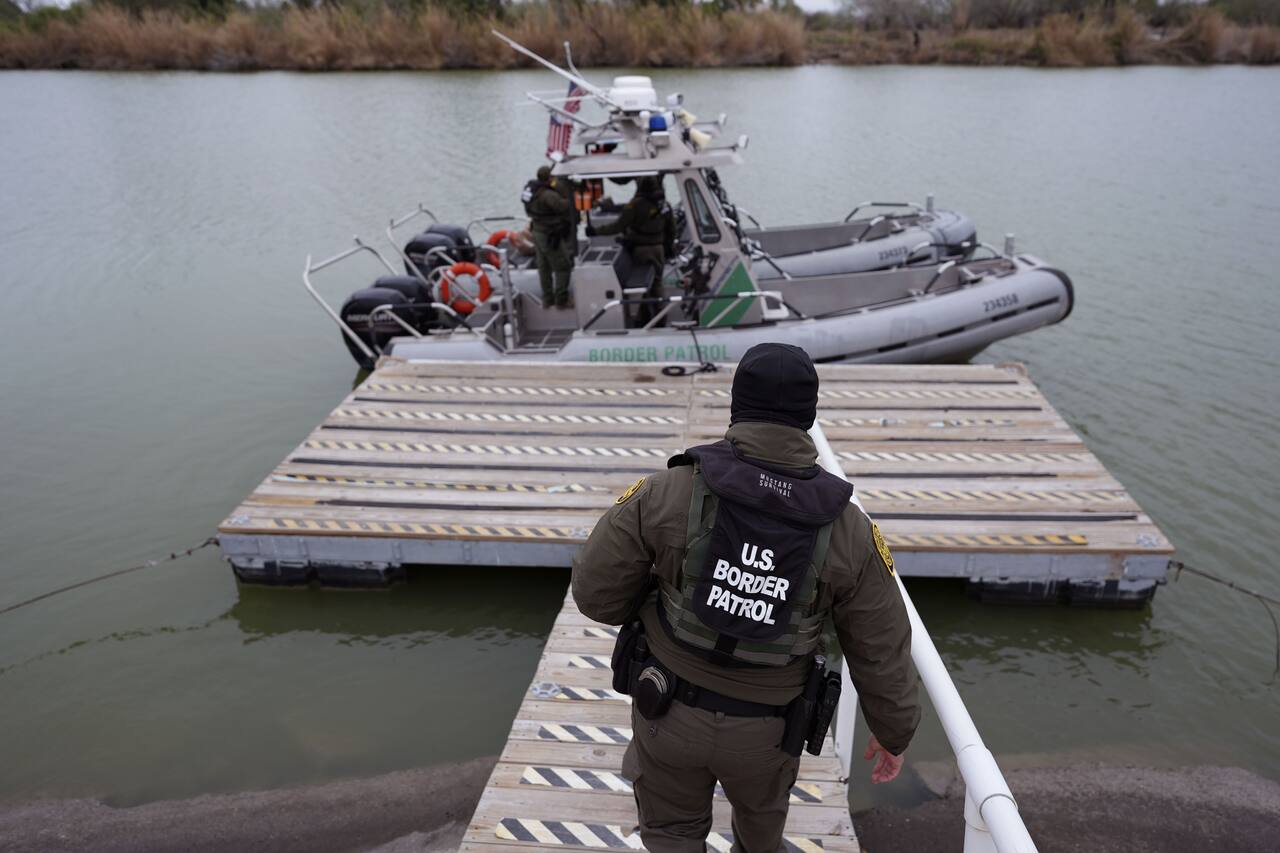
Federal prosecutors in Houston have charged 297 people, including 268 noncitizens, with immigration and border-security crimes filed in a single week, November 6 to 12, the U.S. Attorney's Office for the Southern District of Texas announced on Tuesday, November 17. The weekly tally is the latest in a rolling series of enforcement updates under the Justice Department's nationwide Operation Take Back America, and it underlines how completely one charge — felony re-entry after a previous removal — now dominates the federal criminal docket in South Texas.
Source: U.S. Attorney's Office, Southern District of Texas
The breakdown, as the U.S. Attorney's Office released it, is this: 211 people face charges of felony re-entry after prior removal; 53 criminal complaints were filed for illegal entry; 30 people — 28 of them noncitizens themselves, prosecutors say — were charged over alleged human smuggling; and one remaining case involves making false statements. The office's headline counts 295 cases while its text counts 297 people charged, a small gap analysts attribute to cases and people not mapping one-to-one; the charge-by-charge breakdown adds up to 295. Prosecutors said most of those charged with re-entry have prior felony records involving narcotics, violent crime or immigration offences. Every charge is an allegation: an indictment or criminal complaint is a formal accusation, not evidence, and each defendant is presumed innocent unless convicted.
The named re-entry cases: Santa Maria, La Joya, Mission and San Juan
The release names individual re-entry cases from across the Rio Grande Valley end of the district. Mexican national Jose Guillermo Ramirez-Trevino was charged with felony re-entry after authorities allegedly found him unlawfully in the United States near Santa Maria, in Cameron County, despite having been removed on October 2, 2009. According to the criminal complaint, he has a prior conviction for manufacturing and delivering a controlled substance.
Clemente Miguel Moran-Alcala, also a Mexican national, was charged with felony re-entry after authorities allegedly found him near La Joya, in Hidalgo County, despite having been removed on August 24, 2011. The complaint alleges prior convictions for burglary and assault on a police officer. Authorities also reported finding three more Mexican nationals — Cirilo Sauceda-Escamilla near La Joya, Juan Turrubiates near Mission and Erik Manuel Delgado-Pereira near San Juan. Sauceda-Escamilla and Delgado-Pereira had previously been removed in May and August respectively, prosecutors said, while Turrubiates had been removed on April 15, 2016. Their alleged prior convictions, as listed in the charges, are online solicitation of a minor, murder and manslaughter respectively. All of the re-entry defendants face up to 20 years in federal prison if convicted.
In the same announcement, the office reported a sentence in a separate smuggling case: Gerardo David Zarate Martinez, a 20-year-old Mexican national, received 60 months in federal prison for conspiring to transport noncitizens in a case that resulted in death, and for bringing three people into the United States for financial gain. The court heard testimony that Martinez fled the scene without checking on the injured or deceased, and cited what it called his callous disregard for their lives in handing down the sentence.
Why re-entry prosecutions dominate in South Texas
Independent court data help explain the shape of the tally. Figures compiled by the Transactional Records Access Clearinghouse (TRAC) at Syracuse University show 5,099 new federal immigration prosecutions nationwide in August 2026, up 8.5 per cent from a year earlier — and the Southern District of Texas ranked first among all federal districts with 846 of them, ahead of New Mexico, the Western District of Texas, Arizona and the Southern District of California. In practice, that means a person with a prior removal who is encountered by Border Patrol or ICE in South Texas faces a substantial chance of a federal criminal case, with prison time and a felony record, before any new removal — not simply a flight back across the border.
Source: Immigration Analytics / TRAC, Syracuse University
The cases were referred or supported by a long list of federal partners, the U.S. Attorney's Office said: Immigration and Customs Enforcement's Homeland Security Investigations and Enforcement and Removal Operations, the Border Patrol, the Drug Enforcement Administration, the FBI, the U.S. Marshals Service and the Bureau of Alcohol, Tobacco, Firearms and Explosives, with additional help from state and local law enforcement. Operation Take Back America is the Justice Department's nationwide initiative that marshals federal resources against illegal immigration, cartels and transnational criminal organisations, and violent crime.
A district the size of a small country — and a trucking corridor
The Southern District of Texas is one of the busiest prosecutor's offices in the United States. It covers 43 counties and more than 10 million people across roughly 44,000 square miles, and its assistant U.S. attorneys work out of seven divisions: Houston, Galveston, Victoria, Corpus Christi, Brownsville, McAllen and Laredo. For the Punjabi diaspora, the district matters on two levels: Houston is one of the largest Punjabi and Sikh communities in Texas and a major trucking hub, and the Laredo and Valley divisions sit on some of the busiest freight crossings between the United States and Mexico, where long-haul drivers — many of them Punjabi — clear loads every day. A prosecution machine running at this volume shapes everything from border wait times to who gets stopped, questioned and charged along those corridors.
The U.S. Attorney's Office states it plainly at the end of its own release: an indictment or criminal complaint is a formal accusation of criminal conduct, not evidence. Every defendant in these 295 cases is presumed innocent unless convicted through due process of law.
What happens next: the new complaints move into the district's federal courts, where many immigration cases begin before magistrate judges in the Houston, McAllen, Brownsville and Laredo divisions. Defendants charged with felony re-entry face up to 20 years in prison if convicted, followed by removal. The U.S. Attorney's Office has published a similar tally almost every week — earlier updates in the same series charged 301 people in one week in June — and has said enhanced enforcement at the border and in the interior of the district will continue, with public-safety and border-security cases as its stated top priorities under current leadership.